

Hotel Guest Privacy Rights in India: Legal Lessons from the Incident at The Leela Palace Udaipur
India’s hospitality sector has witnessed tremendous growth, with world-class hotels offering premium accommodation and services to travellers. Major hotel brands operating across India include Taj Hotels, Oberoi Hotels & Resorts, ITC Hotels, The Leela Palaces Hotels and Resorts, Marriott International, Hyatt Hotels Corporation, Radisson Hotel Group, Hilton Hotels & Resorts, Accor Hotels, IHG Hotels & Resorts, and brands under Accor such as Novotel.
These hotels promise comfort, safety, discretion, and high service standards. However, even within luxury hospitality environments, disputes occasionally arise that highlight the legal responsibility of hotels to protect guest privacy.
One such case that has recently drawn attention involves The Leela Palace Udaipur, where a couple alleged that hotel staff entered their room and saw them while they were inside the bathroom taking a shower. The consumer forum reportedly directed the hotel to pay ₹10 lakh compensation, along with refund of room charges and litigation costs.
While the hotel has indicated that it is evaluating legal options, the incident has triggered wider discussion about guest privacy rights and hotel liability in India.
The Incident and the Alleged Privacy Breach
According to reports discussed in the consumer complaint:
- A couple were staying at the luxury hotel in Udaipur.
- At the time of the incident, they were inside the bathroom shower area.
- A hotel staff member allegedly entered the room using a master key.
- It was claimed that the staff member looked toward the bathroom and saw the couple while they were bathing.
The guests alleged that this intrusion caused embarrassment, humiliation, and mental distress, as it occurred during a highly private moment.
Bathrooms are universally regarded as the most private space within a hotel room, and any intrusion during such circumstances may be perceived as a serious violation of dignity.
Legal Rights of Hotel Guests in India
Hotel guests in India are protected under several legal principles.
1. Consumer Protection Act, 2019
Hotels are considered service providers, and guests are treated as consumers.
If a hotel fails to provide proper services or causes distress, it may amount to deficiency in service, allowing guests to seek:
- Refund of charges
- Compensation for mental agony
- Litigation costs
Consumer courts have recognised that mental distress and humiliation caused by service failures can justify compensation.
2. Right to Privacy
The right to privacy has been recognised by the Supreme Court as a fundamental right.
Even though hotels are private establishments, they provide services to the public and must ensure that guests’ dignity and personal space are respected.
Intrusion when guests are:
- changing clothes
- sleeping
- using the bathroom
- taking a shower
can potentially amount to serious privacy violations.
3. Duty of Care of Hotels
Hotels owe their guests a duty of care, which includes:
- Maintaining secure premises
- Preventing unauthorized room access
- Ensuring staff professionalism
- Protecting guest dignity and confidentiality
Failure to fulfil these obligations may expose hotels to legal liability and consumer complaints.
Hospitality Industry Privacy Protocols
Leading hotel brands such as Taj, Oberoi, ITC, Leela, Marriott, Hyatt, Hilton, Radisson, Accor, Novotel, and IHG follow strict internal procedures to protect guest privacy.
Common protocols include:
Knock–Announce–Wait Rule
Housekeeping staff must knock and announce their presence before entering a room.
Occupancy Verification
If there is no response, staff should confirm the room status with the front desk.
Respect for “Do Not Disturb” Signs
Rooms displaying DND signs should not be disturbed except in emergencies.
Master Key Control
Master keys must be used only under strict supervision and recorded in access logs.
These safeguards exist specifically to prevent situations where guests may be resting, changing clothes, or showering.
Why Privacy Breaches Are Taken Seriously
Hotel rooms function as temporary private residences.
When guests are:
- bathing
- dressing
- resting
they are in a vulnerable and personal situation.
Intrusions during such moments can cause severe emotional distress and embarrassment, which consumer courts increasingly recognise as valid grounds for compensation.
What Guests Should Do if Privacy Is Violated
If a guest experiences a privacy breach during a hotel stay, the following steps may be taken:
1. Inform Hotel Management
Immediately report the incident to the hotel manager or front desk.
2. Document the Incident
Preserve booking details, bills, and communication records.
3. Send a Legal Notice
A lawyer may issue a notice demanding explanation and compensation.
4. File a Consumer Complaint
If the issue remains unresolved, the guest may approach the Consumer Disputes Redressal Commission.
Responsibilities of Hotels
Hotels must implement strong privacy safeguards, including:
• Staff training on guest privacy
• Strict room entry protocols
• Monitoring of master key usage
• Prompt handling of complaints
• Periodic review of safety procedures
Luxury hotels especially must maintain the highest standards of discretion and professionalism.
Conclusion
India’s hospitality industry represented by brands such as Taj, Oberoi, ITC, Leela, Marriott, Hyatt, Hilton, Radisson, Accor, Novotel, and IHG is built on the promise of comfort, discretion, and premium service.
Incidents such as the one reported at The Leela Palace Udaipur, where guests alleged that staff entered the room and saw them while they were taking a shower, highlight the importance of maintaining strong privacy safeguards.
For travellers, the key takeaway is that hotel guests in India have enforceable legal rights, and consumer courts can provide remedies when those rights are violated.
For hotels, the lesson is equally clear: true hospitality lies not only in luxury amenities but in safeguarding the dignity, safety, and privacy of every guest.
FAQ: Hotel Privacy and Consumer Rights
Can hotel staff enter my room without permission?
Generally, hotel staff must knock, announce their presence, and obtain consent before entering a room unless there is an emergency.
Can I claim compensation if hotel staff intrudes on my privacy?
Yes. If the intrusion causes embarrassment or distress, compensation may be claimed under the Consumer Protection Act, 2019.
What should I do if hotel staff enters my room while I am inside?
You should immediately inform hotel management, document the incident, and consider sending a legal notice or filing a consumer complaint.
Are international hotel brands bound by Indian consumer laws?
Yes. Hotels operating in India including global brands such as Marriott, Hyatt, Hilton, Radisson, Accor, and Novotel must comply with Indian consumer protection laws.
How can hotels prevent such disputes?
Hotels should enforce strict privacy protocols, employee training, and proper supervision of staff access to guest rooms.

Advocate Sarosh Damania is the founder of Sarosh Damania & Co., a premier law firm based in Mumbai, recognized for its exceptional legal services to corporations, individuals, and international clients worldwide. With a rich blend of experience and expertise, Adv. Damania and his team specialize in a wide array of legal disciplines, including Civil Law, Criminal Law, Aviation Law, Arbitration, Consumer Law, RERA, Company Law, Succession Law, Wills, Intellectual Property Law, Property Law, Housing Society Law, Debt Recovery, and Banking Law.
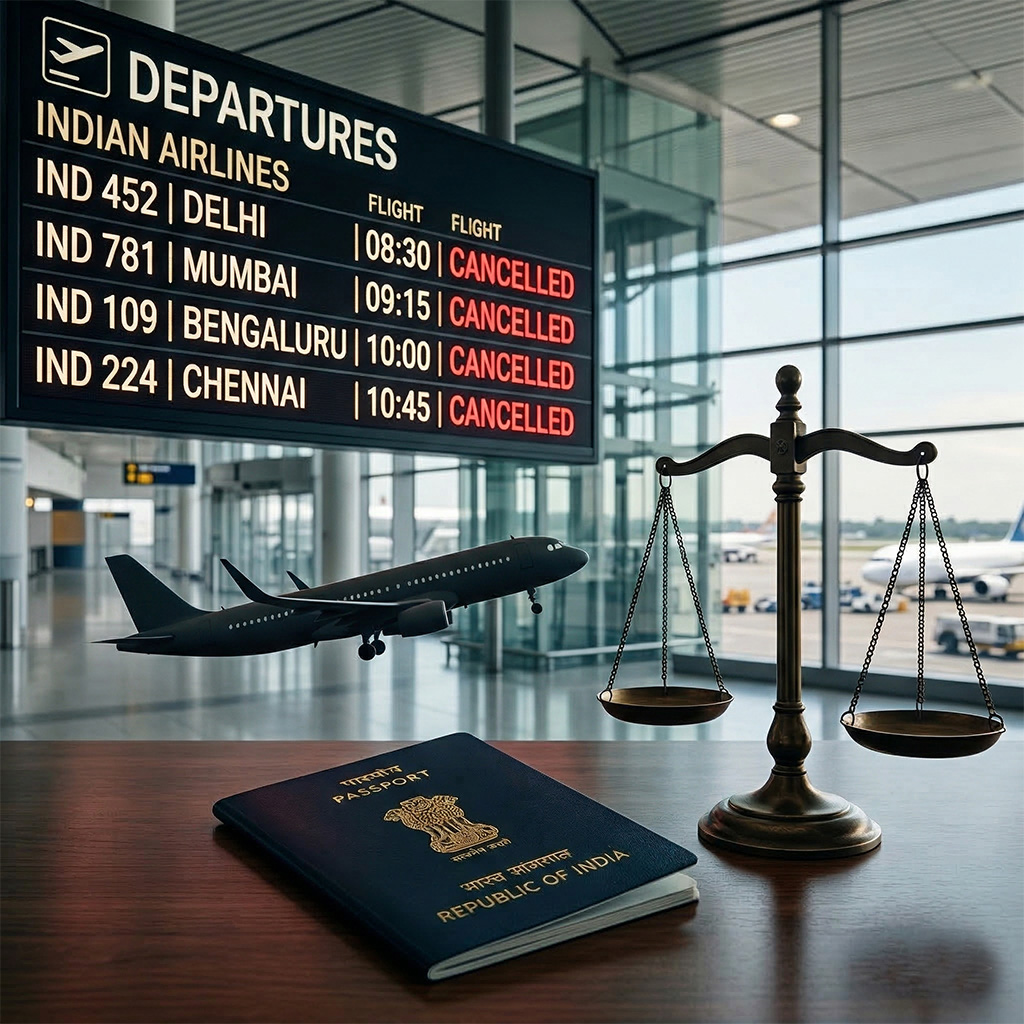
Middle East Airspace Crisis: Impact on Indian Airlines, Airports, and Passenger Rights Under Indian Aviation Law
The ongoing geopolitical tensions and security developments in the Middle East have triggered widespread disruption across global aviation networks. Airlines across the world have been forced to cancel flights, suspend operations, and reroute aircraft to avoid conflict zones and restricted airspace.
For India, the consequences are particularly significant. The Middle East functions as one of the most important aviation corridors connecting India with Europe, Africa, and North America. Any instability in this region directly affects Indian airlines, airports, and millions of Indian passengers.
Major aviation hubs such as Dubai International Airport, Hamad International Airport, and Abu Dhabi International Airport serve as critical transit points for Indian travellers. Disruptions at these hubs often cascade across airline networks worldwide.
This article examines the impact of the Middle East crisis on Indian aviation operations and the legal rights available to passengers under Indian law.
Strategic Importance of the Middle East for Indian Aviation
India maintains one of the busiest aviation corridors with the Gulf region. Every day, hundreds of flights operate between India and Middle Eastern cities such as Dubai, Doha, Abu Dhabi, Muscat, Riyadh, Jeddah, and Kuwait.
The majority of these flights originate from major Indian international airports including:
- Chhatrapati Shivaji Maharaj International Airport
- Indira Gandhi International Airport
- Kempegowda International Airport
- Rajiv Gandhi International Airport
- Cochin International Airport
- Calicut International Airport
These airports collectively handle millions of passengers travelling to the Gulf region each year. A large portion of these passengers are Indian professionals, migrant workers, tourists, and international transit travellers.
When geopolitical tensions result in airspace restrictions or safety advisories, airlines may be compelled to reroute flights or suspend operations entirely, resulting in large-scale passenger disruption.
Indian Airlines Most Affected by the Crisis
Indian airlines maintain extensive connectivity with the Middle East. Several carriers rely on Gulf routes as a core component of their international networks.
The Indian airlines most affected include:
- Air India
- Air India Express
- IndiGo
- Akasa Air
- SpiceJet
These carriers operate hundreds of weekly flights between India and Middle Eastern destinations. Operational disruptions may require airlines to:
- Cancel flights due to airspace closure
- Delay departures pending safety clearance
- Reroute aircraft around restricted regions
- Reduce frequency on certain routes
Such adjustments can significantly affect passenger schedules and airline operating costs.
International Airlines Carrying Indian Passengers
Indian travellers are also heavily reliant on international airlines operating through Middle Eastern hubs. Some of the largest carriers include:
- Qatar Airways
- Emirates
- Etihad Airways
- British Airways
- Lufthansa
- Singapore Airlines
- Cathay Pacific
These airlines provide key transit routes for passengers travelling from India to destinations across Europe, North America, and Australia.
Any disruption at Middle Eastern hubs may therefore affect passengers travelling far beyond the region itself.
Impact on Indian Passengers
The Middle East crisis has resulted in multiple operational challenges for Indian passengers.
Flight Cancellations and Delays
Passengers travelling to or via the Middle East may experience:
- Last-minute cancellations
- Extended airport delays
- Missed connecting flights
- Rescheduled itineraries
Since many international journeys involve connections at Gulf hubs, disruption at a single airport may affect an entire itinerary.
Increased Airfares
Flight rerouting and reduced aircraft availability increase operating costs for airlines. This may lead to higher ticket prices on certain routes until normal operations resume.
Impact on Migrant Workers
Millions of Indian nationals working in Gulf countries rely on aviation connectivity for employment travel and family visits. Disruptions may affect:
- Employment reporting schedules
- Emergency travel requirements
- Contractual travel obligations
This makes efficient airline communication and passenger assistance essential.
Passenger Rights Under Indian Aviation Regulations
Passengers departing from India are protected under the Civil Aviation Requirements (CAR) issued by the Directorate General of Civil Aviation.
These regulations specify airline obligations in cases of delays, cancellations, and denied boarding.
Compensation and Refund Rights
If a flight departing from India is cancelled, passengers are generally entitled to:
- Full refund of the ticket fare
- Alternative flight arrangements
- Assistance at the airport including meals and refreshments
- Hotel accommodation in cases of overnight delay
However, airlines may not be required to provide monetary compensation where the cancellation arises from extraordinary circumstances, including war, political instability, or airspace closure.
Nevertheless, the obligation to provide refunds or alternative travel arrangements continues to apply.
Assistance During Flight Delays
Under DGCA guidelines, airlines must provide passenger assistance based on the length of delay:
- 2–4 hour delay: meals or refreshments
- More than 6 hours: option of refund or alternative flight
- Overnight delays: hotel accommodation and airport transfers
These protections apply to flights originating from Indian airports regardless of the nationality of the airline.
Practical Guidance for Affected Passengers
Passengers whose flights are affected by Middle East airspace disruptions should consider the following steps:
- Monitor airline notifications and airport announcements regularly.
- Contact the airline immediately to explore rebooking or refund options.
- Retain all travel documentation, including boarding passes and email communications.
- Review travel insurance policies to determine coverage for delays and cancellations.
Prompt action can help passengers minimise inconvenience and recover eligible costs.
Conclusion
The Middle East crisis highlights how geopolitical events can rapidly disrupt global aviation networks. For India, where aviation connectivity with the Gulf region is critical, such developments have immediate implications for airlines, airports, and passengers.
While airlines continue to prioritise safety and operational continuity, passengers must remain informed about their rights under Indian aviation regulations.
Understanding the legal framework governing flight cancellations and delays can help travellers navigate disruptions and ensure that their rights are protected.
Frequently Asked Questions (FAQ) – Flight Cancellations Due to the Middle East Crisis
1. Why are flights being cancelled due to the Middle East crisis?
Flights are being cancelled primarily due to safety concerns arising from military activity, missile threats, and airspace restrictions across several countries in the Middle East. Airlines must comply with international aviation safety advisories and avoid conflict zones. As a result, many flights passing through the region are either cancelled or rerouted.
2. Which airlines operating in India are affected by the Middle East crisis?
Several Indian and international airlines operating flights from India to the Gulf region may be affected, including Air India, Air India Express, IndiGo, Akasa Air, SpiceJet, as well as international carriers such as Emirates, Qatar Airways, and Etihad Airways.
3. Which Indian airports are most affected by these disruptions?
Indian airports with the highest Gulf connectivity are likely to experience the most impact. These include Chhatrapati Shivaji Maharaj International Airport, Indira Gandhi International Airport, Kempegowda International Airport, Rajiv Gandhi International Airport, and Cochin International Airport.
4. Are passengers entitled to a refund if their flight is cancelled?
Yes. If an airline cancels a flight departing from India, passengers are entitled to either a full refund of the ticket price or an alternative flight arrangement. These rights are governed by regulations issued by the Directorate General of Civil Aviation.
5. Will passengers receive compensation if flights are cancelled due to war or geopolitical conflict?
In many cases, airlines may not be required to pay monetary compensation if the cancellation occurs due to extraordinary circumstances such as war, airspace closure, or political instability. However, airlines must still offer refunds or alternative travel arrangements.
6. What assistance must airlines provide during long delays?
Under DGCA regulations, airlines must provide assistance depending on the duration of the delay. This may include meals and refreshments, hotel accommodation for overnight delays, and transportation between the airport and the hotel.
7. Can passengers file a complaint if airlines do not provide refunds?
Yes. Passengers may file complaints through the AirSewa portal of the Directorate General of Civil Aviation. If the issue remains unresolved, passengers may approach consumer courts under the Consumer Protection Act.
8. Can passengers sue foreign airlines in India?
Yes. If a flight originates from India, passengers may file a case before Indian consumer courts even against foreign airlines for deficiency in service.
9. What should passengers do if they miss a connecting flight due to a cancellation?
Passengers should immediately contact the airline to request rebooking on the next available flight. If the airline fails to provide reasonable assistance, passengers may be entitled to compensation depending on the circumstances.
10. How can passengers protect themselves from travel disruptions?
Passengers should monitor airline notifications, keep copies of their booking documents, check travel insurance coverage, and stay informed about developments affecting international air travel routes.
Advocate Sarosh Damania is the founder of Sarosh Damania & Co., a premier law firm based in Mumbai, recognized for its exceptional legal services to corporations, individuals, and international clients worldwide. With a rich blend of experience and expertise, Adv. Damania and his team specialize in a wide array of legal disciplines, including Civil Law, Criminal Law, Aviation Law, Arbitration, Consumer Law, RERA, Company Law, Succession Law, Wills, Intellectual Property Law, Property Law, Housing Society Law, Debt Recovery, and Banking Law.
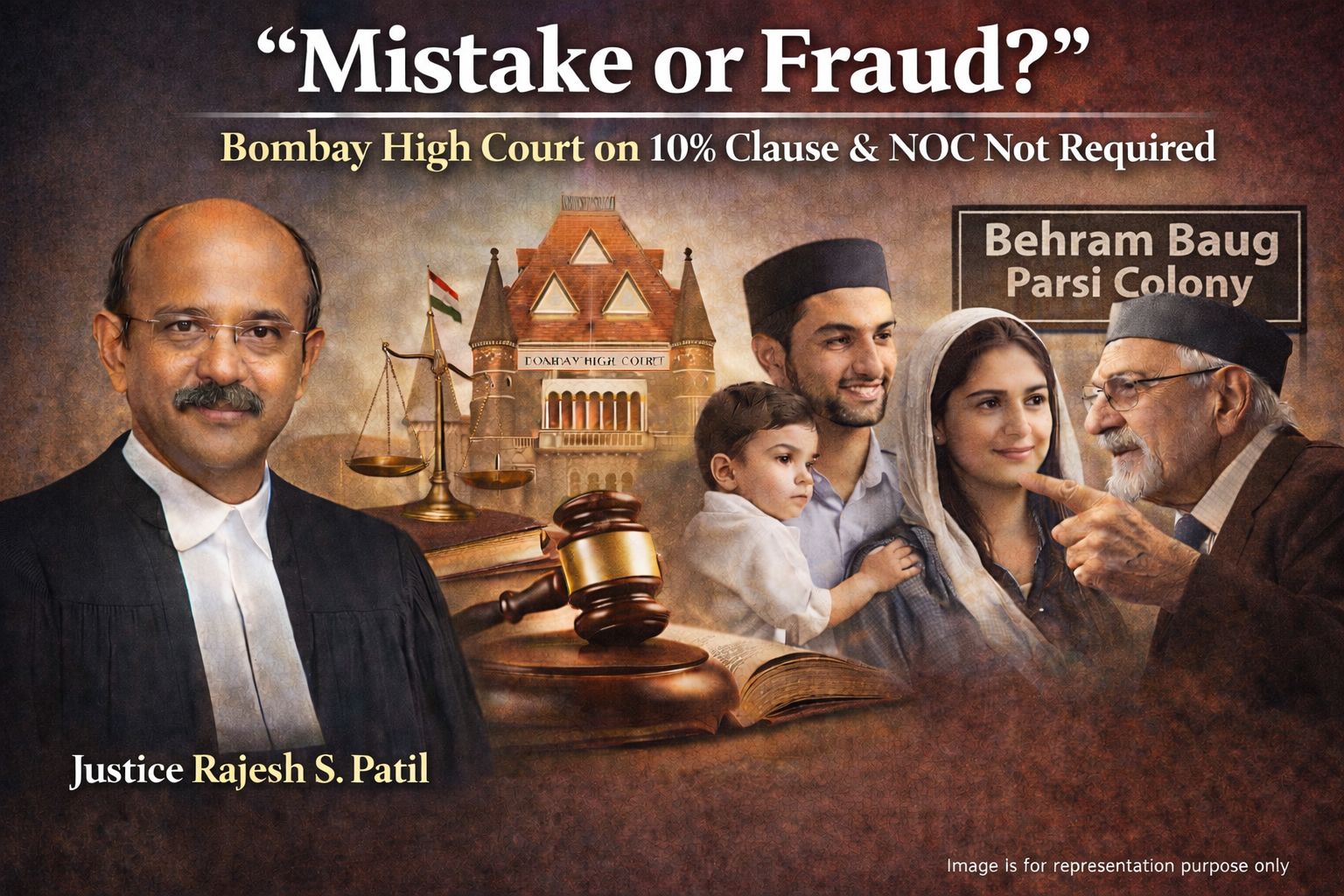
“Mistake or Fraud?” Bombay High Court Questions Suppression by Parsi Public Trust, Clarifies 10% Clause and NOC Not Required for Flat Sale
2026:BHC-OS:4262 | Justice Rajesh S. Patil | Section 36 Maharashtra Public Trusts Act | 10% Resale Clause |
NOC Not Required | Arbitration Suppression
Key Issue: Is NOC required to sell a flat in Mumbai, Maharashtra?
On 12 February 2026, the Bombay High Court (Coram: Justice Rajesh S. Patil) delivered a significant judgment
in 2026:BHC-OS:4262, addressing three critical issues in Maharashtra property and trust law:
- Whether trustees of a Parsi public trust suppressed material facts in arbitration proceedings.
- Whether a 10% differential can be imposed on every resale of a flat.
- Whether prior approval / NOC is required for transfer of a flat in a co-operative housing society.
Whether the non-disclosure of withdrawal of the Charity Commissioner application was a mere mistake
or whether it amounted to fraud committed by the Trustees on the housing society and on the Court.
No satisfactory explanation was offered by the Advocate for the Trust
Background: Section 36 Sanction and 10% Clause
The land belonged to The Zoroastrian Radih Society. Flats were constructed for members of the Parsi community.
Under a sanction granted under Section 36 of the Bombay Public Trusts Act (now Maharashtra Public Trusts Act):
- Flats could not be sold for 10 years.
- After 10 years, 10% of the price difference was payable to the Trust.
The controversy arose when the Trust attempted to expand this clause to levy 10% on every subsequent resale,
not just the first transfer.
Attempt to Introduce Mandatory NOC and Expanded 10% Clause
In 2015, the Trust filed Miscellaneous Application No. 238 of 2015 before the Charity Commissioner seeking to introduce:
- Mandatory prior approval (NOC) before sale of any flat
- Pre-emption rights
- 10% on every resale
- Trust nominees in society management
However, the Charity Commissioner questioned jurisdiction and potential prejudice to purchasers.
The application was withdrawn on 3 November 2015.
Suppression Before Arbitrator – Fraud Question Raised
Consent terms were executed before a sole arbitrator on 21 November 2015.
The High Court recorded that the withdrawal of the Charity Commissioner application was not disclosed
to the arbitrator or to Behramshah Shroff Building No. 1 (Yazad) Co-operative Housing Society Ltd.
The judgment specifically notes that the consent terms were signed by trustee H.H. Santoke,
who continues to serve as trustee.
Justice Rajesh S. Patil recorded that the Court directly questioned whether such non-disclosure amounted to fraud.
This is one of the most significant aspects of the ruling.
NOC Not Required for Flat Sale in Maharashtra (Mumbai Housing Society Transfers)
The Court referred to the legal position under the Maharashtra Co-operative Societies Act and Model Bye-laws.
Under Model Bye-law 38(d):
No Objection Certificate (NOC) of the Society is not required to transfer shares and interest of the transferor
to the transferee.
The amendment in Maharashtra law makes it clear:
- A seller does not require prior permission of the society to sell a flat.
- Society cannot impose additional NOC conditions unless specifically required.
In this case, the Trust’s attempt to mandate NOC before every resale was inconsistent with the statutory framework
governing co-operative housing societies.
This clarification has significant impact for:
- Flat resale in Mumbai
- Housing society transfer disputes
- NOC requirements in Maharashtra property transactions
Supreme Court’s Binding Order (27 March 2018)
The Supreme Court had earlier directed:
- No modification of consent terms.
- Transfer to be finalized without additional conditions contained in the withdrawn Charity Commissioner application.
Justice Patil described the Supreme Court’s order as “clear and unequivocal.”
Final Ruling of the Bombay High Court
- 10% differential applies only to first transfer post restriction period
- 10% cannot be levied on every resale
- Mandatory NOC condition cannot be revived
- Withdrawn Section 36 application cannot be reintroduced
- Execution must strictly comply with Supreme Court order
Execution Application No. 694/2019 filed by the society was allowed.
Execution Application No. 1801/2018 filed by the Trust was dismissed.
Lease deed directed to be executed within eight weeks.
Legal Implications for Maharashtra Property Law
- No Perpetual 10% Resale Levy: Public trusts cannot impose endless financial burdens beyond original sanction.
- NOC Not Required for Flat Sale in Maharashtra: Under Model Bye-laws and amendments, prior approval is generally not mandatory.
- Suppression in Arbitration May Invite Fraud Scrutiny: Even consent awards are subject to judicial review where material non-disclosure exists.
- Section 36 Maharashtra Public Trusts Act Has Limits: Modification after sanction requires jurisdiction and fairness.
Appearance of Counsel
For the Housing Society: Advocates Sarosh Damania, Riddhi Shah, Dharmi Patel and Madhura Shah appeared for the housing society.
For the Trust: Advocates Cherag Balsara, H.N. Vakil and Farhad Vakil, instructed by
M/s. Mulla & Mulla & Craigie Blunt & Caroe, appeared for the Trust.
Judgement Download link
Frequently Asked Questions
Is NOC required to sell a flat in Maharashtra?
Generally, no. Under Model Bye-law 38(d), NOC of the society is not required for transfer.
Can a public trust impose 10% on every resale?
No. The Bombay High Court clarified it applies only to first post-restriction transfer.
What did the Court say about fraud?
The Court recorded a question whether non-disclosure amounted to fraud on the housing society and the Court:
Whether the non-disclosure of withdrawal of the Charity Commissioner application was a mere mistake
or whether it amounted to fraud committed by the Trustees on the housing society and on the Court.
Conclusion
This Bombay High Court judgment is important for Maharashtra housing society law, public trust governance, arbitration transparency,
Section 36 compliance, and flat resale NOC disputes.
By formally recording the “mistake or fraud” question, Justice Rajesh S. Patil has reinforced that transparency in arbitration and execution proceedings is non-negotiable.
Advocate Sarosh Damania is the founder of Sarosh Damania & Co., a premier law firm based in Mumbai, recognized for its exceptional legal services to corporations, individuals, and international clients worldwide. With a rich blend of experience and expertise, Adv. Damania and his team specialize in a wide array of legal disciplines, including Civil Law, Criminal Law, Aviation Law, Arbitration, Consumer Law, RERA, Company Law, Succession Law, Wills, Intellectual Property Law, Property Law, Housing Society Law, Debt Recovery, and Banking Law.

Why This Is the Right Time to Start an Airline in India (2025-26)
Complete guide on starting an airline in India in 2025-26. Learn about DGCA AOC, government NOC, regulatory requirements and why this is the right time. Expert aviation law advice from Sarosh Damania and Co.
Read More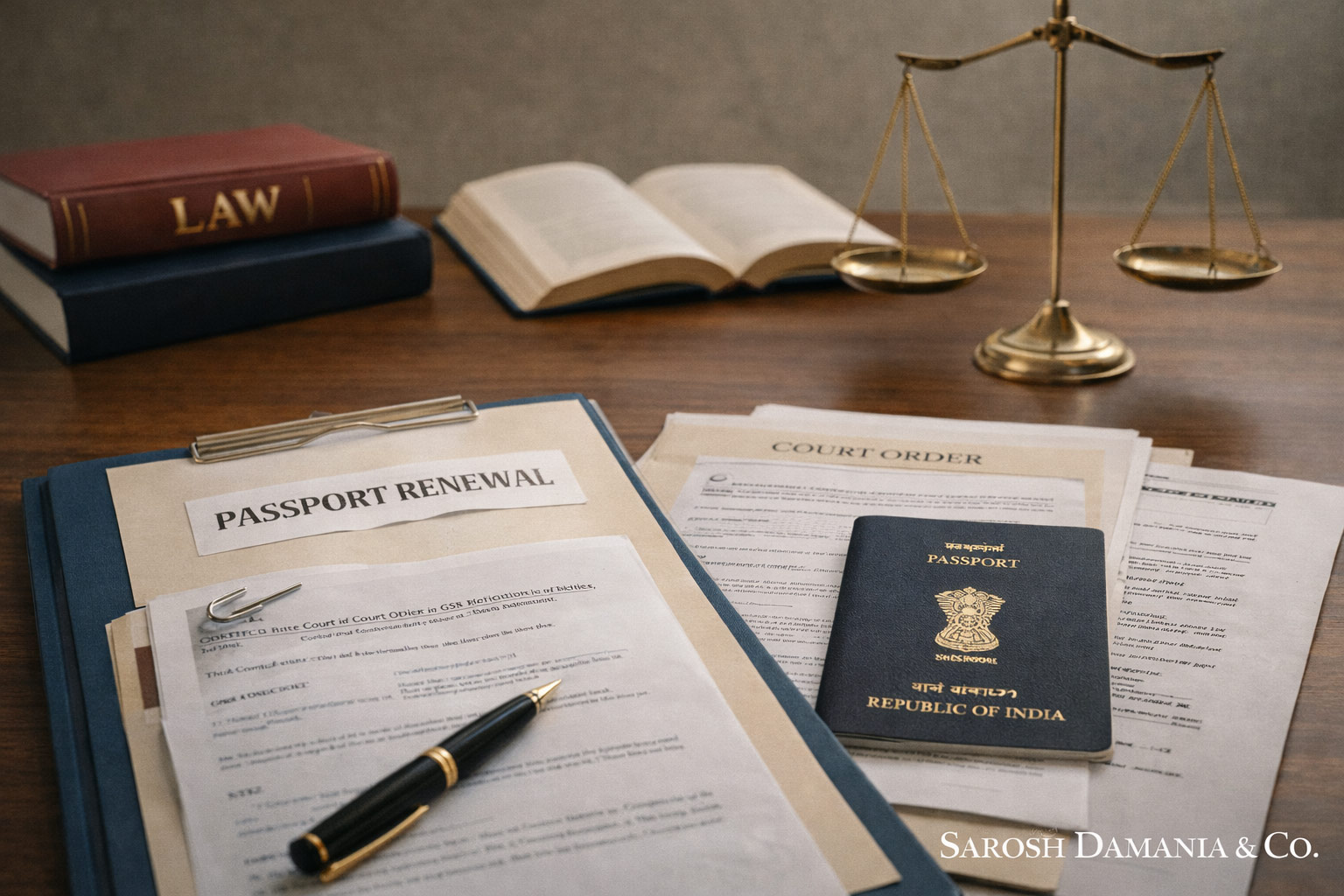
Passport Renewal Pending Due to Criminal Case in India – Know Your Legal Rights
One of the most frequent and frustrating issues faced by Indian citizens today is passport renewal being kept pending or refused due to a pending criminal case. Even individuals who are on bail, have complied with all court conditions, or have obtained express judicial permission often find their applications stuck at the Regional Passport Office (RPO) for months or even years.
This article explains the correct legal position under Indian law, the latest Supreme Court clarification, and the practical remedies available when passport renewal is delayed or denied due to a pending criminal case.
Why Passport Renewal Is Refused in Pending Criminal Cases
Passport Authorities usually rely on Section 6(2)(f) of the Passports Act, 1967, which allows refusal of a passport where criminal proceedings are pending before a court in India.
However, this provision is not an absolute bar.
Indian constitutional law makes a clear distinction between:
- Possession of a passport, and
- Permission to travel abroad
A passport is a civil identity document, whereas travel abroad is regulated by criminal courts through bail conditions and judicial supervision.
Statutory Framework Governing Passport Renewal
1. Section 6(2)(f) – Passports Act, 1967
Allows refusal of issuance or renewal where criminal proceedings are pending, subject to other provisions of the Act.
2. Section 22 & GSR 570(E) Notification (25 August 1993)
This notification creates a statutory exemption, permitting issuance or renewal of passports when:
- The concerned criminal court grants permission or no objection, and
- The applicant complies with court-imposed conditions
3. Ministry of External Affairs Office Memorandum (10 October 2019)
Directs Passport Authorities to:
- Strictly follow court orders
- Treat judicial permission as overriding adverse police verification
- Issue passports for appropriate duration as per law
Supreme Court Clarity on Passport Renewal (December 2025)
In Mahesh Kumar Agarwal v. Union of India (2025), the Supreme Court conclusively settled the law on passport renewal in pending criminal cases.
Key Principles Laid Down
- Passport renewal cannot be denied solely because a criminal case is pending
- Courts may permit renewal while:
- Restricting foreign travel without prior permission
- Directing redeposit of passport after renewal
- Passport Authorities cannot insist on specific travel itineraries or visas
- Section 6(2)(f) cannot operate as an indefinite or permanent prohibition
- The right to hold a passport flows from Article 21 – Right to Personal Liberty

Passport vs Permission to Travel Abroad
It is important to understand:
- Holding a passport does not grant automatic permission to travel abroad
- Permission to travel is exclusively regulated by criminal courts
- Courts retain complete control over:
- Travel restrictions
- Bail conditions
- Passport deposit or redeposit
Administrative authorities cannot override judicial supervision.
Conviction vs Pending Trial – A Crucial Legal Distinction
- Section 6(2)(f) applies at the pre-conviction stage
- A conviction under appeal with a suspended sentence does not automatically bar renewal
- Courts routinely allow renewal even during pendency of criminal appeals
Common Errors by Passport Authorities
Despite settled law, Passport Authorities often:
- Treat Section 6(2)(f) as an absolute prohibition
- Ignore court-issued No Objection orders
- Demand specific foreign travel plans at renewal stage
- Keep applications pending indefinitely without written reasons
Such actions are contrary to binding Supreme Court precedent.
Step-by-Step Remedy if Passport Renewal Is Pending
Step 1: Apply Online with Full Disclosure
Always disclose FIR, trial, appeal, or conviction details truthfully.
Step 2: Obtain Court Permission / No Objection
Seek a clear order from the concerned court permitting:
- Passport renewal
- Subject to travel restrictions if necessary
Step 3: Submit Certified Court Orders to RPO
Attach certified copies during verification.
Step 4: Issue Legal Representation
If delayed or refused, submit a written representation citing:
- GSR 570(E)
- Supreme Court judgment
- Article 21 rights
Step 5: File Writ Petition under Article 226
High Courts regularly direct Passport Authorities to renew passports where law is violated.
Can Passport Be Renewed for 10 Years in Pending Cases?
Yes. The Supreme Court has clarified:
- If the court does not restrict validity,
- Passport Authorities cannot arbitrarily limit issuance to one year
- A standard 10-year passport can be issued
Conclusion
A pending criminal case does not extinguish your right to passport renewal. Indian law balances:
- Personal liberty under Article 21, and
- Judicial oversight to ensure trial participation
Administrative authorities cannot impose additional restrictions beyond statute and court orders.
Passport Renewal Delayed or Refused Due to a Criminal Case?
Get precise constitutional and procedural remedies backed by Supreme Court precedent.
Sarosh Damania & Co.
📞 Call: +91 98338 44020
🌐 Consult: https://saroshdamania.com/contact/
Frequently Asked Questions (FAQs)
Can passport renewal be denied due to a pending criminal case?
No, not automatically. Courts can permit renewal despite pendency.
Is court permission mandatory for renewal?
Yes, where criminal proceedings are pending.
Can RPO ignore a court order?
No. Judicial permission overrides adverse police verification.
Can passport be issued for 10 years?
Yes, unless the court restricts validity.
What is the remedy if RPO delays renewal?
A writ petition under Article 226 before the High Court.
Advocate Sarosh Damania is the founder of Sarosh Damania & Co., a premier law firm based in Mumbai, recognized for its exceptional legal services to corporations, individuals, and international clients worldwide. With a rich blend of experience and expertise, Adv. Damania and his team specialize in a wide array of legal disciplines, including Civil Law, Criminal Law, Aviation Law, Arbitration, Consumer Law, RERA, Company Law, Succession Law, Wills, Intellectual Property Law, Property Law, Housing Society Law, Debt Recovery, and Banking Law.

No Probate of Will Required Anywhere in India After December 2025 And Why a Will Is Still Non-Negotiable
For decades, Indian families were burdened by a colonial-era rule that made probate of a Will compulsory for properties situated in Mumbai, Chennai, and Kolkata the former Presidency towns. This requirement often resulted in years of delay, unnecessary litigation, and avoidable legal costs, even where there was no dispute within the family.
📌 This position has now changed.
Following the December 2025 amendment to the Indian Succession Act, 1925, the concept of mandatory probate has been abolished entirely.
👉 Probate of a Will is no longer compulsory anywhere in India, including Mumbai, Chennai, and Kolkata.
This article explains the current legal position, how property transfers now work without probate, and why despite this major reform making a Will has become more important than ever.
What Is Probate of a Will?
Probate is a formal court certification of a Will, confirming:
- That the Will is genuine, and
- That the executor has authority to administer the estate.
Importantly, probate does not create rights. It merely recognises rights that already exist under a valid Will.
The Law Before vs After December 2025
Position Before the Amendment
- Probate was mandatory for Wills relating to property in:
- Mumbai
- Chennai
- Kolkata
- Even uncontested Wills required court proceedings
- Simple transfers were delayed for years
Position After the December 2025 Amendment
✅ Mandatory probate removed across India
✅ No distinction between Presidency towns and other cities
✅ Probate is now optional, not compulsory
This reform has finally aligned Indian succession law with modern realities and practical inheritance needs.
Is Probate of a Will Required Anywhere in India Today?
Clear Legal Position
👉 No. Probate is not mandatory anywhere in India.
This applies uniformly to:
- Mumbai
- Chennai
- Kolkata
- Delhi
- Bengaluru
- Hyderabad
- All other cities and towns across India
Can Probate Still Be Obtained?
Yes. Probate has not been abolished only the requirement to mandatorily obtain it has been removed.
Probate may still be voluntarily opted for in cases such as:
- High-value or complex estates
- Anticipated family disputes
- Multiple executors or beneficiaries
- Institutional, banking, or cross-border assets
Probate now functions as a protective legal option, not a compulsory hurdle.
How Property Is Transferred Without Probate Today
Post-amendment, authorities generally process inheritance-based transfers on the strength of:
- The original Will
- Death Certificate of the testator
- Legal Heir Certificate / Family Tree Affidavit
- Indemnity Bond
- No-Objection Certificates (where required)
- Verification by housing society / municipal or revenue authorities
This applies to:
- Flats in cooperative housing societies
- Land and revenue properties
- Redevelopment conveyances
- Sale of inherited property
If Probate Is Not Required, Why Is a Will Still Crucial?
This is the most misunderstood aspect of the amendment.
What the Amendment Does NOT Do
❌ It does not eliminate succession laws
❌ It does not simplify inheritance without a Will
❌ It does not prevent disputes by itself
What Happens If There Is No Will
- Property devolves strictly under personal succession laws
- Assets are mechanically divided among heirs
- Joint ownership causes sale and redevelopment deadlocks
- One dissenting heir can stall the entire property
- Litigation becomes unavoidable
Importance of a Will After the 2025 Amendment
In reality, the importance of a Will has increased, because:
- Authorities now rely directly on the Will without probate
- Clear Wills avoid the need for succession certificates
- Property titles become cleaner and more marketable
- Family intent is preserved
- Disputes are reduced at the very outset
💡 Probate becoming optional makes the drafting of a Will more not less critical.
A Dangerous Myth After the Amendment
“Now that probate is not required, we don’t need a Will.”
This assumption is legally incorrect and practically disastrous.
Without a Will:
- Transfers become document-heavy and uncertain
- Multiple heirs must consent at every stage
- Buyers and developers hesitate due to title risk
- Courts remain the final destination
Drafting a Strong Will: What Truly Matters
A legally sound Will should:
- Clearly identify all assets
- Clearly name beneficiaries
- Appoint an executor
- Use precise and unambiguous language
- Anticipate family and commercial realities
A poorly drafted Will can still invite disputes even without probate.
Key Takeaways
✔ Probate of a Will is not mandatory anywhere in India after December 2025
✔ Mumbai, Chennai, and Kolkata are no longer exceptions
✔ Probate is now a voluntary safeguard, not a legal requirement
✔ A Will remains the cornerstone of inheritance planning
✔ Proper drafting prevents disputes, delays, and litigation
Final Word
The December 2025 amendment has removed an outdated colonial requirement but it has not removed the need for foresight and planning.
In practice, families do not suffer because probate is required;
they suffer because no clear Will exists.
The law has simplified inheritance.
It is now up to individuals to use that simplicity wisely.
If you own property, have dependants, or wish to preserve family harmony,
a properly drafted Will is essential not optional.
Need Help Drafting or Reviewing a Will?
Get clear, legally sound estate planning advice tailored to your family and assets.
Sarosh Damania & Co.
📞 Call: +91 98338 44020
🌐 Consult: https://saroshdamania.com/contact/
Frequently Questions Asked (FAQs)
Is probate of a Will required anywhere in India after December 2025?
No. Probate is no longer mandatory anywhere in India.
Does the amendment eliminate the need for a Will?
No. A Will is more important than ever to avoid disputes.
Can probate still be obtained voluntarily?
Yes, especially for high-value or complex estates.
What happens if there is no Will?
Assets devolve under succession laws, often leading to disputes and litigation.
Is probate completely abolished?
No. Only mandatory probate has been removed.
Advocate Sarosh Damania is the founder of Sarosh Damania & Co., a premier law firm based in Mumbai, recognized for its exceptional legal services to corporations, individuals, and international clients worldwide. With a rich blend of experience and expertise, Adv. Damania and his team specialize in a wide array of legal disciplines, including Civil Law, Criminal Law, Aviation Law, Arbitration, Consumer Law, RERA, Company Law, Succession Law, Wills, Intellectual Property Law, Property Law, Housing Society Law, Debt Recovery, and Banking Law.

How to Claim Compensation from IndiGo | Know Your Passenger Rights
When an airline cancels or delays your flight, a simple “sorry for the inconvenience” is not enough. Under Indian law, passengers are entitled to compensation, not just an apology.
If your IndiGo flight was cancelled, delayed, or you were denied boarding, you may be eligible for a refund and compensation under the DGCA’s Passenger Charter and the Consumer Protection Act, 2019.
Here’s a practical, step-by-step guide on how to claim compensation from IndiGo and assert your legal rights as a passenger.
What the Law Says: Passenger Rights under DGCA and Consumer Law
The Directorate General of Civil Aviation (DGCA) and the Ministry of Civil Aviation have issued the Air Passenger Charter, which defines the rights of air travellers in India.
You can access the official Charter here:
🔗 DGCA Air Passenger Charter (Official PDF)
According to these regulations:
- Passengers are entitled to refunds, alternate travel options, and monetary compensation if a flight is cancelled, delayed, or overbooked.
- When the cause of delay or cancellation is within the airline’s control, the airline is legally bound to pay compensation.
- Under the Consumer Protection Act, passengers can also seek damages for deficiency in service, inconvenience, and mental harassment.
In other words, if IndiGo cancels your flight or delays it significantly, they cannot escape responsibility by offering only an apology or a rebooking option.
View this post on Instagram
What You Can Claim from IndiGo
Depending on your situation, the following rights apply under Indian aviation and consumer law:
- Full Refund: If the flight is cancelled or rescheduled and you no longer wish to travel.
- Rebooking or Alternate Flight: At no extra charge.
- Monetary Compensation: For delays, cancellations, or denied boarding due to overbooking.
- Reimbursement of Expenses: If you are stranded due to a long delay, you may claim meal, transport, or hotel costs.
- Damages for Mental Agony: Through the Consumer Court, if IndiGo refuses to follow DGCA rules or fails to respond properly to your complaint.
These rights are not goodwill gestures — they are legally enforceable obligations under the Passenger Charter and DGCA Civil Aviation Requirements.
Step-by-Step: How to Claim Compensation Against IndiGo
1. Collect and Preserve Evidence
Keep your booking confirmation, boarding pass, cancellation messages, and any receipts for meals or accommodation expenses.
If possible, take photographs or screenshots showing flight delays or announcements.
2. File a Complaint with IndiGo
Visit IndiGo’s official website or email their customer relations team.
Mention your flight number, booking reference, date, and nature of the disruption. Clearly request refund and compensation as per DGCA Passenger Charter.
Save the acknowledgment or reference number for future reference.
3. Escalate via AirSewa
If you do not receive a satisfactory reply within a reasonable time, register your grievance on the AirSewa Portal (the official Ministry of Civil Aviation platform):
🔗 www.airsewa.gov.in
Attach copies of your complaint, flight details, and supporting evidence.
4. Approach the Consumer Court
If IndiGo fails to compensate or responds inadequately, you can approach the District Consumer Disputes Redressal Commission (Consumer Court).
You can claim:
- Refund of ticket amount
- Statutory compensation under DGCA rules
- Additional damages for harassment, stress, or losses incurred
There is no need for a lawyer at the initial stage, though engaging one ensures a more effective representation.
5. File Within the Limitation Period
Complaints should be filed within two years from the date of the incident, as per the Consumer Protection Act.
Common Mistakes Passengers Make
- Accepting a refund without claiming compensation.
- Deleting cancellation or delay emails that serve as proof.
- Believing that “extraordinary circumstances” always absolve the airline.
- Not escalating the complaint when customer care offers only a token apology.
Remember: under the Passenger Charter, airlines cannot deny compensation for reasons like crew shortage or technical issues — those are internal operational matters within their control.
Why You Should Hold IndiGo Accountable
IndiGo is India’s largest airline, carrying millions of passengers each month. Yet, frequent cancellations and delays have caused widespread passenger frustration.
Holding the airline accountable ensures:
- Transparency and fairness in the aviation industry.
- Stronger compliance with DGCA norms.
- Better treatment of passengers in future disruptions.
When passengers assert their rights and approach the Consumer Court, they help build public awareness and pressure airlines to uphold legal obligations.
Conclusion: Don’t Settle for a “Sorry”
If your IndiGo flight was cancelled, delayed, or you were denied boarding, you have every right to demand more than an apology.
You can legally claim a refund, compensation, and damages for inconvenience or distress. File your complaint promptly, preserve all documentation, and if necessary, approach the Consumer Court for justice.
Airlines must follow the law — and passengers must insist on their rights.
Advocate Sarosh Damania is the founder of Sarosh Damania & Co., a premier law firm based in Mumbai, recognized for its exceptional legal services to corporations, individuals, and international clients worldwide. With a rich blend of experience and expertise, Adv. Damania and his team specialize in a wide array of legal disciplines, including Civil Law, Criminal Law, Aviation Law, Arbitration, Consumer Law, RERA, Company Law, Succession Law, Wills, Intellectual Property Law, Property Law, Housing Society Law, Debt Recovery, and Banking Law.

Corporate Lawyer in Bandra Kurla Complex (BKC) — Strategic Legal Solutions for Modern Businesses
Bandra Kurla Complex (BKC) is Mumbai’s most prominent commercial hub—home to global corporations, startups, consulting firms, financial institutions, fintech companies, and multinational headquarters. With high-value transactions, fast-paced business decisions, and complex regulatory requirements, companies in BKC need a dedicated Corporate Lawyer to safeguard their business interests.
At Sarosh Damania & Co., we provide strategic, business-centric corporate legal services tailored for founders, CXOs, SMEs, investors, and enterprises operating in and around BKC.
Why Businesses in BKC Need a Specialized Corporate Lawyer
The business environment in BKC is different from other parts of Mumbai. Companies here deal with:
✔ High-value commercial contracts
✔ Cross-border transactions
✔ Joint ventures & partnerships
✔ Complex corporate compliance
✔ Regulatory scrutiny
✔ Employment policies for large teams
✔ Intellectual property management
✔ Dispute risks with vendors, clients, or partners
A generic lawyer may not understand BKC’s fast-paced corporate environment. A specialized Corporate Lawyerensures your business is legally protected and always compliant.
Corporate Legal Services Offered in BKC
1. Corporate Contract Drafting & Review
BKC businesses rely heavily on contracts. We ensure your agreements are airtight, enforceable, and tailored to your business model.
We assist with:
- Service agreements
- Vendor contracts
- Master Service Agreements (MSA)
- Founder agreements
- Partnership deeds
- Joint venture agreements
- Non-Disclosure Agreements (NDA)
- Investment agreements
- Licensing agreements
2. Corporate Compliance & Regulatory Advisory
BKC-based companies must comply with multiple regulatory frameworks.
Services include:
- ROC filings & company compliance
- FEMA / RBI compliance for foreign transactions
- Labour law & HR compliance
- POSH policies
- Sector-specific regulatory guidance
- Internal legal audits
3. Startup & Investor Legal Services
BKC is a hotspot for startups and venture capital firms.
Legal support includes:
- Cap table planning
- Term sheet review
- Shareholder agreements
- ESOP structuring
- Funding round documentation
- Due diligence
4. Corporate Dispute Resolution
Disputes can derail operations if not addressed quickly.
We handle:
- Contract breaches
- Investor disputes
- Vendor conflicts
- Partnership disagreements
- Debt recovery
- Arbitration matters
- Commercial litigation
Our goal is always to resolve disputes efficiently with minimal business disruption.
5. Intellectual Property (IP) Protection
For companies in tech, media, consulting, or creative industries, IP protection is crucial.
We assist with:
- Trademark registration
- Copyright protection
- Licensing agreements
- IP infringement actions
- Brand enforcement
6. Policy Creation & Internal Documentation
We draft clear, legally compliant internal documents such as:
- Employment agreements
- HR policies
- Data protection policies
- Privacy & compliance frameworks
- Vendor onboarding documentation
What Makes a Good Corporate Lawyer in BKC?
✔ Strong business understanding
Not just law — the lawyer must understand business strategy and risk assessment.
✔ Experience with large enterprises
Familiarity with corporate structures, multi-party negotiations, and compliance.
✔ Fast turnaround time
Corporate decisions move quickly — your lawyer should too.
✔ Ability to negotiate and strategize
A great corporate lawyer protects interests without damaging business relationships.
✔ Multi-sector exposure
IT, FinTech, consulting, healthcare, real estate, finance — BKC has it all.
Why BKC Is a Corporate Legal Hotspot
BKC hosts:
- Banks & NBFCs
- Big 4 consulting firms
- MNC headquarters
- Stock market intermediaries
- Tech & fintech companies
- Law firms
- Venture capital firms
- Government & regulatory offices
Legal complexity here is significantly higher than other business districts—making corporate legal strategy essential.
When Should You Consult a Corporate Lawyer?
Contact a corporate lawyer when:
- Signing a new contract
- Raising investment
- Expanding your business
- Hiring or restructuring staff
- Facing any dispute
- Entering a JV or partnership
- Considering acquisition or merger
- Preparing for due diligence
Early legal guidance prevents bigger issues later.
📞 Looking for a Corporate Lawyer in BKC?
Get strategic, business-focused legal support from an experienced Corporate Lawyer.
Sarosh Damania & Co.
☎ Call: +91 98338 44020
🌐 Contact: https://saroshdamania.com/contact/
📅 Same-day consultations available for BKC businesses
FAQs (Frequently Asked Questions)
1. Why do companies in BKC need a Corporate Lawyer?
Because BKC deals with complex transactions, high-value contracts, and strict compliance rules.
2. What does a Corporate Lawyer do?
They handle contracts, compliance, disputes, company structure, investment documents, and IP protection.
3. Can you help startups in BKC?
Yes — we assist with funding rounds, shareholder agreements, ESOPs, and due diligence.
4. Do you provide contract drafting & review?
Absolutely. We specialize in business contracts for all types of companies.
5. Do corporate disputes go to court?
Not always. Many are resolved through negotiation or arbitration.
6. How fast can I get a consultation?
Same-day consultations are available for BKC clients.
Advocate Sarosh Damania is the founder of Sarosh Damania & Co., a premier law firm based in Mumbai, recognized for its exceptional legal services to corporations, individuals, and international clients worldwide. With a rich blend of experience and expertise, Adv. Damania and his team specialize in a wide array of legal disciplines, including Civil Law, Criminal Law, Aviation Law, Arbitration, Consumer Law, RERA, Company Law, Succession Law, Wills, Intellectual Property Law, Property Law, Housing Society Law, Debt Recovery, and Banking Law.

Lawyer in Andheri West, Mumbai — Property, Society & Redevelopment Legal Expert
Andheri West is one of Mumbai’s most fast-developing and dynamic neighbourhoods. With its mix of high-rise societies, commercial complexes, co-working spaces, retail hubs, and ongoing redevelopment projects, legal disputes here often revolve around property, societies, redevelopment agreements, rental issues, and commercial leases.
If you are searching for a lawyer in Andheri West, Mumbai, it’s important to choose someone who understands the local architecture, cooperative society culture, builder–buyer patterns, and typical conflict points across Lokhandwala, Four Bungalows, Oshiwara, DN Nagar, and Versova.
At Sarosh Damania & Co., we specialise in helping clients navigate the complex regulatory, documentation, and dispute-resolution needs that arise within Andheri West’s unique real-estate ecosystem.
Why Property & Society Disputes Are Extremely Common in Andheri West
Compared to other Mumbai suburbs, Andheri West sees a significantly higher number of property-related legal issues because:
✔ It has hundreds of cooperative housing societies
Most are 15–30 years old, with issues such as:
- Maintenance arrears
- Unauthorised alternations
- Society elections
- Flat transfer delays
- Parking disputes
✔ Redevelopment is widespread
Builders often approach ageing societies for redevelopment, leading to disputes over:
- Corpus amount
- Transit rent
- Carpet area calculations
- Developer reliability
- Delayed projects
✔ Commercial leasing is booming
Lokhandwala, Oshiwara & Link Road have thousands of:
- Shops
- Salons
- Studios
- Cafes
- Clinics
- Offices
This leads to legal matters involving:
- Breach of contract
- Lock-in periods
- Eviction
- Rental escalations
- Deposit disputes
✔ High tenancy turnover
Andheri West has the highest rental movement in Mumbai due to entertainment industry and corporate workforce.
This means leave & license legal issues appear frequently.
Legal Services Offered by Property & Society Lawyers in Andheri West
Below are the specialized legal services handled by Sarosh Damania & Co. — each tailored for the local Andheri West environment.
1. Cooperative Housing Society Legal Support
- Drafting & interpreting bye-laws
- Society formation issues
- AGM/EGM disputes
- Election irregularities
- Society notices & replies
- Transfer of flats & NOCs
- Recovery of maintenance dues
Housing societies often fail to follow MCS Act procedures — our legal guidance helps both society and members avoid penalties.
2. Redevelopment & Real Estate Legal Expertise
- Reviewing developer offers
- Drafting redevelopment agreement
- Negotiating corpus, area, and timelines
- Representing societies during disputes
- RERA complaint filing
- Delayed possession & compensation claims
Local advantage: We have worked with several developers operating in Oshiwara, Lokhandwala, and Andheri West corridors.
3. Leave & License / Rent Agreement Issues
- Drafting & verification
- Commercial lease disputes
- Lock-in period enforcement
- Tenant eviction (legal route)
- Security deposit recovery
- Illegal tenancy cases
These matters require precise drafting to prevent future disputes.
4. Builder-Buyer Dispute Resolution
- RERA complaints
- Refund & compensation
- Possession delay remedies
- Quality, amenities, and layout deviation matters
- Fraudulent or misleading promises
We ensure your rights are protected under MOFA, RERA & consumer law.
5. Documentation, Agreement Drafting & Legal Opinion
- Sale agreements
- Gift deed
- Power of Attorney
- Title verification
- Commercial lease agreements
- Family property arrangements
- Society resolutions
Strong documentation prevents conflicts later.
What Makes a Good Property Lawyer in Andheri West?
✔ Local Real-Estate Knowledge
Understanding the behaviour of societies, landlords, tenants, and builders in this area is crucial.
✔ Experience With MCS Act, MOFA & RERA
Property law relies heavily on technical rules and government regulations.
✔ Accurate Drafting
Most disputes arise from poorly drafted agreements — a skilled lawyer eliminates ambiguity.
✔ Negotiation & Dispute Management
A good lawyer resolves issues early, without litigation wherever possible.
✔ Court Experience (If Needed)
When disputes escalate, your lawyer should be comfortable representing you at:
- City Civil Court, Dindoshi
- Co-operative Court
- RERA
- Consumer Court
- Bombay High Court
Why Andheri West Needs Specialist Lawyers (Unique Local Factors)
Andheri West has a specific legal profile:
1️⃣ Highly mixed-use localities
Residential + commercial in same building → frequent conflict.
2️⃣ Redevelopment around every corner
Societies often face confusion about their rights.
3️⃣ Short-term rentals & industry professionals
Tenancy agreements must be precise to avoid misuse.
4️⃣ Commercial lease disputes
Especially in Link Road, Lokhandwala & Oshiwara.
5️⃣ Builder disputes from mid-sized developers
Not all builders have strong financial standing.
A lawyer who understands these local nuances provides better and faster solutions.
When Should You Consult a Property/Society Lawyer?
You should seek help immediately if:
- Society issues show early signs of conflict
- Builder offers redevelopment but terms are unclear
- Tenant stops paying rent
- Commercial partner breaches agreement
- Possession from builder is delayed
- Society refuses to issue NOC
- Maintenance dues escalate
- Illegal alterations affect your flat or common area
Delaying legal action often worsens the situation.
📞 Need a Property or Society Lawyer in Andheri West?
Get precise, reliable and strategic legal support tailored to your building, society, or real-estate matter.
Sarosh Damania & Co.
☎ Call: +91 98338 44020
🌐 Contact: https://saroshdamania.com/contact/
📅 Same-day appointments available
FAQs (Frequently Asked Questions)
1. Why are property disputes so common in Andheri West?
Due to redevelopment, mixed-use buildings, high tenancy turnover, and complex society structures.
2. How can a lawyer help with society disputes?
By drafting notices, resolving conflict through MCS Act procedures, and representing you in Cooperative Court if required.
3. Can a lawyer help with redevelopment problems?
Yes — from reviewing builder offers to filing RERA complaints for delays.
4. Do I need a lawyer for leave & license agreements?
Yes, improper drafting leads to major disputes later.
5. What documents does a property lawyer check?
Title, chain of documents, society records, approvals, layout, RERA certificate, and encumbrance.
6. Can a lawyer help recover a security deposit?
Yes — through negotiation, legal notice, or civil action if needed.
Advocate Sarosh Damania is the founder of Sarosh Damania & Co., a premier law firm based in Mumbai, recognized for its exceptional legal services to corporations, individuals, and international clients worldwide. With a rich blend of experience and expertise, Adv. Damania and his team specialize in a wide array of legal disciplines, including Civil Law, Criminal Law, Aviation Law, Arbitration, Consumer Law, RERA, Company Law, Succession Law, Wills, Intellectual Property Law, Property Law, Housing Society Law, Debt Recovery, and Banking Law.

Advocate Near Lokhandwala and Oshiwara, Andheri West — Expert Legal Services by Sarosh Damania & Co.
Legal matters require clarity, confidence, and the right representation. If you’re searching for an advocate near Lokhandwala and Oshiwara, Andheri West, the right legal guidance can make a significant difference in your case outcome.
At SaroshDamania.com, we focus on providing reliable, strategic, and client-centric legal solutions for individuals, families, and businesses across Andheri West.
Why Choose a Local Advocate in Lokhandwala & Oshiwara?
✔ Easy Accessibility
Quick consultations, faster document handling, and smooth coordination.
✔ Better Understanding of Local Courts
Advocates familiar with:
- Andheri Metropolitan Magistrate Court
- City Civil Court, Dindoshi
- Bombay High Court
can navigate procedures more efficiently.
✔ Experience with Local Property & Society Issues
Lokhandwala & Oshiwara have numerous housing societies and commercial projects. Experienced local advocates can assist with:
- Builder disputes
- Rental disagreements
- NOC / transfer issues
- Society legal conflicts
Legal Services Provided in Lokhandwala & Oshiwara
1. Civil Law
- Money recovery
- Property disputes
- Consumer complaints
- Contractual matters
2. Criminal Law
- Bail applications
- FIR registration & quashing
- Fraud, cybercrime, harassment cases
3. Family Law
- Divorce (mutual & contested)
- Child custody
- Domestic violence matters
- Maintenance & alimony
4. Property & Real Estate
- Agreement drafting
- Leave & license
- RERA matters
- Due diligence
5. Corporate & Business Law
- Business contracts
- Startup legal compliance
- Employment law
- Intellectual property & trademarks
6. Documentation & Drafting
- Power of Attorney
- Wills & succession
- Affidavits
- Notices & replies
How to Choose the Right Advocate?
- Choose a lawyer experienced in your case type
- Ask for a clear legal strategy
- Confirm transparent fees
- Check reviews or reputation
- Ensure comfortable communication
Why Andheri West Is a Legal Hub
- Well-connected location
- High density of legal professionals
- Proximity to multiple courts
- Large number of residential societies & businesses
📞 When Should You Contact an Advocate?
- You receive a notice
- You need a legal document
- A dispute is escalating
- You want to file or defend a case
- Police or criminal involvement
Early consultation protects your rights.
Need Legal Help in Lokhandwala or Oshiwara?
Get expert guidance from Sarosh Damania & Co. for civil, criminal, family, property, or corporate matters.
☎ Call Now: +91 98338 44020
🌐 Contact Page: https://saroshdamania.com/contact-us/
📅 Same-Day Consultations Available
FAQs (Frequently Asked Questions)
1. How do I find the best advocate near Lokhandwala and Oshiwara?
Choose an experienced advocate with positive reviews and local court familiarity.
2. What types of cases do advocates in Andheri West handle?
Civil, criminal, family, property, and business matters.
3. Do I need an appointment?
Yes, most advocates prefer scheduled consultations.
4. Are consultations paid?
Fees vary based on case type and advocate experience.
5. Why choose a local advocate?
For faster communication, convenience, and better understanding of local disputes.
Advocate Sarosh Damania is the founder of Sarosh Damania & Co., a premier law firm based in Mumbai, recognized for its exceptional legal services to corporations, individuals, and international clients worldwide. With a rich blend of experience and expertise, Adv. Damania and his team specialize in a wide array of legal disciplines, including Civil Law, Criminal Law, Aviation Law, Arbitration, Consumer Law, RERA, Company Law, Succession Law, Wills, Intellectual Property Law, Property Law, Housing Society Law, Debt Recovery, and Banking Law.