
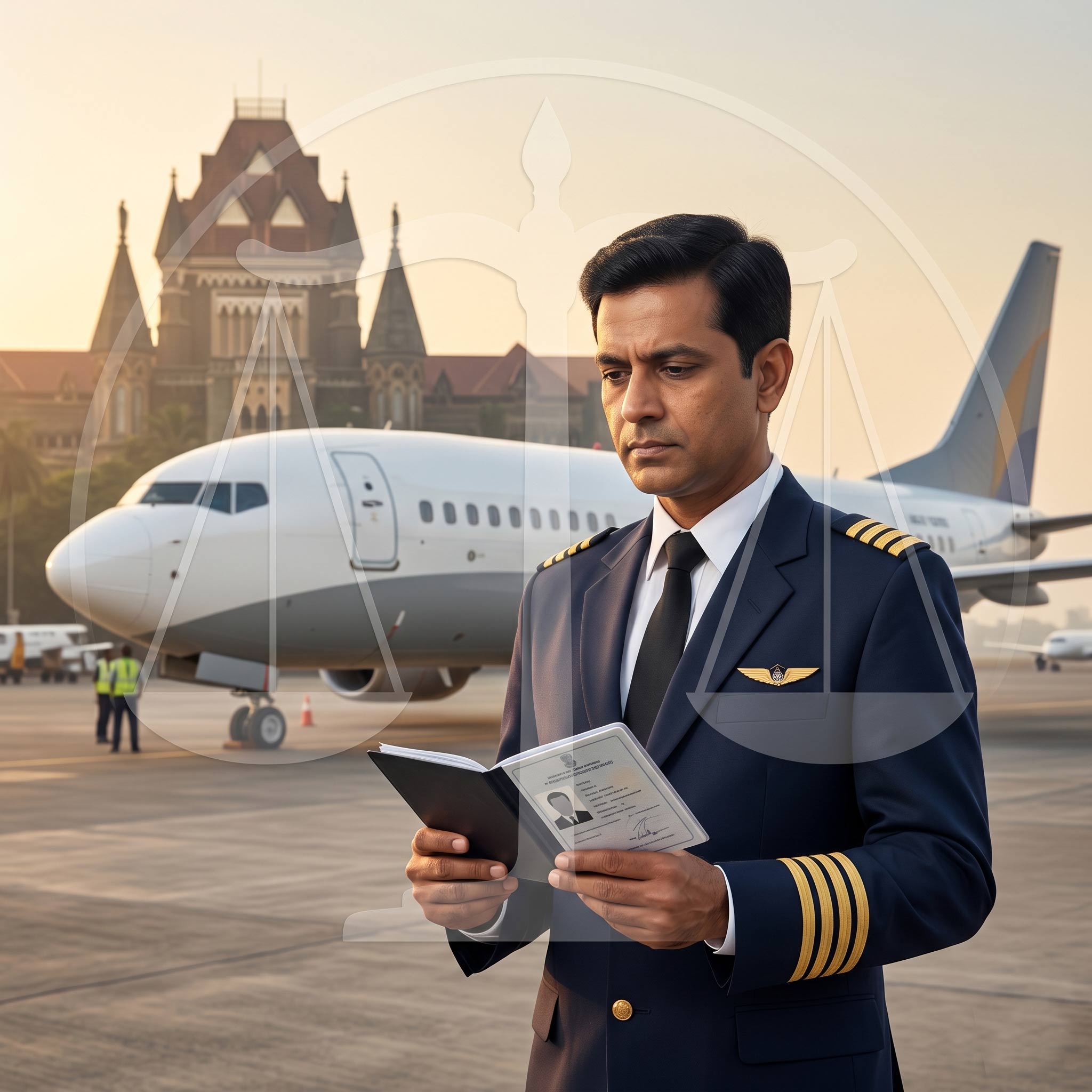
Bombay High Court Restores Air India Pilot’s Licence After 15 Years: DGCA Cannot Suspend a Pilot Licence Without a Hearing
The Bombay High Court has delivered a significant judgment that is likely to have far-reaching consequences for pilots, airlines, aviation professionals, aviation regulators, and administrative authorities across India. In Jeetendra Krishna Varma v. Director General of Civil Aviation (Writ Petition No. 3360 of 2011), the Court held that the Directorate General of Civil Aviation (DGCA) cannot suspend a pilot’s licence merely by invoking “public interest” without first complying with the mandatory requirements of law and the principles of natural justice. The Court ultimately quashed a licence suspension order that had remained in force for nearly fifteen years and restored the Airline Transport Pilot Licence (ATPL) of an Air India pilot.
This judgment is not merely about one pilot. It is an important precedent on DGCA licence suspension, aviation regulatory action, pilot licensing law in India, administrative fairness, natural justice, and judicial review of regulatory decisions.
Why This Judgment Matters to Every Pilot in India
A pilot’s licence is not merely a document. It represents years of training, examinations, flying experience, medical assessments, recurrent proficiency checks, and professional dedication.
For commercial pilots, airline pilots, flight instructors, and aviation professionals, a licence is their livelihood.
Suspension or cancellation of a licence can have devastating consequences including:
- Loss of employment;
- Loss of seniority;
- Loss of flight currency;
- Reputational damage;
- Loss of future career opportunities;
- Financial hardship; and
- Long-term professional consequences.
The Bombay High Court has now reaffirmed that before such drastic action is taken, the regulator must strictly follow the law.
Facts of the Case: Air India Pilot’s ATPL Suspended in 2011
The petitioner was a highly experienced Air India pilot who had obtained his Commercial Pilot Licence (CPL) in 1988 after undergoing flight training in the United States.
Over the next two decades, he flew thousands of hours, successfully completed repeated DGCA proficiency checks, and accumulated nearly 7,000 hours of flying experience. Based on his qualifications and experience, he became eligible for an Airline Transport Pilot Licence (ATPL), which is the highest category of pilot licence recognised under Indian aviation regulations. The DGCA granted him the ATPL in September 2010.
However, in March 2011, following a criminal investigation relating to alleged irregularities in aviation examination records, the DGCA suspended the pilot’s licence on the allegation that he had relied upon a forged marksheet while obtaining the ATPL.
The suspension order was issued immediately without:
- Any show-cause notice;
- Any personal hearing;
- Disclosure of evidence;
- Identification of the allegedly forged document;
- Recording of adequate reasons; or
- Specification of the period of suspension.
The pilot challenged the action before the Bombay High Court.
Can DGCA Suspend a Pilot Licence Without a Show Cause Notice?
The central legal question before the Court was straightforward:
Can the DGCA suspend a pilot’s licence without issuing a show-cause notice and without granting an opportunity of hearing?
The answer given by the Bombay High Court was an emphatic No.
The Court examined Rule 39A of the Aircraft Rules, 1937, which specifically governs disqualification from holding or obtaining aviation licences.
The Rule clearly requires the licensing authority to:
- Give the licence holder an opportunity of being heard;
- Consider the explanation;
- Arrive at a reasoned satisfaction;
- Record reasons in writing; and
- Specify the period of disqualification.
The Court held that these requirements are mandatory and not optional. Since none of these safeguards were followed, the suspension order was held to be illegal and unsustainable.
Rule 39A of the Aircraft Rules: The Most Important Protection Available to Pilots
One of the most important aspects of this judgment is the Court’s detailed interpretation of Rule 39A.
The Court clarified that whenever the DGCA proposes to suspend, cancel, revoke, or disqualify a person from holding a licence, it must first satisfy the requirements prescribed under Rule 39A.
The judgment makes it abundantly clear that:
A pilot must be informed of the allegations.
A pilot must be given a fair opportunity to respond.
The DGCA must disclose the material relied upon.
Reasons must be recorded in writing.
A speaking and reasoned order must be passed.
The period of suspension must be specified.
Failure to comply with these requirements renders the action vulnerable to judicial review.
For aviation lawyers, airline operators, pilot associations, and aviation compliance professionals, this aspect of the judgment will likely become a frequently cited precedent in future DGCA enforcement proceedings.
Public Interest Cannot Be Used to Bypass Due Process
A particularly significant finding of the Court relates to the DGCA’s reliance on “public interest.”
The regulator argued that the licence had been suspended in the interest of aviation safety and public interest.
While aviation safety undoubtedly remains paramount, the Court held that public interest cannot be used as a substitute for statutory compliance.
The DGCA attempted to rely upon Rule 19 of the Aircraft Rules.
The Court rejected the argument and held that Rule 19 did not permit the regulator to bypass the mandatory hearing requirements contained in Rule 39A. The Court further observed that the petitioner had not been convicted of any offence and therefore the reliance on Rule 19 was entirely misplaced.
This finding is particularly important because regulators across sectors often attempt to justify extraordinary actions by invoking public interest.
The judgment sends a clear message:
Public interest does not override the rule of law.
Regulatory authorities must act within the framework of the statute.
Natural Justice in Aviation Law: The Court Reaffirms Constitutional Principles
The judgment is also a powerful reaffirmation of the doctrine of natural justice.
Natural justice forms the backbone of administrative law in India.
The principle of Audi Alteram Partem—”hear the other side”—requires that no person should be condemned without being given an opportunity to defend himself.
The Supreme Court has repeatedly held that procedural fairness is an integral component of Article 14 and Article 21 of the Constitution of India.
The Bombay High Court relied upon well-established precedents including:
- Maneka Gandhi v. Union of India;
- A.K. Kraipak v. Union of India;
- Dharampal Satyapal Ltd. v. Deputy Commissioner of Central Excise; and
- State of U.P. v. Sudhir Kumar Singh.
The Court held that denial of a hearing in the present case had clearly caused prejudice because the pilot was never given an opportunity to explain his version before the drastic action of licence suspension was imposed.
This principle extends beyond aviation law and applies to all forms of administrative action involving licences, permits, registrations, approvals, certifications, and professional qualifications.
DGCA Failed to Follow Its Own Enforcement Policy
Another critical aspect highlighted by the Court was the DGCA’s failure to follow its own Enforcement Policy and Procedures Manual.
Clause 12.7 of the Manual specifically recognises that suspension of an aviation document is one of the most severe administrative sanctions available to the regulator.
The Manual requires:
- Issuance of a show-cause notice;
- Description of the alleged offence;
- Disclosure of particulars of the contravention;
- Opportunity to submit an explanation; and
- Consideration of the pilot’s defence before suspension.
The Court found that the DGCA completely ignored these procedural safeguards.
Although policy manuals may not always have statutory force, courts have consistently held that public authorities are expected to follow their own published procedures, particularly where they are designed to ensure fairness and transparency.
Serious Findings on Lack of Evidence
The judgment is equally noteworthy for its observations regarding the evidence relied upon by the DGCA.
The Court recorded that:
- The allegedly forged marksheet was not produced before the Court;
- No handwriting expert’s report was obtained;
- The petitioner disputed the handwriting appearing on the relevant entries;
- The burden of proof lay upon the DGCA; and
- Despite fifteen years having passed, no criminal charges had been framed against the petitioner.
These observations reinforce another fundamental legal principle:
Administrative action cannot be based merely on suspicion, assumptions, or allegations.
There must be evidence.
There must be procedural fairness.
There must be due process.
What This Judgment Means for Airline Pilots and Aviation Professionals
The practical implications of this decision are substantial.
The judgment confirms that:
Registration of an FIR does not automatically justify suspension of a pilot licence.
Criminal allegations do not dispense with procedural safeguards.
DGCA must issue a proper show-cause notice before taking action.
Affected pilots have a right to know the evidence against them.
The regulator must pass a reasoned order capable of judicial scrutiny.
Courts will intervene where administrative authorities violate natural justice.
For pilots facing DGCA investigations, enforcement proceedings, licence suspension proceedings, medical certification disputes, examination irregularity allegations, or licensing disputes, this judgment provides an important layer of legal protection.
Bombay High Court Restores ATPL and Grants Liberty for Fresh Proceedings
Having found that the suspension order was illegal, the Bombay High Court set aside the impugned order and restored the pilot’s Airline Transport Pilot Licence.
At the same time, the Court balanced the interests of aviation safety by granting liberty to the DGCA to initiate fresh proceedings in accordance with Rule 39A and pass a fresh order after granting a proper hearing.
This approach demonstrates judicial restraint and reinforces that the Court was not deciding the allegations themselves. Rather, it was ensuring that any action taken by the regulator complies with the law.
Conclusion: A Landmark Precedent in Indian Aviation Law
The decision in Jeetendra Krishna Varma v. DGCA is likely to become one of the leading judgments on pilot licence suspension and aviation regulatory enforcement in India.
The judgment reinforces several important legal principles:
- DGCA cannot suspend a pilot licence without a hearing.
- Rule 39A of the Aircraft Rules must be strictly followed.
- Public interest cannot override statutory safeguards.
- Natural justice applies to aviation licensing decisions.
- Regulatory authorities must provide reasons for their actions.
- Administrative decisions affecting livelihood are subject to judicial review.
Most importantly, the judgment reminds regulators that aviation safety and procedural fairness are not competing objectives. Effective regulation requires both.
The rule of law demands that even where allegations are serious, the affected individual must be heard before adverse action is taken.
That principle remains as relevant in aviation law as it is in every other branch of administrative law.
Frequently Asked Questions
Can DGCA suspend a pilot licence without issuing a show-cause notice?
No. The Bombay High Court held that DGCA must comply with Rule 39A of the Aircraft Rules and provide an opportunity of hearing before suspending a pilot licence.
What is Rule 39A of the Aircraft Rules, 1937?
Rule 39A governs disqualification from holding or obtaining aviation licences and requires procedural safeguards including notice, hearing, written reasons, and specification of the suspension period.
Can DGCA rely on public interest to bypass natural justice?
No. The Court held that public interest cannot be used to override mandatory statutory requirements and due process protections.
Does registration of an FIR automatically justify licence suspension?
No. The judgment clarifies that criminal allegations alone do not eliminate the requirement to follow due process and provide a hearing.
What remedies are available if a pilot faces an unlawful licence suspension?
A pilot may challenge the action through appropriate legal proceedings, including judicial review before constitutional courts where principles of natural justice have been violated.
Why is this judgment important for aviation professionals?
The decision strengthens procedural safeguards, protects livelihood rights, and establishes an important precedent for future DGCA enforcement actions.

Advocate Sarosh Damania is the founder of Sarosh Damania & Co., a premier law firm based in Mumbai, recognized for its exceptional legal services to corporations, individuals, and international clients worldwide. With a rich blend of experience and expertise, Adv. Damania and his team specialize in a wide array of legal disciplines, including Civil Law, Criminal Law, Aviation Law, Arbitration, Consumer Law, RERA, Company Law, Succession Law, Wills, Intellectual Property Law, Property Law, Housing Society Law, Debt Recovery, and Banking Law.

Airline Passenger Rights in India: Legal Remedies for Flight Delays, Cancellations, Denied Boarding & Baggage Loss
The aviation sector in India has witnessed exponential growth over the past decade. India today stands amongst the fastest-growing aviation markets globally, with millions of passengers travelling annually through domestic and international airlines including IndiGo, Air India, Air India Express, SpiceJet, Akasa Air, Alliance Air, Emirates, Etihad Airways, Lufthansa, British Airways, Turkish Airlines, Virgin Atlantic and numerous other carriers operating in India.
However, with the rapid expansion of the aviation industry, there has also been a corresponding rise in disputes between passengers and airlines relating to:
- Flight delays;
- Flight cancellations;
- Denied boarding;
- Overbooking;
- Baggage loss and delayed baggage;
- Visa and immigration-related boarding refusals;
- Deficiency in airline services;
- Arbitrary refund refusals;
- Passenger harassment and mental agony;
- Operational negligence by airlines;
- Misleading representations and unfair trade practices.
Passengers frequently suffer severe financial loss, mental trauma, inconvenience, reputational damage, disruption of holidays, missed business opportunities, and emotional distress on account of arbitrary and negligent acts committed by airlines.
Unfortunately, many passengers remain unaware that Indian law provides robust legal remedies against airlines and aviation service providers.
This article seeks to provide a detailed legal analysis of:
- Passenger rights in India;
- Airline liability under Indian law;
- DGCA regulations;
- Consumer Court remedies;
- Compensation claims;
- Legal proceedings against airlines;
- Defences commonly raised by airlines;
- Rights available to domestic and international passengers.
This article is intended to serve as a comprehensive legal guide for passengers, corporate travellers, NRIs, foreign nationals, and businesses dealing with airline disputes in India.
Prepared by:
Sarosh Damania & Co. – Advocates, Bombay High Court
LEGAL FRAMEWORK GOVERNING AIRLINE PASSENGER RIGHTS IN INDIA
Airline passenger rights in India are governed by a combination of statutory provisions, delegated legislation, international conventions, contractual principles, and judicial precedents.
The principal legal framework includes:
(A) Consumer Protection Act, 2019
Passengers travelling by air are “consumers” within the meaning of the Consumer Protection Act, 2019.
Any negligence, deficiency, unfair trade practice, arbitrary conduct, or failure in service by an airline may give rise to consumer proceedings before:
- District Consumer Disputes Redressal Commission;
- State Consumer Disputes Redressal Commission;
- National Consumer Disputes Redressal Commission (NCDRC).
Consumer Courts in India have repeatedly held airlines liable for:
- wrongful denial of boarding;
- baggage loss;
- arbitrary cancellation;
- delayed refunds;
- operational negligence;
- harassment caused to passengers.
(B) Directorate General of Civil Aviation (DGCA) Regulations
The Directorate General of Civil Aviation has framed Civil Aviation Requirements (CAR) governing:
- denied boarding compensation;
- passenger facilitation;
- cancellation handling;
- refund obligations;
- treatment of passengers during delays;
- airline accountability.
The DGCA regulations impose mandatory obligations upon airlines operating in India.
Failure to comply may expose airlines to:
- regulatory action;
- consumer litigation;
- compensation liability.
(C) Carriage by Air Act, 1972
The Carriage by Air Act incorporates international aviation conventions governing:
- airline liability;
- international carriage;
- baggage claims;
- passenger injury claims;
- delay-related damages.
(D) Montreal Convention, 1999
The Montreal Convention governs liability in international carriage and applies to many international flights involving India.
The Convention deals with:
- delayed baggage;
- damaged baggage;
- passenger injury;
- delay damages;
- compensation limitations.
However, airlines frequently attempt to misuse liability limitations under the Convention to defeat legitimate passenger claims.
Indian courts have repeatedly clarified that arbitrary conduct and deficiency in service may still attract compensation under Indian consumer jurisprudence.
AIRLINE LIABILITY FOR FLIGHT DELAYS IN INDIA
Flight delays constitute one of the most common grievances faced by passengers travelling through airlines such as:
- IndiGo
- Air India
- SpiceJet
- Akasa Air
- Air India Express
Passengers are frequently stranded at airports for several hours without:
- proper communication;
- refreshments;
- accommodation;
- alternate arrangements;
- transparency regarding reasons for delay.
OBLIGATIONS OF AIRLINES DURING FLIGHT DELAYS
Under DGCA regulations, airlines are obligated to provide facilities and assistance to passengers depending upon:
- duration of delay;
- distance of flight;
- cause of delay.
Such obligations may include:
- meals and refreshments;
- hotel accommodation;
- airport transfers;
- alternate flights;
- refund options;
- re-routing assistance.
Failure to provide such facilities may amount to deficiency in service.
WHEN ARE AIRLINES LIABLE FOR DELAYS?
Airlines may become liable where delays occur due to:
- technical defects;
- operational mismanagement;
- crew unavailability;
- scheduling failures;
- aircraft rotation issues;
- internal staffing problems;
- avoidable maintenance failures.
Airlines frequently attempt to avoid liability by citing:
- bad weather;
- force majeure;
- ATC restrictions;
- security reasons.
However, such defences are not absolute and must be substantiated by credible evidence.
Merely making vague assertions regarding “operational reasons” or “technical issues” cannot automatically absolve an airline of liability.
DENIED BOARDING AND OVERBOOKING – LEGAL POSITION IN INDIA
Overbooking is a widespread commercial practice adopted by airlines worldwide.
Airlines frequently sell more confirmed tickets than available seats anticipating passenger no-shows. However, when all passengers report for travel, airlines resort to involuntary denied boarding.
Such disputes commonly arise involving:
- IndiGo
- Air India
- Air India Express
- SpiceJet
RIGHTS OF PASSENGERS IN CASE OF DENIED BOARDING
Passengers wrongfully denied boarding may be entitled to:
- monetary compensation;
- full refund;
- alternate flights;
- hotel accommodation;
- reimbursement of consequential expenses.
Where passengers suffer substantial loss due to denied boarding, they may additionally claim:
- compensation for mental agony;
- loss of business opportunities;
- loss of vacation value;
- reputational harm;
- litigation costs.
VISA AND IMMIGRATION-RELATED DENIED BOARDING DISPUTES
One of the fastest-growing areas of aviation litigation concerns:
- transit visa disputes;
- immigration documentation disputes;
- wrongful refusal of boarding;
- airline misinterpretation of visa requirements.
Such disputes frequently arise during international travel involving airlines such as:
- Emirates
- Etihad Airways
- Lufthansa
- British Airways
- Turkish Airlines
Passengers are often denied boarding despite possessing:
- valid visas;
- onward tickets;
- transit permissions;
- supporting immigration documentation.
In numerous cases, airline staff incorrectly interpret immigration rules leading to unlawful denial of boarding.
Such conduct may expose airlines to substantial compensation claims.
FLIGHT CANCELLATIONS – PASSENGER RIGHTS UNDER INDIAN LAW
Passengers whose flights are cancelled may be entitled to:
- full refund;
- alternate travel;
- compensation;
- reimbursement of consequential losses.
Airlines are expected to provide timely intimation regarding cancellations.
Failure to properly notify passengers may constitute deficiency in service.
BAGGAGE LOSS, DELAYED BAGGAGE & DAMAGE CLAIMS
Baggage disputes remain amongst the most litigated aviation disputes globally.
Passengers commonly face:
- complete baggage loss;
- delayed baggage delivery;
- damaged luggage;
- theft of valuables;
- missing articles.
Such disputes frequently arise involving both domestic and international airlines operating in India.
IMPORTANT STEPS PASSENGERS MUST TAKE IMMEDIATELY
Passengers should immediately:
- File a Property Irregularity Report (PIR);
- Preserve baggage tags;
- Retain boarding passes;
- Preserve receipts of emergency purchases;
- Send written complaints to the airline;
- Preserve all communications.
Failure to properly document baggage disputes may weaken subsequent legal claims.
CAN AIRLINES LIMIT THEIR LIABILITY?
Airlines frequently rely upon:
- Conditions of Carriage;
- liability exclusion clauses;
- Montreal Convention limits.
However, courts and consumer forums examine:
- fairness;
- transparency;
- reasonableness;
- conduct of the airline.
Arbitrary, negligent, unfair, or oppressive conduct may still expose airlines to compensation liability despite contractual disclaimers.
CONSUMER COURT REMEDIES AGAINST AIRLINES
Passengers may initiate proceedings before:
- District Consumer Commission;
- State Consumer Commission;
- National Consumer Disputes Redressal Commission (NCDRC).
Consumer litigation against airlines has significantly increased in recent years.
Consumer Courts have repeatedly awarded compensation for:
- deficiency in service;
- harassment;
- arbitrary conduct;
- mental agony;
- operational negligence.
WHAT COMPENSATION CAN PASSENGERS CLAIM?
Passengers may claim:
- ticket costs;
- refund amounts;
- replacement flight expenses;
- hotel costs;
- transportation costs;
- medical expenses;
- business losses;
- compensation for mental agony;
- litigation costs;
- interest.
The quantum of compensation depends upon:
- facts of the case;
- documentary evidence;
- nature of negligence;
- conduct of airline;
- actual financial losses suffered.
COMMON DEFENCES RAISED BY AIRLINES
Airlines frequently attempt to avoid liability by alleging:
- bad weather;
- operational reasons;
- force majeure;
- airport restrictions;
- late reporting by passenger;
- visa/documentation deficiencies;
- technical issues.
However, courts carefully scrutinize whether such defences are genuine or merely an afterthought to evade liability.
EMERGING TRENDS IN AVIATION LITIGATION IN INDIA
The following trends are increasingly visible:
Increase in Passenger Awareness
Passengers are increasingly asserting their legal rights.
Rise in International Aviation Disputes
Cross-border aviation litigation is significantly increasing.
Higher Compensation Claims
Passengers are seeking compensation not only for financial loss but also for emotional distress and reputational harm.
Digital Evidence Becoming Critical
WhatsApp chats, emails, airport videos, screenshots, recordings, and social media evidence now play a significant role in aviation litigation.
Increased Consumer Court Intervention
Consumer forums are increasingly adopting a passenger-centric approach.
WHY PROFESSIONAL LEGAL REPRESENTATION IS IMPORTANT
Passengers frequently weaken otherwise strong cases by:
- accepting inadequate vouchers;
- signing waiver forms;
- failing to preserve evidence;
- making inconsistent statements;
- not understanding airline regulations.
Professional legal assistance helps:
- assess liability;
- quantify compensation;
- structure evidence;
- draft legal notices;
- initiate consumer proceedings;
- challenge airline defences effectively.
HOW Sarosh Damania & Co. ASSISTS CLIENTS
Sarosh Damania & Co. regularly advises and represents clients in matters involving:
- airline disputes;
- denied boarding claims;
- aviation consumer litigation;
- baggage loss claims;
- international travel disputes;
- DGCA complaints;
- compensation recovery proceedings;
- commercial aviation disputes.
The Firm represents clients before:
- Consumer Commissions;
- High Courts;
- regulatory authorities;
- arbitral forums.
CONCLUSION
The aviation industry cannot operate in a manner where passengers are expected to silently absorb:
- financial losses;
- humiliation;
- inconvenience;
- arbitrary treatment;
- operational failures.
Indian law recognizes passenger rights and provides strong legal remedies against airlines in cases involving negligence, deficiency in service, unfair trade practices, and arbitrary conduct.
Passengers must:
- understand their legal rights;
- preserve documentary evidence;
- act promptly;
- seek professional legal advice where necessary.
For legal assistance relating to airline disputes, aviation litigation, consumer claims, baggage disputes, denied boarding matters, compensation recovery, or passenger rights litigation, contact:
Sarosh Damania & Co. – Advocates, Bombay High Court
Practice Areas:
- Aviation Law
- Consumer Litigation
- Airline Passenger Rights
- International Travel Disputes
- Consumer Protection Litigation
- Commercial Litigation
Office:
Mumbai
Website:
Frequently Asked Questions (FAQs)
Can I claim compensation for flight delay in India?
Yes. Passengers may claim compensation if delays occur due to airline negligence or operational issues.
What are my rights if boarding is denied?
Passengers may be entitled to refunds, alternate flights, hotel accommodation, and compensation.
What should I do if baggage is lost?
Immediately file a PIR (Property Irregularity Report) and preserve all travel documents.
Can airlines refuse refunds?
Airlines must comply with DGCA refund obligations and consumer protection laws.
Can I file a consumer case against an airline?
Yes. Complaints may be filed before Consumer Commissions in India.
Advocate Sarosh Damania is the founder of Sarosh Damania & Co., a premier law firm based in Mumbai, recognized for its exceptional legal services to corporations, individuals, and international clients worldwide. With a rich blend of experience and expertise, Adv. Damania and his team specialize in a wide array of legal disciplines, including Civil Law, Criminal Law, Aviation Law, Arbitration, Consumer Law, RERA, Company Law, Succession Law, Wills, Intellectual Property Law, Property Law, Housing Society Law, Debt Recovery, and Banking Law.
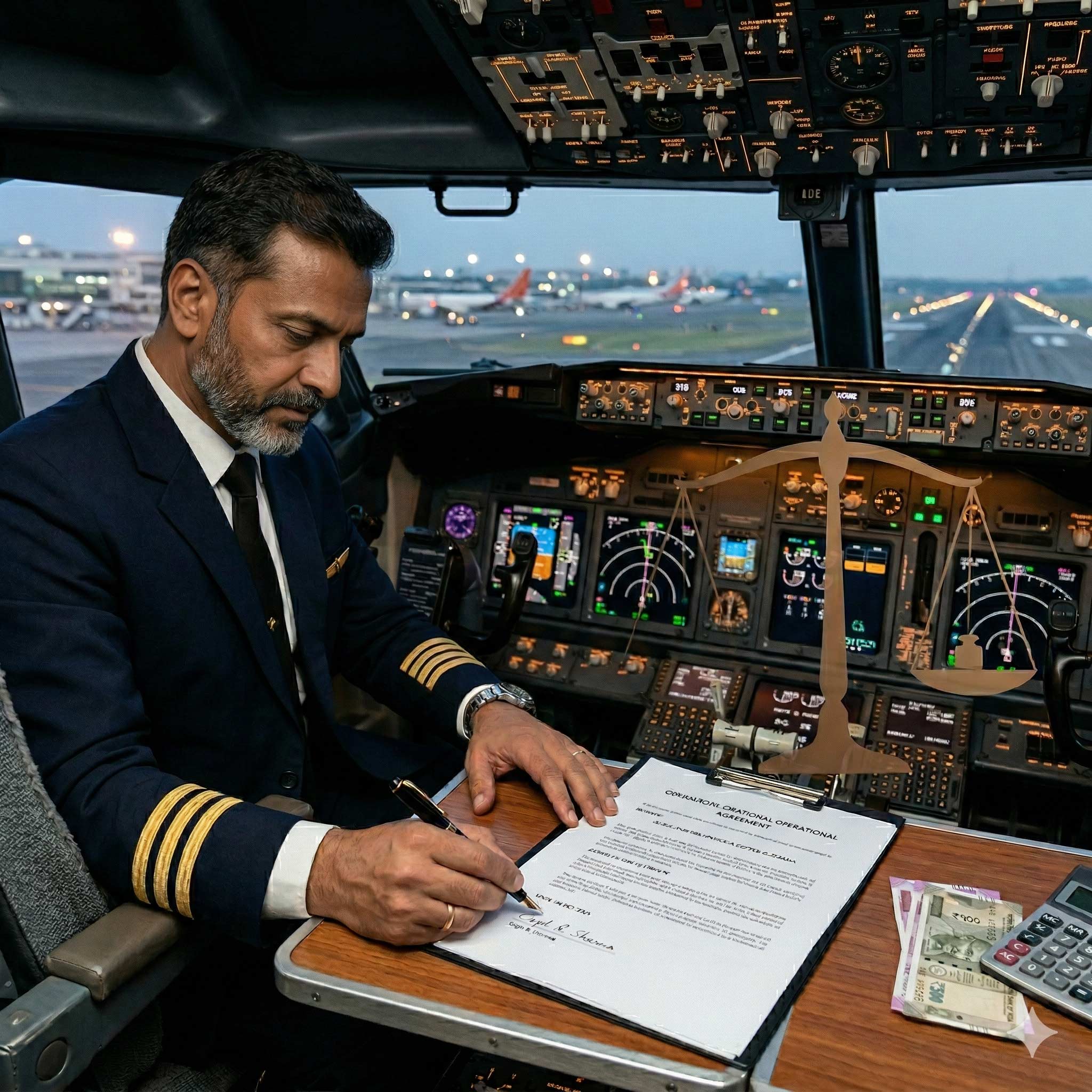
Pilot Training Bonds in India: Are Airline Employment Bonds Legal or a Form of Bonded Labour?
A Legal Guide for Cadet Pilots, Flying School Students, and Aviation Professionals ✈️⚖️
India’s aviation industry is expanding rapidly. Airlines are ordering hundreds of aircraft and the demand for trained pilots continues to rise. Every year, thousands of aspiring aviators enroll in flying schools and cadet programs hoping to build successful careers in commercial aviation.
However, many young pilots face a serious challenge at the very beginning of their careers restrictive employment bonds, training bonds, blank security cheques, and contractual clauses that limit their professional mobility.
In addition to these contractual obligations, many pilots also report administrative harassment when they attempt to resign, such as delays in Full & Final settlement (F&F), refusal to issue No Objection Certificates (NOC), and delays in providing experience letters or logbook verification.
From the perspective of pilots, these practices raise serious legal concerns and may in certain circumstances resemble modern bonded labour disguised as employment agreements.
This article examines the legality of aviation training bonds in India and highlights important issues affecting cadet pilots, CPL holders, and aviation professionals.
The True Cost of Becoming a Pilot in India
Before even joining an airline, aspiring pilots already bear enormous financial burdens.
Typical training costs include:
- Commercial Pilot Licence (CPL): Rs. 40 lakh – Rs. 70 lakh
- Type Rating Training: Rs. 25 lakh – Rs. 40 lakh
- Simulator and line training costs
By the time a pilot becomes employable, many have already invested Rs. 70 lakh to over Rs. 1.2 crore in training.
Despite this massive personal investment, airlines frequently require pilots to sign training bonds ranging from Rs. 50 lakh to Rs. 2 crore, obligating them to remain with the airline for several years or pay heavy penalties if they resign early.
What Is a Pilot Training Bond?
A training bond is a contractual agreement requiring a pilot to:
• Work with the airline for a minimum lock-in period (typically 3–6 years)
• Repay training costs if they resign before completing the bond period
• Pay substantial liquidated damages or penalties
Airlines argue that such bonds protect their investment in pilot training.
However, pilots often argue that these agreements can restrict their freedom to change employers and impose disproportionate financial risks.
The Controversial Practice of Blank Cheques
One of the most alarming practices reported by pilots is the demand for blank or undated security cheques as collateral for training bonds.
These cheques are often taken:
- Before training begins
- Without specifying the amount
- As security for future recovery of bond amounts
If a dispute arises, airlines may deposit the cheque and initiate proceedings under the Negotiable Instruments Act, 1881 in case of cheque dishonour.
This exposes pilots to criminal cheque bounce cases, creating immense pressure to remain in employment even if conditions become unfavourable.
Constitutional Protection Against Forced Labour
The Constitution of India protects individuals against forced labour.
Under Article 23 of the Constitution of India, forced labour and begar are prohibited.
India also abolished bonded labour through the Bonded Labour System (Abolition) Act, 1976.
If an employment contract effectively prevents an individual from leaving employment or imposes disproportionate financial penalties, courts may examine whether the arrangement resembles bonded labour or coercive employment practices.
Employment Bonds Under Indian Contract Law
Employment bonds are analysed under the Indian Contract Act, 1872.
Two important legal principles apply.
Restraint of Trade
Under Section 27, agreements restraining a person from exercising their profession may be void.
If a pilot is prevented from joining another airline, the clause may be legally unenforceable.
Excessive Penalty Clauses
Under Section 74, employers cannot impose arbitrary penalty amounts.
Employers must demonstrate actual loss or reasonable compensation.
If a bond demands Rs. 1 crore but the actual training cost is significantly lower, courts may reduce or invalidate the claim.
Airlines in India Where Training Bonds Have Been Reported
Training bonds have historically been associated with several airlines operating in India, including:
- Air India
- Air India Express
- IndiGo
- SpiceJet
- Akasa Air
- Vistara
- Alliance Air
While airlines justify bonds as protection of training investments, pilots often argue that the financial risk is disproportionately transferred to them.
Pilot Associations Raising Concerns
Several pilot unions have repeatedly raised concerns regarding restrictive employment bonds.
These include:
- Indian Commercial Pilots Association (ICPA)
- Airline Pilots Association of India (ALPA India)
- Federation of Indian Pilots (FIP)
These organisations have advocated for fair employment practices, transparent training cost recovery mechanisms, and better protection for pilots.
Major Flying Schools and Cadet Programs in India
Aspiring pilots typically begin their careers through flying schools and cadet programs.
Prominent aviation training institutions include:
- Indira Gandhi Rashtriya Uran Akademi
- Bombay Flying Club
- Chimes Aviation Academy
- CAE Oxford Aviation Academy
- NFTI Gondia
- Redbird Aviation
- Ambitions Flying Club
- IndiGo Cadet Pilot Programme
While these institutions provide excellent training, cadet pilots should carefully examine any contractual commitments linked to airline placements.
Harassment Faced by Young Pilots After Resignation
Another serious issue frequently reported by pilots is the administrative harassment faced after resignation.
Many pilots claim that airlines delay or refuse to provide essential documents required for future employment.
Common complaints include:
•Delayed Full & Final settlement (F&F) payments
•Refusal or delay in issuing No Objection Certificates (NOC)
•Delays in providing experience letters or relieving letters
•Failure to verify flying experience and logbook records
Without these documents, pilots may face difficulty applying to new airlines.
Such practices can effectively trap pilots in their existing employment, even after resignation.
Role of Aviation Regulator in India
India’s aviation regulator, Directorate General of Civil Aviation, is responsible for regulating aviation operations, licensing, and safety standards.
While DGCA oversees pilot licensing and training standards, employment contracts between airlines and pilots remain largely private agreements.
Many aviation professionals believe that DGCA should consider clear guidelines regulating training bonds, pilot employment mobility, and documentation procedures to protect young pilots entering the profession.
Why Many Pilots Consider Training Bonds Unfair
From the pilot’s perspective, several factors contribute to the controversy surrounding training bonds.
Unequal Bargaining Power
Young pilots often sign contracts under pressure due to limited job opportunities.
Excessive Financial Liability
Bond amounts sometimes exceed the actual training cost.
Restrictions on Career Mobility
Pilots may be prevented from joining other airlines offering better opportunities.
Administrative Pressure
Delays in F&F settlements, NOCs, and experience letters can discourage pilots from leaving.
Advice for Cadet Pilots Before Signing Any Bond
Before signing any aviation employment bond or cadet program contract, aspiring pilots should:
✔ Seek independent legal advice
✔ Verify the actual training cost claimed by the airline
✔ Avoid issuing blank or undated cheques
✔ Ensure the bond period is reasonable
✔ Carefully review exit clauses and penalty provisions
No employment agreement can override constitutional protections or labour rights.
Conclusion: Awareness Is Essential for Aspiring Pilots
Aviation careers should be built on skill, professionalism, and merit, not restrictive contracts that place disproportionate financial pressure on young pilots.
Understanding the legal implications of training bonds, seeking proper legal advice, and carefully reviewing employment agreements are essential steps for every aspiring pilot.
The dream of flying should not come at the cost of unfair contractual obligations that resemble bonded labour.
FAQs on Pilot Training Bonds in India
Are pilot training bonds legal in India?
They may be enforceable if they represent reasonable recovery of training costs, but excessive penalties can be challenged in court.
Can airlines demand blank cheques from pilots?
There is no statutory requirement for pilots to issue blank cheques, and doing so can create serious legal risks.
Can airlines delay F&F settlements or experience letters?
Unreasonable delays may be challenged legally, especially if they prevent a pilot from seeking new employment.
Can a bond prevent a pilot from joining another airline?
Such restrictions may be void as restraint of trade under Indian contract law.
Should cadet pilots sign employment bonds without legal review?
No. Aviation employment contracts should ideally be reviewed by a qualified lawyer before signing.
Advocate Sarosh Damania is the founder of Sarosh Damania & Co., a premier law firm based in Mumbai, recognized for its exceptional legal services to corporations, individuals, and international clients worldwide. With a rich blend of experience and expertise, Adv. Damania and his team specialize in a wide array of legal disciplines, including Civil Law, Criminal Law, Aviation Law, Arbitration, Consumer Law, RERA, Company Law, Succession Law, Wills, Intellectual Property Law, Property Law, Housing Society Law, Debt Recovery, and Banking Law.
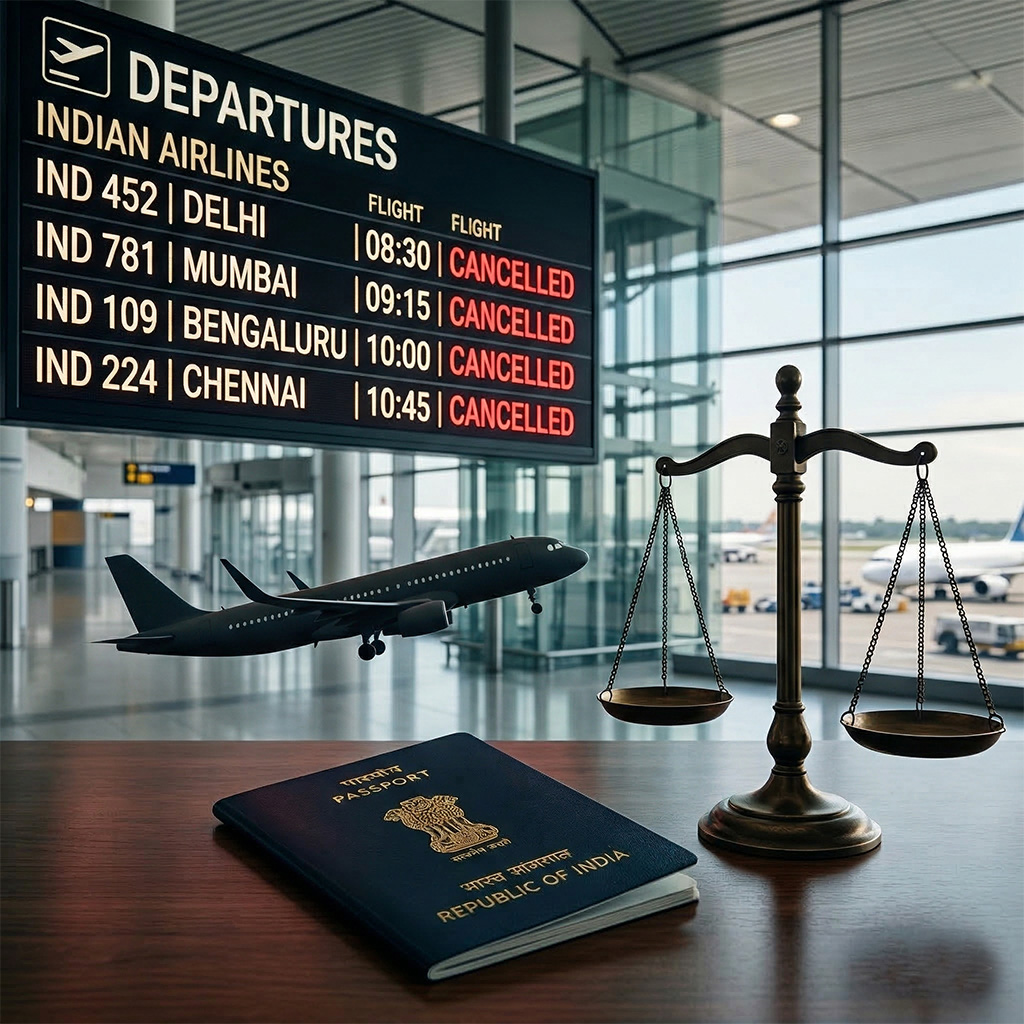
Middle East Airspace Crisis: Impact on Indian Airlines, Airports, and Passenger Rights Under Indian Aviation Law
The ongoing geopolitical tensions and security developments in the Middle East have triggered widespread disruption across global aviation networks. Airlines across the world have been forced to cancel flights, suspend operations, and reroute aircraft to avoid conflict zones and restricted airspace.
For India, the consequences are particularly significant. The Middle East functions as one of the most important aviation corridors connecting India with Europe, Africa, and North America. Any instability in this region directly affects Indian airlines, airports, and millions of Indian passengers.
Major aviation hubs such as Dubai International Airport, Hamad International Airport, and Abu Dhabi International Airport serve as critical transit points for Indian travellers. Disruptions at these hubs often cascade across airline networks worldwide.
This article examines the impact of the Middle East crisis on Indian aviation operations and the legal rights available to passengers under Indian law.
Strategic Importance of the Middle East for Indian Aviation
India maintains one of the busiest aviation corridors with the Gulf region. Every day, hundreds of flights operate between India and Middle Eastern cities such as Dubai, Doha, Abu Dhabi, Muscat, Riyadh, Jeddah, and Kuwait.
The majority of these flights originate from major Indian international airports including:
- Chhatrapati Shivaji Maharaj International Airport
- Indira Gandhi International Airport
- Kempegowda International Airport
- Rajiv Gandhi International Airport
- Cochin International Airport
- Calicut International Airport
These airports collectively handle millions of passengers travelling to the Gulf region each year. A large portion of these passengers are Indian professionals, migrant workers, tourists, and international transit travellers.
When geopolitical tensions result in airspace restrictions or safety advisories, airlines may be compelled to reroute flights or suspend operations entirely, resulting in large-scale passenger disruption.
Indian Airlines Most Affected by the Crisis
Indian airlines maintain extensive connectivity with the Middle East. Several carriers rely on Gulf routes as a core component of their international networks.
The Indian airlines most affected include:
- Air India
- Air India Express
- IndiGo
- Akasa Air
- SpiceJet
These carriers operate hundreds of weekly flights between India and Middle Eastern destinations. Operational disruptions may require airlines to:
- Cancel flights due to airspace closure
- Delay departures pending safety clearance
- Reroute aircraft around restricted regions
- Reduce frequency on certain routes
Such adjustments can significantly affect passenger schedules and airline operating costs.
International Airlines Carrying Indian Passengers
Indian travellers are also heavily reliant on international airlines operating through Middle Eastern hubs. Some of the largest carriers include:
- Qatar Airways
- Emirates
- Etihad Airways
- British Airways
- Lufthansa
- Singapore Airlines
- Cathay Pacific
These airlines provide key transit routes for passengers travelling from India to destinations across Europe, North America, and Australia.
Any disruption at Middle Eastern hubs may therefore affect passengers travelling far beyond the region itself.
Impact on Indian Passengers
The Middle East crisis has resulted in multiple operational challenges for Indian passengers.
Flight Cancellations and Delays
Passengers travelling to or via the Middle East may experience:
- Last-minute cancellations
- Extended airport delays
- Missed connecting flights
- Rescheduled itineraries
Since many international journeys involve connections at Gulf hubs, disruption at a single airport may affect an entire itinerary.
Increased Airfares
Flight rerouting and reduced aircraft availability increase operating costs for airlines. This may lead to higher ticket prices on certain routes until normal operations resume.
Impact on Migrant Workers
Millions of Indian nationals working in Gulf countries rely on aviation connectivity for employment travel and family visits. Disruptions may affect:
- Employment reporting schedules
- Emergency travel requirements
- Contractual travel obligations
This makes efficient airline communication and passenger assistance essential.
Passenger Rights Under Indian Aviation Regulations
Passengers departing from India are protected under the Civil Aviation Requirements (CAR) issued by the Directorate General of Civil Aviation.
These regulations specify airline obligations in cases of delays, cancellations, and denied boarding.
Compensation and Refund Rights
If a flight departing from India is cancelled, passengers are generally entitled to:
- Full refund of the ticket fare
- Alternative flight arrangements
- Assistance at the airport including meals and refreshments
- Hotel accommodation in cases of overnight delay
However, airlines may not be required to provide monetary compensation where the cancellation arises from extraordinary circumstances, including war, political instability, or airspace closure.
Nevertheless, the obligation to provide refunds or alternative travel arrangements continues to apply.
Assistance During Flight Delays
Under DGCA guidelines, airlines must provide passenger assistance based on the length of delay:
- 2–4 hour delay: meals or refreshments
- More than 6 hours: option of refund or alternative flight
- Overnight delays: hotel accommodation and airport transfers
These protections apply to flights originating from Indian airports regardless of the nationality of the airline.
Practical Guidance for Affected Passengers
Passengers whose flights are affected by Middle East airspace disruptions should consider the following steps:
- Monitor airline notifications and airport announcements regularly.
- Contact the airline immediately to explore rebooking or refund options.
- Retain all travel documentation, including boarding passes and email communications.
- Review travel insurance policies to determine coverage for delays and cancellations.
Prompt action can help passengers minimise inconvenience and recover eligible costs.
Conclusion
The Middle East crisis highlights how geopolitical events can rapidly disrupt global aviation networks. For India, where aviation connectivity with the Gulf region is critical, such developments have immediate implications for airlines, airports, and passengers.
While airlines continue to prioritise safety and operational continuity, passengers must remain informed about their rights under Indian aviation regulations.
Understanding the legal framework governing flight cancellations and delays can help travellers navigate disruptions and ensure that their rights are protected.
Frequently Asked Questions (FAQ) – Flight Cancellations Due to the Middle East Crisis
1. Why are flights being cancelled due to the Middle East crisis?
Flights are being cancelled primarily due to safety concerns arising from military activity, missile threats, and airspace restrictions across several countries in the Middle East. Airlines must comply with international aviation safety advisories and avoid conflict zones. As a result, many flights passing through the region are either cancelled or rerouted.
2. Which airlines operating in India are affected by the Middle East crisis?
Several Indian and international airlines operating flights from India to the Gulf region may be affected, including Air India, Air India Express, IndiGo, Akasa Air, SpiceJet, as well as international carriers such as Emirates, Qatar Airways, and Etihad Airways.
3. Which Indian airports are most affected by these disruptions?
Indian airports with the highest Gulf connectivity are likely to experience the most impact. These include Chhatrapati Shivaji Maharaj International Airport, Indira Gandhi International Airport, Kempegowda International Airport, Rajiv Gandhi International Airport, and Cochin International Airport.
4. Are passengers entitled to a refund if their flight is cancelled?
Yes. If an airline cancels a flight departing from India, passengers are entitled to either a full refund of the ticket price or an alternative flight arrangement. These rights are governed by regulations issued by the Directorate General of Civil Aviation.
5. Will passengers receive compensation if flights are cancelled due to war or geopolitical conflict?
In many cases, airlines may not be required to pay monetary compensation if the cancellation occurs due to extraordinary circumstances such as war, airspace closure, or political instability. However, airlines must still offer refunds or alternative travel arrangements.
6. What assistance must airlines provide during long delays?
Under DGCA regulations, airlines must provide assistance depending on the duration of the delay. This may include meals and refreshments, hotel accommodation for overnight delays, and transportation between the airport and the hotel.
7. Can passengers file a complaint if airlines do not provide refunds?
Yes. Passengers may file complaints through the AirSewa portal of the Directorate General of Civil Aviation. If the issue remains unresolved, passengers may approach consumer courts under the Consumer Protection Act.
8. Can passengers sue foreign airlines in India?
Yes. If a flight originates from India, passengers may file a case before Indian consumer courts even against foreign airlines for deficiency in service.
9. What should passengers do if they miss a connecting flight due to a cancellation?
Passengers should immediately contact the airline to request rebooking on the next available flight. If the airline fails to provide reasonable assistance, passengers may be entitled to compensation depending on the circumstances.
10. How can passengers protect themselves from travel disruptions?
Passengers should monitor airline notifications, keep copies of their booking documents, check travel insurance coverage, and stay informed about developments affecting international air travel routes.
Advocate Sarosh Damania is the founder of Sarosh Damania & Co., a premier law firm based in Mumbai, recognized for its exceptional legal services to corporations, individuals, and international clients worldwide. With a rich blend of experience and expertise, Adv. Damania and his team specialize in a wide array of legal disciplines, including Civil Law, Criminal Law, Aviation Law, Arbitration, Consumer Law, RERA, Company Law, Succession Law, Wills, Intellectual Property Law, Property Law, Housing Society Law, Debt Recovery, and Banking Law.

Aviation Disputes in India: Know Your Passenger Rights and Legal Remedies
Airline delays, cancellations, lost baggage, and denied boarding — aviation disputes are increasingly common as
air travel grows in India. Know your rights and legal remedies.
Common Aviation Disputes in India
Flight Delays and Cancellations
Under DGCA’s Civil Aviation Requirements (CAR), passengers are entitled to compensation for delays beyond specified
thresholds. Airlines like
IndiGo must provide meals, accommodation, and compensation based on delay duration.
Baggage Issues
- Delayed baggage: Airline must compensate for essential purchases
- Lost baggage: Liability under Montreal Convention (approximately $1,700 for international flights)
- Damaged baggage: Immediate reporting required
Denied Boarding
If denied boarding due to overbooking (not passenger’s fault), you’re entitled to:
- Alternate flight or full refund
- Compensation (up to Rs 20,000 for domestic flights)
- Meals and accommodation if needed
Legal Framework for Passenger Rights
Key regulations governing passenger rights in India:
- DGCA CARs: Civil Aviation Requirements for passenger facilitation
- Montreal Convention: International liability framework
- Consumer Protection Act: Consumer forum remedies
- Carriage by Air Act: Domestic implementation of international conventions
How to Resolve Aviation Disputes
Step 1: Airline Complaint
First, file a formal written complaint with the airline within 7 days of the incident.
Step 2: DGCA Air Sewa
If unsatisfied, escalate to DGCA’s Air Sewa portal (airsewa.gov.in) or helpline 1800-114-400.
Step 3: Consumer Forum
File a complaint at District/State/National Consumer Disputes Redressal Commission based on claim value.
Step 4: Civil Court
For complex matters or higher damages, civil litigation may be necessary.
Aviation Dispute Legal Help
Sarosh Damania & Co. specializes in aviation law and passenger
rights:
- Airline compensation claims
- Consumer forum representation
- Complex aviation litigation
- International claim assistance
Frequently Asked Questions
How much compensation can I claim for flight delay?
For domestic flights delayed 3+ hours, airlines must provide Rs 5,000-10,000 compensation plus meals. For 6+ hours,
add accommodation. International flights follow Montreal Convention limits.
Can I sue an airline in India?
Yes, you can approach Consumer Forums (up to Rs 2 crore) or civil courts for higher claims. Class action suits are
also possible for widespread issues.


How to Become an Aviation Lawyer in India: Complete Career Guide 2026
Complete guide on becoming an aviation lawyer in India. Learn about education, skills, career paths, and salary expectations.
Read More
Why This Is the Right Time to Start an Airline in India (2025-26)
Complete guide on starting an airline in India in 2025-26. Learn about DGCA AOC, government NOC, regulatory requirements and why this is the right time. Expert aviation law advice from Sarosh Damania and Co.
Read More
Aviation Law in India: Complete Guide 2025
As India’s aviation sector soars to new heights in 2025, understanding aviation law in India is crucial for airlines, passengers, and businesses alike. With the industry projected to become the world’s third-largest by 2030, navigating complex regulations requires expert guidance. At Sarosh Damania & Co., we specialize as a leading aviation lawyer in India, offering comprehensive legal services to ensure compliance and resolve disputes efficiently.
This complete guide to aviation law in India covers key regulations, recent updates, the role of aviation lawyers, and future trends. Whether you’re an airline executive, a passenger seeking rights, or a business in aircraft leasing, this resource draws on our 20+ years of experience to provide actionable insights.
History and Evolution of Aviation Law in India
Aviation law in India has evolved significantly since the early 20th century. The foundation was laid with the Aircraft Act of 1934, which remains a cornerstone for regulating aircraft operations, registration, and safety. Post-independence, the Air Corporations Act of 1953 nationalized air transport, leading to the formation of Air India and Indian Airlines.
The liberalization in the 1990s marked a turning point, with the Open Skies Policy encouraging private players like Jet Airways and IndiGo. Today, aviation law in India is governed by a mix of domestic statutes and international conventions, including the Chicago Convention of 1944, to which India is a signatory.
In 2025, post-COVID recovery has accelerated reforms, with the government focusing on sustainable aviation and digital integration. As an experienced aviation lawyer in India, we’ve witnessed how these changes impact everything from drone regulations to airport privatization.
Key Regulations and Acts Governing Aviation Law in India
Understanding the legal framework is essential for compliance. Here’s a breakdown of the primary laws:
1. The Aircraft Act, 1934, and Aircraft Rules, 1937
These form the bedrock of aviation law in India, covering aircraft certification, maintenance, and operations. Amendments in 2025 emphasize cybersecurity in aviation, addressing threats to air traffic control systems.
2. The Directorate General of Civil Aviation (DGCA) Regulations
The DGCA, under the Ministry of Civil Aviation, enforces safety standards. Key 2025 updates include stricter rules on carbon emissions under the Carbon Offsetting and Reduction Scheme for International Aviation (CORSIA). Businesses must comply to avoid penalties—our firm, as a top aviation lawyer in India, assists with audits and appeals.
3. The Airports Authority of India Act, 1994
This regulates airport development and management. With initiatives like UDAN (Ude Desh ka Aam Naagrik) expanding regional connectivity, legal challenges arise in land acquisition and PPP models.
4. Passenger Rights and Consumer Protection
The Consumer Protection Act, 2019, intersects with aviation law in India for issues like flight delays and baggage loss. The DGCA’s Passenger Charter mandates compensation—up to INR 20,000 for delays over 24 hours. Passengers often seek an aviation lawyer in India for claims against airlines.
5. International Treaties and Bilateral Agreements
India adheres to the Warsaw Convention (1929) and Montreal Convention (1999) for liability in international carriage. In 2025, new bilateral air service agreements with countries like the UAE enhance routes but require careful legal navigation.
Other notable areas include drone laws (Drone Rules, 2021, updated for urban air mobility) and aircraft financing under the Cape Town Convention.
The Role of an Aviation Lawyer in India
In a sector fraught with regulatory hurdles, an aviation lawyer in India plays a pivotal role. At Sarosh Damania & Co., we provide expertise in:
- Contract Drafting and Negotiation: For aircraft leasing, MRO (Maintenance, Repair, Overhaul) agreements, and airline mergers.
- Dispute Resolution: Handling litigation at the Bombay High Court or arbitration for accidents, insurance claims, and labor disputes.
- Regulatory Compliance: Advising on DGCA approvals, environmental norms, and cybersecurity protocols.
- Risk Management: For emerging risks like AI in flight operations and sustainable fuel mandates.
Choosing the right aviation lawyer in India can mitigate risks—our Mumbai-based firm has successfully represented clients in high-profile cases, establishing us as thought leaders in aviation law in India.
Challenges and Future Trends in Aviation Law for 2025
The aviation industry faces ongoing challenges, including environmental sustainability and technological integration.
Emerging Challenges
- Sustainability and Net-Zero Goals: India’s commitment to net-zero by 2070 pushes for Sustainable Aviation Fuel (SAF). Non-compliance could lead to fines—legal expertise is vital.
- Cybersecurity Threats: With digital cockpits, data breaches are rising. Aviation law in India now incorporates IT Act provisions.
- Passenger Privacy: GDPR-like rules under the Digital Personal Data Protection Act, 2023, affect airline data handling.
2025 Trends
- Urban Air Mobility (UAM): E-VTOL (electric vertical takeoff and landing) vehicles will revolutionize transport, requiring new regulations.
- AI and Automation: Predictive maintenance and autonomous flights—lawyers must address liability in AI failures.
- Post-Pandemic Reforms: Enhanced health protocols and flexible ticketing laws.
As a forward-thinking aviation lawyer in India, we anticipate these shifts and help clients stay ahead.
Conclusion
Navigating aviation law in India in 2025 demands expertise amid rapid growth and regulatory changes. Sarosh Damania & Co. stands as your trusted aviation lawyer in India, offering tailored solutions to protect your interests. Contact us today at +91 98338 44020 or via our contact page for a consultation.
This guide is for informational purposes and not legal advice. For personalized support, consult a qualified aviation lawyer.
FAQ: Common Questions on Aviation Law in India
What is the role of DGCA in aviation law in India?
The DGCA regulates safety, licensing, and operations, ensuring adherence to international standards.
How can an aviation lawyer in India help with flight delay claims?
We assist in filing complaints and seeking compensation under the Passenger Charter and Consumer Protection Act.
What are the key updates to aviation law in India for 2025?
Focus on sustainability, cybersecurity, and UAM, with amendments to the Aircraft Rules.
Advocate Sarosh Damania is the founder of Sarosh Damania & Co., a premier law firm based in Mumbai, recognized for its exceptional legal services to corporations, individuals, and international clients worldwide. With a rich blend of experience and expertise, Adv. Damania and his team specialize in a wide array of legal disciplines, including Civil Law, Criminal Law, Aviation Law, Arbitration, Consumer Law, RERA, Company Law, Succession Law, Wills, Intellectual Property Law, Property Law, Housing Society Law, Debt Recovery, and Banking Law.

Aviation Law in India
Aviation law in India has evolved significantly over the decades, adapting to the dynamic needs of the aviation industry and addressing both domestic and international challenges. From the early days of civil aviation in the country to the present, where India is among the fastest-growing aviation markets globally, the legal framework governing this sector has expanded and diversified.
In India, aviation law is shaped by a combination of national statutes, regulations, and international agreements. The primary objective of these laws is to ensure the safety, security, and efficiency of air travel, while also fostering growth and innovation in the industry. This blog aims to provide a comprehensive overview of aviation law in India, covering the historical evolution, key regulatory bodies, and the latest legal developments.
International Aviation Law: Its Influence on Indian Aviation
The aviation industry is inherently international, and India is no exception. International aviation law, particularly the regulations set forth by the International Civil Aviation Organization (ICAO), plays a crucial role in shaping Indian aviation law. India, as a member state of the ICAO, adheres to its standards and recommended practices.
Bilateral and multilateral air service agreements have also been pivotal in expanding India’s international air connectivity. The Open Skies Policy, which allows greater access to international carriers, has significantly impacted Indian aviation, driving competition and enhancing service quality.
Civil Aviation Regulations (CAR) in India
The backbone of aviation law in India is the Civil Aviation Regulations (CAR), which are issued by the Directorate General of Civil Aviation (DGCA). These regulations cover a wide range of aspects, from safety standards and security protocols to licensing requirements and environmental considerations.
Recent updates to the CARs, particularly in 2023-2024, have focused on enhancing passenger safety, improving operational efficiency, and integrating advanced technologies like drones into the regulatory framework. These changes reflect the evolving needs of the industry and the government’s commitment to maintaining high standards of aviation safety and security.
The Aircraft Act, 1934 and The Aircraft Rules, 1937
The Aircraft Act, 1934, and the Aircraft Rules, 1937, form the cornerstone of Indian aviation law. These statutes govern the licensing, registration, and airworthiness certification of aircraft in India. They also lay down the legal framework for investigating aviation accidents and enforcing safety standards.
Recent amendments to these laws have introduced stricter penalties for non-compliance, enhanced regulatory oversight, and streamlined procedures for aircraft leasing and financing. These changes are aimed at aligning Indian aviation law with international best practices and promoting growth in the sector.
The Airports Economic Regulatory Authority of India (AERA) Act, 2008
The Airports Economic Regulatory Authority of India (AERA) Act, 2008, was enacted to regulate the tariffs and other charges levied by airports in India. AERA plays a critical role in ensuring that airport operators maintain a balance between profitability and affordability while providing quality services to passengers.
In recent years, AERA has been instrumental in driving efficiency and transparency in airport operations, particularly through the introduction of performance-linked tariffs and the promotion of public-private partnerships in airport development.
The DGCA and Its Role in Indian Aviation
The Directorate General of Civil Aviation (DGCA) is the principal regulatory body for civil aviation in India. It oversees the enforcement of aviation laws, the licensing of pilots and engineers, the certification of aircraft, and the approval of air routes.
The DGCA has been proactive in responding to the challenges posed by the rapid growth of the aviation industry in India. Recent directives have focused on improving safety oversight, enhancing training standards, and addressing emerging issues such as the regulation of drones and the integration of new technologies in aviation.
The Role of the Ministry of Civil Aviation (MoCA)
The Ministry of Civil Aviation (MoCA) is responsible for the formulation and implementation of national aviation policies in India. It plays a key role in coordinating the activities of various stakeholders, including the DGCA, AERA, and airport operators.
MoCA’s flagship initiatives, such as the UDAN (Ude Desh Ka Aam Nagrik) scheme and the National Civil Aviation Policy (NCAP) 2016, have been pivotal in expanding air connectivity to underserved regions, promoting regional aviation, and boosting economic growth. Recent updates to these policies reflect the government’s focus on sustainability, technology adoption, and infrastructure development in the aviation sector.
Airlines and Passenger Rights in India
Passenger rights are a critical aspect of aviation law in India. The DGCA has issued several regulations aimed at protecting passengers from unfair practices by airlines, such as denial of boarding, flight delays, and cancellations. These regulations also address issues related to baggage handling, compensation, and refund policies.
Recent court rulings have further strengthened passenger rights, setting precedents for compensation and holding airlines accountable for service failures. As the aviation industry continues to grow, ensuring that passengers are treated fairly and transparently remains a top priority for regulators and policymakers.
Environmental Regulations in Indian Aviation
The environmental impact of aviation is a growing concern, and Indian aviation law has increasingly focused on addressing these challenges. The regulatory framework includes provisions for reducing carbon emissions, managing noise pollution, and promoting the use of sustainable aviation fuels.
The DGCA plays a vital role in monitoring environmental compliance and ensuring that airlines and airports adopt best practices in environmental management. Recent initiatives have also emphasized the importance of green airports and the need for the aviation industry to contribute to India’s climate goals.
Aviation Safety and Security Laws
Safety and security are paramount in aviation law in India. The regulatory framework encompasses a wide range of measures aimed at ensuring the safety of passengers, crew, and aircraft. This includes stringent safety standards, regular inspections, and mandatory reporting of safety incidents.
The Bureau of Civil Aviation Security (BCAS) is responsible for implementing security protocols at airports and onboard flights. Recent incidents have led to policy changes, such as enhanced screening procedures and the deployment of advanced security technologies.
Liability and Insurance in Aviation
Liability and insurance are critical components of aviation law in India. Airlines and aircraft operators are legally liable for any harm caused to passengers, crew, or third parties during the course of air travel. Aviation insurance provides coverage for these liabilities, as well as for damage to aircraft and cargo.
Recent cases in Indian courts have highlighted the complexities of aviation liability and insurance, particularly in the context of accidents and incidents involving multiple parties. These cases have also underscored the importance of having comprehensive insurance coverage to mitigate financial risks.
Aircraft Leasing and Financing in India
Aircraft leasing and financing are integral to the growth of the aviation industry in India. The legal framework governing these activities includes provisions for the registration and deregistration of aircraft, tax incentives for leasing companies, and protections for lessors and financiers.
The Cape Town Convention and Aircraft Protocol, to which India is a signatory, has further strengthened the legal framework for aircraft leasing and financing. These international agreements provide a uniform set of rules for the enforcement of rights in aircraft assets, thereby reducing risks for investors and facilitating access to capital.
The Role of Competition Law in Aviation
Competition law plays a crucial role in maintaining fair competition in the aviation sector. The Competition Commission of India (CCI) is responsible for investigating anti-competitive practices, such as price-fixing, cartelization, and abuse of dominance by airlines and other aviation stakeholders.
Key cases involving airlines and airport operators have highlighted the importance of competition law in preventing monopolistic behavior and ensuring that consumers benefit from competitive pricing and improved service quality. Recent developments in competition law have also addressed issues related to mergers and acquisitions in the aviation sector.
Labour Laws and Employment Issues in Aviation
The aviation industry is a significant employer in India, and labour laws play a vital role in regulating employment relationships in this sector. The legal framework includes provisions for working hours, wages, benefits, and safety standards for aviation workers.
Recent labour disputes in the aviation industry have brought attention to issues such as job security, contractual employment, and the rights of outsourced workers. The resolution of these disputes has often involved the application of both general labour laws and industry-specific regulations.
Dispute Resolution Mechanisms in Aviation
Dispute resolution is an essential aspect of aviation law in India. Disputes in the aviation sector can arise from a variety of issues, including contractual disagreements, regulatory violations, and passenger grievances. The legal framework provides for arbitration, mediation, and litigation as mechanisms for resolving these disputes.
Indian courts have played a significant role in adjudicating aviation-related disputes, setting important precedents that have shaped the development of aviation law. Recent cases have highlighted the need for efficient and effective dispute resolution mechanisms that balance the interests of all stakeholders.
Aviation Infrastructure and Airport Development Laws
The development of aviation infrastructure, particularly airports, is governed by a comprehensive legal framework that includes regulations on land acquisition, construction, and operation of airports. Public-private partnership (PPP) models have been widely used in airport development, allowing for the involvement of private capital in the expansion of aviation infrastructure.
Recent projects, such as the development of greenfield airports and the modernization of existing airports, have faced legal challenges related to land acquisition, environmental clearances, and regulatory approvals. These challenges have underscored the need for clear and consistent legal guidelines to support the growth of aviation infrastructure.
The Role of Technology in Aviation: Legal Implications
Technology is transforming the aviation industry, and Indian aviation law is adapting to address the legal implications of these advancements. Emerging technologies, such as drones, artificial intelligence, and blockchain, present both opportunities and challenges for the industry.
The regulatory framework for drones in India, for example, includes provisions for registration, licensing, and operational restrictions. As technology continues to evolve, the legal framework will need to keep pace with these changes to ensure that innovation is supported while risks are managed effectively.
Cybersecurity in Aviation
Cybersecurity is a growing concern in the aviation sector, with increasing reliance on digital systems for communication, navigation, and operational control. The legal framework for aviation cybersecurity includes regulations on data protection, incident reporting, and the implementation of cybersecurity measures by airlines and airports.
Recent cyber attacks on aviation infrastructure have highlighted the vulnerabilities in the sector and the need for robust legal protections. The government’s initiatives to enhance cybersecurity in aviation are aimed at safeguarding critical infrastructure and ensuring the safety of air travel.
Aviation Law and Consumer Protection
Consumer protection is a key aspect of aviation law in India, with the Consumer Protection Act, 2019, providing a legal framework for addressing grievances related to air travel. Passengers have the right to seek compensation for issues such as flight delays, cancellations, and lost baggage.
Recent cases in consumer courts have set important precedents for the enforcement of consumer rights in the aviation sector. These cases have also emphasized the need for airlines to adopt fair and transparent practices in their dealings with passengers.
Future of Aviation Law in India
The future of aviation law in India is likely to be shaped by several factors, including the growth of the industry, technological advancements, and evolving consumer expectations. Upcoming legal reforms are expected to focus on areas such as sustainability, digital transformation, and the integration of new technologies.
Global trends, such as the push for carbon-neutral aviation and the increasing use of unmanned aerial vehicles, will also have a significant impact on Indian aviation law. As the industry continues to grow, the legal framework will need to evolve to address new challenges and opportunities.
Conclusion
Aviation law in India is a dynamic and evolving field, reflecting the rapid growth of the industry and the complex challenges it faces. From the regulation of safety and security to the protection of passenger rights and the development of aviation infrastructure, the legal framework plays a critical role in shaping the future of air travel in India.
As we look ahead, it is clear that aviation law will continue to be an essential tool for ensuring that the industry remains safe, efficient, and responsive to the needs of all stakeholders. Whether through the adoption of new technologies, the enforcement of environmental standards, or the protection of consumer rights, the future of aviation law in India promises to be both exciting and challenging.
Talk to Adv. Sarosh Damania a leading aviation lawyer in Mumbai, India.
References
- The Aircraft Act, 1934
- The Airports Economic Regulatory Authority of India (AERA) Act, 2008
- Civil Aviation Requirements (CAR) issued by DGCA
- Consumer Protection Act, 2019
- Recent judgments and regulatory updates from Indian courts and authorities
Advocate Sarosh Damania is the founder of Sarosh Damania & Co., a premier law firm based in Mumbai, recognized for its exceptional legal services to corporations, individuals, and international clients worldwide. With a rich blend of experience and expertise, Adv. Damania and his team specialize in a wide array of legal disciplines, including Civil Law, Criminal Law, Aviation Law, Arbitration, Consumer Law, RERA, Company Law, Succession Law, Wills, Intellectual Property Law, Property Law, Housing Society Law, Debt Recovery, and Banking Law.