

Instagram Influencer Agreements in India: Legal Clauses Every Creator, Influencer & Brand Must Know
Detailed Legal Analysis of Influencer Contracts, Brand Collaborations, Copyright Rights, Paid Promotions, Exclusivity Clauses & Social Media Disputes in India
The digital creator economy in India has, over the past decade, transformed into one of the fastest-growing commercial industries in the country.
Social media influencers, digital creators, lifestyle personalities, fashion bloggers, fitness influencers, comedians, gamers, beauty creators, travel vloggers, finance creators, and celebrity content creators today command enormous commercial influence across digital platforms including:
- YouTube
- Snapchat
- TikTok
- X
Influencers today are no longer merely social media personalities. They constitute:
- commercial entities;
- intellectual property owners;
- marketing channels;
- digital entrepreneurs;
- independent businesses.
Prominent Indian influencers and creators including:
- Kusha Kapila
- Komal Pandey
- Masoom Minawala
- Dolly Singh
- Prajakta Koli
- Bhuvan Bam
- Ashish Chanchlani
- CarryMinati
- Ranveer Allahbadia
- Ankush Bahuguna
- Mumbiker Nikhil
- Santoshi Shetty
regularly collaborate with major national and international brands including:
- Nykaa
- Myntra
- Amazon
- Flipkart
- Mamaearth
- Sugar Cosmetics
- Boat
- Samsung
- OnePlus
- Nike
- Adidas
- Zomato
- Swiggy
- L’Oréal
- H&M
- Zara
- Ajio
- Tata Cliq
- Airbnb
for:
- paid promotions;
- celebrity endorsements;
- digital campaigns;
- product launches;
- affiliate marketing;
- brand integrations;
- sponsored reels;
- event appearances;
- platform partnerships.
However, despite the enormous financial scale of influencer marketing in India, a substantial number of creators and influencers continue to operate:
- without legally vetted agreements;
- based solely upon WhatsApp communications;
- through oral assurances;
- without understanding copyright ownership;
- without proper payment protection mechanisms;
- without adequate legal safeguards.
This frequently results in:
- non-payment disputes;
- copyright violations;
- unauthorized commercial exploitation of influencer content;
- reputational misuse;
- exclusivity disputes;
- breach of collaboration terms;
- tax disputes;
- social media litigation;
- injunction proceedings;
- legal notices by brands or agencies.
Accordingly:
a properly drafted Influencer Agreement has become legally indispensable in modern digital commerce.
This article seeks to provide a detailed legal analysis concerning:
- influencer agreements in India;
- creator contracts;
- Instagram collaboration agreements;
- copyright ownership;
- exclusivity clauses;
- payment protection;
- social media advertising compliance;
- legal liabilities of influencers;
- dispute resolution mechanisms.
Prepared by:
Sarosh Damania & Co. – Advocates, Bombay High Court
LEGAL NATURE OF AN INSTAGRAM INFLUENCER AGREEMENT
An Instagram Influencer Agreement constitutes a legally enforceable commercial contract executed between:
- an influencer / creator / celebrity;
and - a brand / agency / advertiser / production company / marketing entity.
Such agreements regulate:
- commercial deliverables;
- content obligations;
- ownership rights;
- advertising obligations;
- exclusivity conditions;
- payment mechanisms;
- intellectual property rights;
- confidentiality obligations;
- termination rights.
In the absence of a properly drafted agreement, parties frequently encounter ambiguity and litigation.
WHY INFLUENCERS REQUIRE LEGALLY DRAFTED CONTRACTS
A common misconception amongst creators is that:
- Instagram DMs;
- WhatsApp chats;
- emails;
- informal oral discussions;
are sufficient to govern commercial collaborations.
Such assumptions frequently result in:
- delayed payments;
- outright payment defaults;
- unauthorized usage of reels and videos;
- copyright disputes;
- indefinite exploitation of influencer content;
- unauthorized paid advertisements using creator identity;
- reputational misuse.
Similarly, brands require legal safeguards against:
- non-performance;
- reputational controversies;
- misleading endorsements;
- breach of exclusivity obligations.
IMPORTANT LEGAL CLAUSES EVERY INFLUENCER AGREEMENT MUST CONTAIN

I. SCOPE OF WORK / DELIVERABLES CLAUSE
The agreement must clearly define:
- number of reels;
- posts;
- stories;
- videos;
- live sessions;
- event appearances;
- campaign timelines;
- tagging obligations;
- hashtags;
- call-to-action requirements;
- approval timelines.
Ambiguity in deliverables constitutes one of the most common causes of disputes in influencer marketing transactions.
II. PAYMENT TERMS CLAUSE
One of the most litigated issues in influencer collaborations concerns:
delayed, withheld, or unpaid compensation.
The agreement must clearly specify:
- commercial fee;
- advance payments;
- milestone-based payments;
- GST applicability;
- invoicing obligations;
- TDS deductions;
- payment timelines;
- consequences of delayed payment.
Influencers must avoid vague assurances such as:
“payment will be processed after campaign completion.”
III. COPYRIGHT OWNERSHIP & INTELLECTUAL PROPERTY RIGHTS
This is perhaps the single most important legal clause in influencer agreements.
A crucial legal issue frequently arises:
Whether the influencer retains ownership over the content created?
Under Indian copyright jurisprudence:
the creator ordinarily remains the first owner of copyright unless rights are specifically assigned.
Accordingly, the agreement must expressly define:
- ownership rights;
- licensing scope;
- duration of usage;
- territorial usage rights;
- advertising rights;
- commercial exploitation rights;
- sublicensing rights.
Absent proper contractual limitation, brands frequently:
- reuse influencer reels indefinitely;
- commercially exploit influencer identity;
- run paid advertisements using creator content;
- modify or repurpose creator videos without additional compensation.
IV. EXCLUSIVITY CLAUSE
Brands including Nike, Adidas, Mamaearth, Sugar Cosmetics and other commercial entities frequently insist upon exclusivity obligations.
Such clauses may prohibit influencers from promoting competing products or brands for a specified duration.
The agreement must therefore clearly define:
- duration of exclusivity;
- competing brands covered;
- product categories restricted;
- territorial applicability.
Overly broad exclusivity clauses may become commercially oppressive and legally unreasonable.
V. WHITELISTING / BOOSTING / PAID ADVERTISEMENT RIGHTS
Modern influencer agreements increasingly contain clauses permitting:
- whitelisting;
- paid boosting;
- sponsored advertisements;
- platform promotions using influencer identity.
Such clauses permit brands to commercially exploit influencer content beyond the original collaboration.
Influencers must therefore ensure:
- separate commercial compensation;
- limited duration;
- restricted platform usage;
- prior approval rights.
VI. ASCI & ADVERTISEMENT DISCLOSURE COMPLIANCE
The Advertising Standards Council of India mandates disclosure obligations relating to:
- paid promotions;
- sponsored collaborations;
- advertisements;
- brand endorsements.
Failure to disclose sponsored content may expose:
- influencers;
- creators;
- brands;
- agencies;
to regulatory scrutiny and legal consequences.
VII. MORALITY / REPUTATION CLAUSE
Brands increasingly insist upon morality clauses permitting termination in the event of:
- controversy;
- criminal allegations;
- offensive conduct;
- reputational backlash.
Such clauses must be:
- narrowly drafted;
- proportionate;
- reasonable;
- non-arbitrary.
VIII. TERMINATION CLAUSE
The agreement must clearly regulate:
- termination rights;
- cancellation consequences;
- refund obligations;
- post-termination content usage;
- payment liabilities.
Numerous disputes arise where brands terminate campaigns after content creation but refuse payment.
IX. CONFIDENTIALITY CLAUSE
Influencers frequently gain access to:
- confidential launches;
- unreleased products;
- campaign strategies;
- pricing structures;
- internal marketing information.
Confidentiality obligations therefore become commercially essential.
X. DISPUTE RESOLUTION & JURISDICTION CLAUSE
The agreement must specify:
- governing law;
- jurisdiction;
- arbitration mechanism;
- forum for dispute adjudication.
This assumes critical importance in cross-border influencer collaborations.
COMMON LEGAL DISPUTES FACED BY INFLUENCERS IN INDIA
Influencers frequently encounter disputes involving:
- unpaid collaborations;
- fake agencies;
- copyright infringement;
- unauthorized commercial usage;
- impersonation;
- misuse of image rights;
- defamatory online campaigns;
- breach of exclusivity;
- reputational misuse.
WHETHER INSTAGRAM DMS & WHATSAPP CHATS ARE LEGALLY ADMISSIBLE?
Yes.
Indian courts increasingly recognize:
- WhatsApp chats;
- Instagram messages;
- emails;
- electronic records;
as legally admissible evidence subject to proof requirements.
However:
a professionally drafted written agreement always provides significantly superior legal protection.
TAXATION & GST ISSUES FOR INFLUENCERS
Influencers and creators earning commercial revenue may require compliance concerning:
- Income Tax;
- GST registration;
- TDS deductions;
- foreign remittance compliance;
- invoicing requirements.
Improperly structured collaborations frequently create avoidable tax disputes.
WHETHER INFLUENCERS CAN INITIATE LEGAL ACTION FOR NON-PAYMENT?
Yes.
Influencers may initiate:
- legal notices;
- recovery proceedings;
- commercial litigation;
- arbitration proceedings;
- intellectual property actions.
Claims may include:
- unpaid fees;
- damages;
- injunctions;
- compensation.
WHY PROFESSIONAL LEGAL DRAFTING IS ESSENTIAL
Influencer agreements involve complex issues relating to:
- intellectual property rights;
- commercial law;
- advertising regulations;
- taxation;
- brand licensing;
- digital exploitation rights;
- commercial liability.
Improperly drafted agreements may expose creators to substantial financial and reputational risks.
Professional legal drafting assists in:
- protecting commercial rights;
- securing payments;
- safeguarding intellectual property;
- limiting liability exposure;
- preventing exploitation.
HOW Sarosh Damania & Co. ASSISTS INFLUENCERS, CREATORS & BRANDS
Sarosh Damania & Co. regularly advises:
- influencers;
- celebrities;
- creators;
- agencies;
- digital marketing companies;
- startups;
- luxury brands;
- hospitality groups;
- fashion businesses.
The Firm handles:
- influencer agreements;
- celebrity endorsement contracts;
- copyright disputes;
- intellectual property protection;
- payment recovery litigation;
- social media disputes;
- digital media litigation;
- commercial contract disputes.
The Firm appears before:
- Civil Courts;
- Commercial Courts;
- Arbitral Tribunals;
- Bombay High Court.
CONCLUSION
The influencer economy in India has evolved into a highly sophisticated commercial ecosystem involving substantial financial, intellectual property, and reputational stakes.
Influencers today are not merely content creators — they are:
- businesses;
- brands;
- intellectual property owners;
- commercial entities.
Accordingly:
legal protection has become absolutely indispensable.
A properly drafted influencer agreement protects:
- payments;
- intellectual property;
- commercial exploitation rights;
- reputation;
- advertising rights;
- dispute resolution mechanisms.
For legal assistance relating to:
- influencer agreements;
- Instagram collaboration contracts;
- celebrity endorsement agreements;
- copyright disputes;
- social media litigation;
- payment recovery;
- digital media disputes;
- intellectual property protection,
contact:
Sarosh Damania & Co. – Advocates, Bombay High Court
Practice Areas:
- Influencer Agreements
- Media & Entertainment Law
- Intellectual Property Law
- Commercial Contracts
- Digital Media Disputes
- Bombay High Court Litigation
Office:
Mumbai
Website:
Frequently Asked Questions (FAQs)
Are Instagram influencer agreements legally enforceable in India?
Yes. Influencer agreements are valid commercial contracts enforceable under Indian contract law.
Who owns the copyright of influencer content?
Generally, the creator remains the first owner unless rights are contractually assigned.
Are WhatsApp chats and Instagram DMs valid evidence?
Yes. Indian courts increasingly recognize electronic communications as admissible evidence.
Can influencers take legal action for non-payment?
Yes. Influencers may issue legal notices, initiate recovery proceedings, arbitration, or litigation.
What is an exclusivity clause in influencer contracts?
It restricts influencers from promoting competing brands for a specified period.

Advocate Sarosh Damania is the founder of Sarosh Damania & Co., a premier law firm based in Mumbai, recognized for its exceptional legal services to corporations, individuals, and international clients worldwide. With a rich blend of experience and expertise, Adv. Damania and his team specialize in a wide array of legal disciplines, including Civil Law, Criminal Law, Aviation Law, Arbitration, Consumer Law, RERA, Company Law, Succession Law, Wills, Intellectual Property Law, Property Law, Housing Society Law, Debt Recovery, and Banking Law.
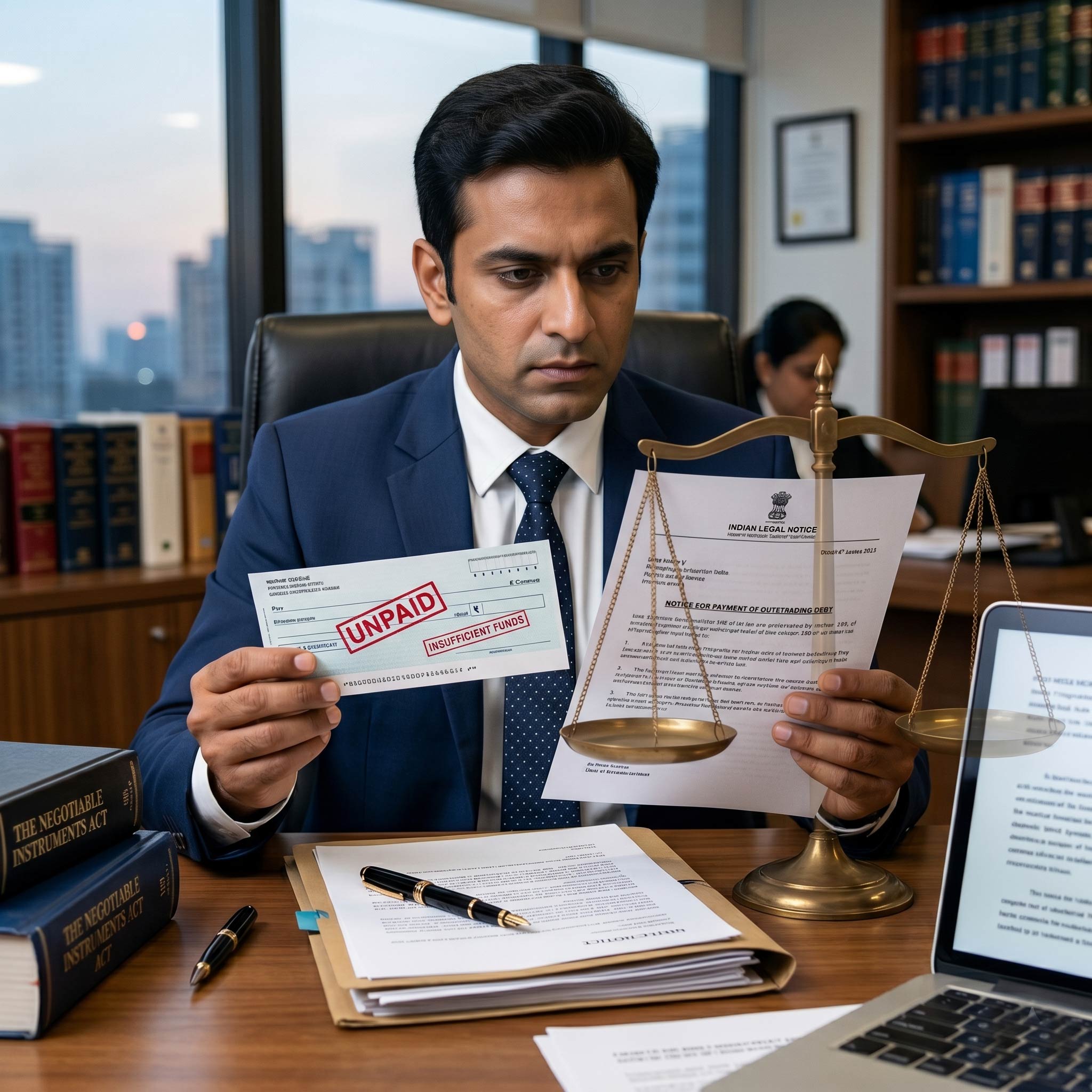
How to Legally Recover Money from Friends or Business Partners in India
One of the most emotionally and financially distressing situations faced by individuals and businesses in India arises when money lent to a friend, relative, colleague, or business partner is not returned.
Across India, particularly in cities such as Mumbai, disputes involving:
- friendly loans;
- unpaid business investments;
- partnership disputes;
- breach of oral promises;
- failed joint ventures;
- unpaid advances;
- dishonoured cheques;
- unpaid profit-sharing arrangements;
- informal financial transactions;
have increased substantially in recent years.
Many individuals lend substantial sums:
- based on friendship;
- family relations;
- trust;
- verbal commitments;
- WhatsApp assurances;
- business goodwill.
However, once disputes arise, the borrower or business partner frequently:
- denies liability;
- avoids repayment;
- delays communication;
- disputes terms;
- threatens counter-action;
- transfers assets;
- or simply disappears.
A common misconception prevailing in society is that:
“money given to friends or business partners cannot be legally recovered unless there is a written agreement.”
This belief is legally incorrect.
Indian law provides multiple legal remedies for recovery of money, even in cases involving:
- oral transactions;
- friendly loans;
- WhatsApp communications;
- undocumented business arrangements;
- verbal assurances.
This article provides a detailed legal analysis regarding:
- recovery of friendly loans;
- recovery from business partners;
- cheque bounce cases;
- civil recovery suits;
- criminal remedies;
- legal notices;
- evidence required;
- limitation period;
- recovery through courts;
- practical legal strategy for recovery of money in India.
Prepared by:
Sarosh Damania & Co. – Advocates, Bombay High Court
COMMON MONEY RECOVERY DISPUTES IN INDIA
The Firm regularly encounters disputes involving:
- friendly loans not returned;
- business investments gone wrong;
- failed partnership arrangements;
- unpaid advances;
- hand loans;
- oral financial arrangements;
- property transaction disputes;
- non-return of security deposits;
- unpaid commissions;
- breach of profit-sharing commitments;
- family financial disputes;
- startup investment disputes;
- unpaid vendor dues.
Such disputes often involve substantial amounts running into:
- lakhs;
- crores;
- business investments;
- property-related advances.
WHETHER MONEY GIVEN WITHOUT WRITTEN AGREEMENT CAN BE RECOVERED?
Yes.
Indian law does not mandate that every loan or financial transaction must necessarily be documented through a formal written agreement.
Money may still be recoverable based upon:
- bank transfers;
- UPI transactions;
- WhatsApp chats;
- emails;
- audio recordings;
- admissions;
- witnesses;
- account statements;
- cheque issuance;
- conduct of parties.
Courts in India increasingly recognize electronic and digital evidence.
IMPORTANT EVIDENCE REQUIRED FOR MONEY RECOVERY
While written agreements strengthen cases, recovery is still possible through surrounding evidence.
Important evidence may include:
(i) Bank Transfer Proofs
- NEFT
- RTGS
- IMPS
- UPI transactions
- account statements
(ii) WhatsApp Chats
Messages acknowledging:
- borrowing;
- repayment promises;
- extensions of time;
- liability admissions.
(iii) Emails
Email communications frequently become crucial evidence.
(iv) Audio Recordings
In appropriate circumstances, recordings may support recovery claims.
(v) Witnesses
Witnesses aware of the transaction may support the claim.
(vi) Cheques Issued by Borrower
Dishonoured cheques significantly strengthen recovery proceedings.
LEGAL NOTICE FOR RECOVERY OF MONEY
The first and most important legal step generally involves issuance of a formal legal notice.
A properly drafted legal notice:
- records the claim;
- narrates facts;
- demands payment;
- preserves legal rights;
- creates documentary evidence;
- often pressures settlement.
A strong advocate-drafted legal notice frequently results in:
- negotiated settlement;
- repayment schedule;
- acknowledgment of liability.
CIVIL SUIT FOR RECOVERY OF MONEY
Where repayment is not made despite notice, proceedings may be initiated before Civil Courts.
A civil recovery suit may seek:
- recovery of principal amount;
- contractual interest;
- commercial interest;
- damages;
- litigation costs.
Civil recovery proceedings may also include:
- attachment applications;
- injunctions;
- disclosure of assets;
- garnishee proceedings.
SUMMARY SUIT UNDER ORDER XXXVII CPC
In appropriate cases involving:
- written contracts;
- invoices;
- cheques;
- acknowledgments;
- promissory notes,
a Summary Suit under Order XXXVII of the Code of Civil Procedure may be maintainable.
Summary suits are comparatively faster since:
the defendant cannot automatically defend the suit without obtaining leave from the court.
This becomes a powerful remedy in commercial recovery disputes.
CHEQUE BOUNCE CASES UNDER SECTION 138 NI ACT
Where the borrower issues a cheque which is dishonoured, proceedings may be initiated under:
Section 138 of the Negotiable Instruments Act, 1881.
Cheque bounce proceedings constitute one of the most effective legal remedies for money recovery in India.
Dishonour of cheques due to:
- insufficient funds;
- account closure;
- payment stop instructions;
- signature mismatch,
may expose the drawer to:
- criminal prosecution;
- fine;
- imprisonment;
- compensation orders.
CAN CRIMINAL ACTION BE TAKEN?
In certain cases, yes.
Where money was obtained through:
- cheating;
- fraudulent inducement;
- dishonest misrepresentation;
- criminal breach of trust;
- deception from inception,
criminal proceedings may be maintainable under:
Bharatiya Nyaya Sanhita, 2023
However:
every money dispute does not automatically amount to a criminal offence.
Courts carefully distinguish:
- civil disputes;
- contractual breaches;
- criminal cheating.
RECOVERY OF MONEY FROM BUSINESS PARTNERS
Business partner disputes frequently involve:
- diversion of funds;
- siphoning of profits;
- breach of partnership terms;
- non-payment of profit share;
- misuse of company accounts;
- unauthorized withdrawals;
- misuse of investor funds.
Such disputes commonly arise in:
- partnerships;
- LLPs;
- startups;
- private limited companies;
- informal business arrangements.
WHETHER ORAL PARTNERSHIPS ARE LEGALLY VALID?
Yes.
Partnerships in India may arise even without formal written agreements.
Courts examine:
- conduct of parties;
- profit sharing;
- capital contribution;
- communications;
- operational involvement.
However, absence of documentation often complicates evidence and recovery.
IMPORTANT LEGAL REMEDIES AGAINST BUSINESS PARTNERS
Depending upon facts, remedies may include:
- civil recovery suits;
- injunction proceedings;
- partnership dissolution;
- rendition of accounts;
- forensic audit;
- criminal complaints;
- arbitration proceedings;
- NCLT proceedings (in company matters).
LIMITATION PERIOD FOR RECOVERY OF MONEY IN INDIA
A crucial issue in money recovery matters is limitation.
Generally:
money recovery proceedings should ordinarily be initiated within 3 years from the date the money became due.
However, limitation may get extended through:
- written acknowledgments;
- part-payments;
- emails;
- WhatsApp admissions;
- fresh promises to pay.
Delay in taking legal action may seriously prejudice recovery rights.
WHETHER WHATSAPP CHATS ARE VALID EVIDENCE?
Yes.
Indian courts increasingly recognize:
- WhatsApp chats;
- emails;
- electronic records;
- digital communications;
as admissible evidence subject to legal proof requirements.
In modern litigation, WhatsApp conversations frequently become critical evidence in recovery disputes.
WHETHER PROPERTY OF BORROWER CAN BE ATTACHED?
In appropriate cases, courts may grant:
- attachment before judgment;
- injunction against transfer of assets;
- restraint orders;
- garnishee reliefs.
Such remedies become important where borrowers attempt to:
- dispose of assets;
- evade liability;
- transfer monies;
- frustrate recovery proceedings.
COMMON DEFENCES RAISED BY BORROWERS
Borrowers frequently allege:
- money was gift and not loan;
- transaction was investment;
- repayment already made;
- no written agreement exists;
- amount was gambling/speculative transaction;
- claim is time-barred.
Proper legal strategy and evidence become critical to defeat such defences.
WHY PROFESSIONAL LEGAL REPRESENTATION IS IMPORTANT
Money recovery disputes frequently involve:
- emotional relationships;
- business fallout;
- complex factual disputes;
- documentary evidence;
- criminal and civil overlap.
Professional legal assistance helps:
- structure the claim properly;
- preserve evidence;
- draft strong legal notices;
- initiate appropriate proceedings;
- maximize recovery chances;
- secure interim reliefs.
- HOW Sarosh Damania & Co. ASSISTS CLIENTS
Sarosh Damania & Co. regularly advises and represents clients in matters involving:
- money recovery disputes;
- friendly loan recovery;
- cheque bounce litigation;
- partnership disputes;
- business fraud disputes;
- recovery suits;
- arbitration proceedings;
- commercial litigation.
The Firm represents clients before:
- Civil Courts;
- Commercial Courts;
- Magistrate Courts;
- Arbitral Tribunals;
- Bombay High Court.
PRACTICAL LEGAL STRATEGY FOR MONEY RECOVERY
An effective money recovery strategy generally involves:
Step 1:
Preserve all documentary and electronic evidence.
Step 2:
Issue a strong legal notice.
Step 3:
Evaluate civil and criminal remedies simultaneously.
Step 4:
Seek urgent interim protection where necessary.
Step 5:
Initiate structured legal proceedings without delay.
CONCLUSION
Money recovery disputes involving friends, relatives, and business partners are amongst the most sensitive and complicated disputes faced by individuals and businesses in India.
However:
merely because money was advanced informally does not mean it cannot be legally recovered.
Indian law provides multiple powerful remedies for recovery of money through:
- civil proceedings;
- cheque bounce litigation;
- commercial suits;
- arbitration;
- criminal proceedings in appropriate cases.
Prompt legal action, proper evidence preservation, and strategic legal representation significantly improve recovery prospects.
For legal assistance relating to:
- money recovery;
- friendly loan disputes;
- cheque bounce matters;
- business partner disputes;
- commercial recovery litigation;
- recovery suits;
- arbitration proceedings,
contact:
Sarosh Damania & Co. – Advocates, Bombay High Court
Practice Areas:
- Money Recovery Litigation
- Cheque Bounce Cases
- Commercial Litigation
- Partnership Disputes
- Arbitration
- Bombay High Court Litigation
Office:
Mumbai
Website:
Frequently Asked Questions (FAQs)
Can money given without written agreement be legally recovered?
Yes. Courts recognize bank transfers, WhatsApp chats, emails, witnesses, and digital evidence.
What is the first legal step for money recovery?
Issuing a strong legal notice demanding repayment.
Can cheque bounce cases help recover money?
Yes. Section 138 NI Act proceedings are among the strongest remedies in India.
Are WhatsApp chats valid evidence?
Yes, courts increasingly recognize electronic records and chats as evidence.
What is the limitation period for money recovery?
Generally 3 years from the date the amount became due, subject to extensions through acknowledgments.
Advocate Sarosh Damania is the founder of Sarosh Damania & Co., a premier law firm based in Mumbai, recognized for its exceptional legal services to corporations, individuals, and international clients worldwide. With a rich blend of experience and expertise, Adv. Damania and his team specialize in a wide array of legal disciplines, including Civil Law, Criminal Law, Aviation Law, Arbitration, Consumer Law, RERA, Company Law, Succession Law, Wills, Intellectual Property Law, Property Law, Housing Society Law, Debt Recovery, and Banking Law.
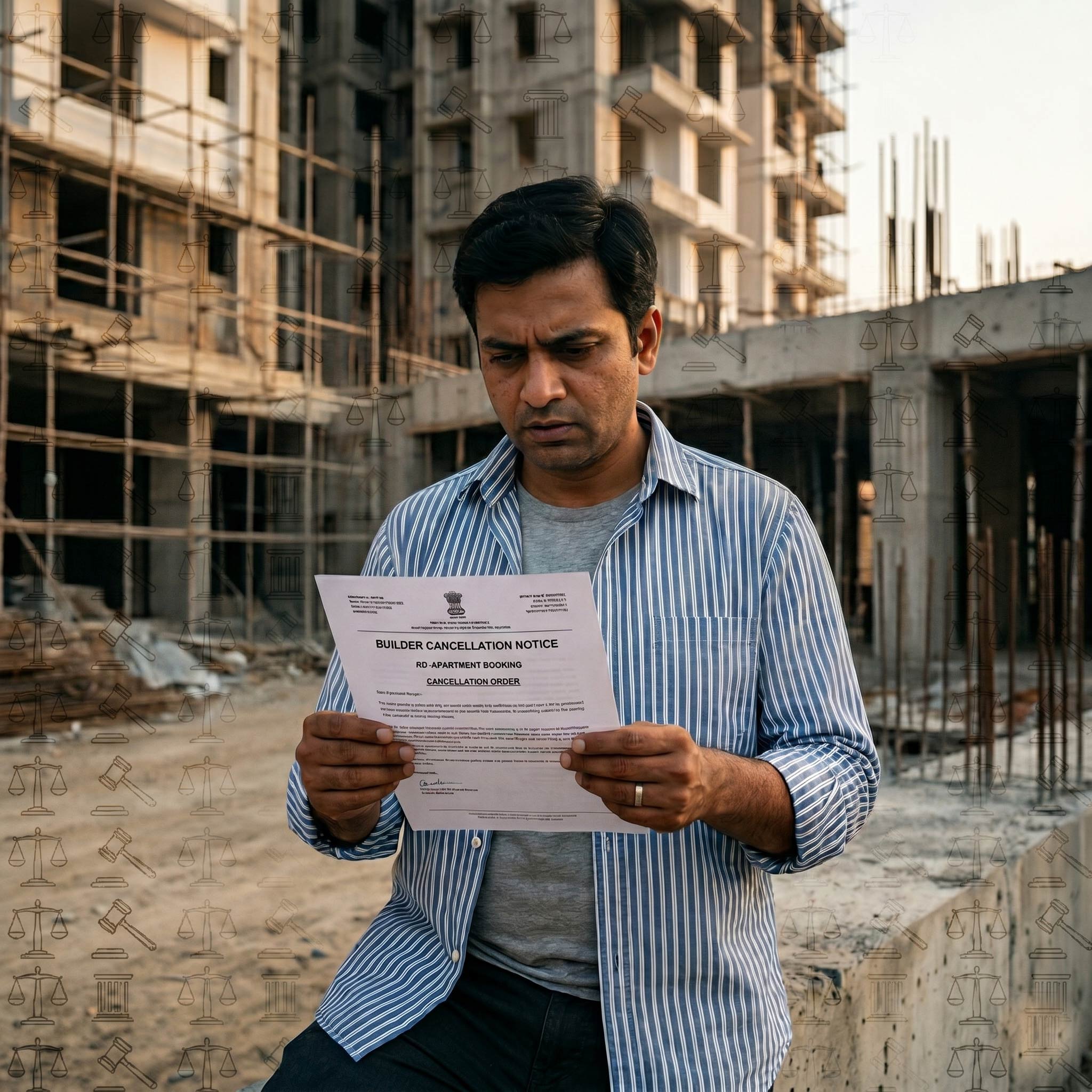
Can Builders Cancel Flat Allotments for Delayed Payments? Legal Rights of Homebuyers Under RERA & Consumer Law
In the ever-expanding real estate market of India, disputes between homebuyers and builders have become increasingly common, particularly in metropolitan cities such as Mumbai, where property prices continue to escalate exponentially.
One of the most frequently arising disputes pertains to the unilateral cancellation of flat allotments by builders and developers on the alleged ground of delayed payment of instalments by purchasers.
Across India, purchasers dealing with leading real estate developers including:
- Lodha Group
- Godrej Properties
- Oberoi Realty
- Runwal Group
- Rustomjee
- Kalpataru Group
- Hiranandani Group
- Shapoorji Pallonji Real Estate
- Piramal Realty
- Mahindra Lifespaces
- Prestige Group
- DLF Limited
- Raheja Universal
- Arkade Developers
- Ajmera Realty
are frequently confronted with:
- arbitrary cancellation notices;
- coercive demand letters;
- illegal forfeiture of booking amounts;
- unilateral termination of allotments;
- refusal to refund monies;
- exorbitant interest demands;
- one-sided contractual clauses heavily favouring builders.
A recurring legal question therefore arises:
Whether a builder can legally cancel a flat allotment merely because there has been a delay in payment by the purchaser?
The answer, in law, is neither automatic nor absolute.
The legal position emerging from judicial precedents, consumer jurisprudence, RERA authorities, and High Court decisions clearly establishes that:
builders and developers cannot act arbitrarily, unfairly, oppressively, or in a manner contrary to settled principles of equity and natural justice while dealing with homebuyers.
This article seeks to analyse in detail:
- the legal rights of homebuyers;
- powers of builders;
- legality of cancellation clauses;
- forfeiture of booking amounts;
- RERA remedies;
- Consumer Court remedies;
- Bombay High Court jurisprudence;
- legal protections available against arbitrary builder action.
Prepared by:
Sarosh Damania & Co. – Advocates, Bombay High Court
STATUTORY FRAMEWORK GOVERNING BUILDER–PURCHASER DISPUTES
Disputes between builders and homebuyers are governed by a combination of statutory enactments, contractual principles, regulatory frameworks, and judicial precedents.
The principal legal framework includes:
I. REAL ESTATE (REGULATION AND DEVELOPMENT) ACT, 2016 (“RERA”)
The enactment of the Real Estate (Regulation and Development) Act, 2016 marked a watershed moment in Indian real estate jurisprudence.
The object and purpose of RERA is inter alia:
- to regulate the real estate sector;
- ensure transparency;
- protect homebuyers;
- prevent exploitation by developers;
- ensure timely completion of projects;
- regulate builder conduct.
In the State of Maharashtra, disputes are adjudicated by MahaRERA.
RERA has significantly curtailed arbitrary practices previously adopted by builders and developers.
II. CONSUMER PROTECTION ACT, 2019
It is now well settled that a homebuyer constitutes a “consumer” under the Consumer Protection Act, 2019.
Builders and developers may therefore be proceeded against for:
- deficiency in service;
- unfair trade practices;
- arbitrary cancellation;
- failure to hand over possession;
- illegal forfeiture;
- misrepresentation;
- oppressive contractual conduct.
Consumer Fora across India, including the Hon’ble National Consumer Disputes Redressal Commission (“NCDRC”), have repeatedly granted relief in favour of homebuyers against arbitrary builder conduct.
III. INDIAN CONTRACT ACT, 1872
Builder–buyer agreements are contractual in nature. However, Indian courts have repeatedly held that contractual clauses cannot be enforced mechanically where:
- the clauses are unconscionable;
- the terms are one-sided;
- bargaining power is unequal;
- the conduct of the builder is oppressive or arbitrary.
The doctrine of fairness, equity, reasonableness, and proportionality increasingly governs modern real estate disputes.
IV. MAHARASHTRA OWNERSHIP FLATS ACT, 1963 (“MOFA”)
In Maharashtra, builders are additionally governed by MOFA which imposes statutory obligations concerning:
- disclosures;
- agreements;
- sanctioned plans;
- possession obligations;
- conveyance;
- transparency towards flat purchasers.
WHETHER BUILDERS HAVE ABSOLUTE POWER TO CANCEL ALLOTMENTS?
Most builder-buyer agreements contain clauses permitting cancellation in the event of:
- non-payment of instalments;
- delayed payments;
- default in payment schedules;
- loan disbursement failures.
However, the mere existence of such a clause does not confer unfettered or arbitrary powers upon the builder.
Indian courts have repeatedly held that:
contractual powers must be exercised reasonably, bona fide, proportionately, and in accordance with principles of natural justice.
Accordingly:
a builder cannot mechanically terminate allotments merely to profiteer from rising market prices or to victimise purchasers.
FACTORS EXAMINED BY COURTS AND RERA AUTHORITIES
While adjudicating cancellation disputes, courts and authorities typically examine:
(i) Nature and extent of purchaser delay;
(ii) Whether delay was intentional or bona fide;
(iii) Conduct of the builder;
(iv) Stage of construction;
(v) Delay attributable to builder himself;
(vi) Whether proper notices were issued;
(vii) Whether purchaser had substantially complied with obligations;
(viii) Whether cancellation was disproportionate or arbitrary;
(ix) Whether the builder suffered actual prejudice;
(x) Whether cancellation was motivated by escalation in property prices.
BUILDERS CANNOT TAKE ADVANTAGE OF THEIR OWN WRONG
A builder who himself delays:
- construction;
- possession;
- approvals;
- occupation certificate;
- project completion;
cannot ordinarily seek to penalize purchasers for delayed instalments.
This principle has repeatedly been recognized by courts and consumer fora.
It is common in India for builders to:
- delay projects for years;
- alter sanctioned plans;
- fail to obtain approvals;
- delay occupation certificates;
- raise illegal or inflated demands;
and thereafter issue cancellation notices to purchasers.
Such conduct has repeatedly been deprecated by courts.
ILLEGAL FORFEITURE OF BOOKING AMOUNTS
Builders frequently attempt to:
- forfeit earnest money;
- deduct exorbitant cancellation charges;
- retain substantial sums already paid by purchasers.
However, forfeiture clauses are not automatically enforceable merely because they exist in agreements.
Courts frequently examine:
- whether actual loss has been suffered;
- whether forfeiture is penal in nature;
- whether the clause is unconscionable;
- whether the amount forfeited is disproportionate.
Arbitrary forfeiture may constitute:
- unfair trade practice;
- deficiency in service;
- unjust enrichment.
WHETHER A HOMEBUYER CAN SEEK RESTORATION OF ALLOTMENT?
Yes.
Depending upon facts and circumstances, purchasers may seek:
- restoration of allotment;
- injunction against cancellation;
- stay against resale;
- refund with interest;
- compensation;
- specific performance.
Such proceedings may be initiated before:
- MahaRERA;
- Consumer Commissions;
- Civil Courts;
- High Courts.
DELAYED HOME LOAN DISBURSEMENT – LEGAL POSITION
In numerous instances, delayed payments occur due to:
- bank processing delays;
- technical deficiencies;
- pending approvals;
- incomplete builder documentation;
- title-related issues.
Builders frequently attempt to hold purchasers solely responsible despite deficiencies attributable to the project itself.
Where delayed disbursement arises due to builder lapses, arbitrary cancellation may become legally unsustainable.
WHETHER BUILDERS CAN RESELL THE FLAT AFTER CANCELLATION?
A frequent concern amongst purchasers pertains to builders attempting to:
- cancel allotments;
- re-market the same flats;
- resell units at substantially escalated prices.
Courts carefully scrutinize whether:
- cancellation was bona fide;
- adequate opportunity was granted;
- builder acted fairly;
- resale was motivated purely by commercial profiteering.
CONSUMER COURT REMEDIES AGAINST BUILDERS
Consumer Commissions across India have consistently granted reliefs including:
- refund with interest;
- compensation for mental agony;
- litigation costs;
- possession reliefs;
- injunctions against cancellation.
Homebuyers are increasingly obtaining substantial reliefs against arbitrary builder conduct.
EMERGING JUDICIAL TREND IN INDIA
The judicial trend in India increasingly recognises that:
homebuyers are not speculative investors but consumers entitled to legal protection.
Courts are increasingly striking down:
- oppressive contractual clauses;
- arbitrary cancellation notices;
- one-sided builder agreements;
- excessive forfeiture provisions.
The era of unchecked builder dominance is gradually witnessing judicial correction.
IMPORTANT STEPS FOR HOMEBUYERS
Upon receipt of a cancellation notice, purchasers should immediately:
- preserve all emails and notices;
- review contractual documentation;
- preserve payment proofs;
- maintain loan correspondence;
- avoid signing coercive undertakings;
- seek immediate legal advice.
Failure to act promptly may prejudice legal remedies.
WHY PROFESSIONAL LEGAL ASSISTANCE IS CRITICAL
Builder disputes involve:
- complex contractual interpretation;
- technical legal issues;
- substantial financial exposure;
- evolving RERA jurisprudence.
Professional legal assistance helps:
- challenge arbitrary cancellation;
- seek injunctions;
- protect investments;
- initiate RERA proceedings;
- pursue consumer litigation;
- negotiate favourable settlements.
HOW Sarosh Damania & Co. ASSISTS HOMEBUYERS
Sarosh Damania & Co. regularly represents:
- homebuyers;
- societies;
- redevelopment occupants;
- NRI purchasers;
- investors;
- commercial purchasers.
The Firm handles disputes involving:
- arbitrary cancellation;
- delayed possession;
- RERA litigation;
- redevelopment disputes;
- illegal forfeiture;
- refund claims;
- consumer litigation;
- Bombay High Court proceedings.
The Firm appears before:
- MahaRERA;
- Consumer Commissions;
- Civil Courts;
- Bombay High Court.
CONCLUSION
The law does not permit builders and developers to act arbitrarily merely because a purchaser has delayed payment of certain instalments.
The rights of builders are not absolute and remain subject to:
- fairness;
- proportionality;
- contractual reasonableness;
- statutory protections;
- judicial scrutiny.
Homebuyers facing:
- cancellation notices;
- forfeiture threats;
- illegal demands;
- delayed possession;
- arbitrary builder conduct;
must immediately evaluate their legal remedies.
For legal assistance in builder disputes, RERA litigation, redevelopment disputes, allotment cancellation matters, consumer complaints, or real estate litigation, contact:
Sarosh Damania & Co. – Advocates, Bombay High Court
Practice Areas:
- RERA Litigation
- Builder Disputes
- Consumer Litigation
- Redevelopment Disputes
- Real Estate Litigation
- Bombay High Court Litigation
Office:
Mumbai
Website:
Frequently Asked Questions (FAQs)
Can a builder legally cancel a flat allotment for delayed payment?
Not automatically. Courts and RERA authorities examine fairness, proportionality, and builder conduct before upholding cancellation.
Can builders forfeit booking amounts?
Only reasonable forfeiture may be allowed. Arbitrary or excessive forfeiture can be challenged legally.
Can a buyer seek restoration of allotment?
Yes. Buyers may seek restoration, injunctions, refunds, or compensation before MahaRERA or Consumer Courts.
What if delay happened due to home loan issues?
If delays are linked to builder deficiencies or approval problems, cancellation may be legally unsustainable.
Can a builder resell the flat after cancellation?
Courts examine whether the cancellation was genuine or motivated by higher resale profits.
Advocate Sarosh Damania is the founder of Sarosh Damania & Co., a premier law firm based in Mumbai, recognized for its exceptional legal services to corporations, individuals, and international clients worldwide. With a rich blend of experience and expertise, Adv. Damania and his team specialize in a wide array of legal disciplines, including Civil Law, Criminal Law, Aviation Law, Arbitration, Consumer Law, RERA, Company Law, Succession Law, Wills, Intellectual Property Law, Property Law, Housing Society Law, Debt Recovery, and Banking Law.

Airline Passenger Rights in India: Legal Remedies for Flight Delays, Cancellations, Denied Boarding & Baggage Loss
The aviation sector in India has witnessed exponential growth over the past decade. India today stands amongst the fastest-growing aviation markets globally, with millions of passengers travelling annually through domestic and international airlines including IndiGo, Air India, Air India Express, SpiceJet, Akasa Air, Alliance Air, Emirates, Etihad Airways, Lufthansa, British Airways, Turkish Airlines, Virgin Atlantic and numerous other carriers operating in India.
However, with the rapid expansion of the aviation industry, there has also been a corresponding rise in disputes between passengers and airlines relating to:
- Flight delays;
- Flight cancellations;
- Denied boarding;
- Overbooking;
- Baggage loss and delayed baggage;
- Visa and immigration-related boarding refusals;
- Deficiency in airline services;
- Arbitrary refund refusals;
- Passenger harassment and mental agony;
- Operational negligence by airlines;
- Misleading representations and unfair trade practices.
Passengers frequently suffer severe financial loss, mental trauma, inconvenience, reputational damage, disruption of holidays, missed business opportunities, and emotional distress on account of arbitrary and negligent acts committed by airlines.
Unfortunately, many passengers remain unaware that Indian law provides robust legal remedies against airlines and aviation service providers.
This article seeks to provide a detailed legal analysis of:
- Passenger rights in India;
- Airline liability under Indian law;
- DGCA regulations;
- Consumer Court remedies;
- Compensation claims;
- Legal proceedings against airlines;
- Defences commonly raised by airlines;
- Rights available to domestic and international passengers.
This article is intended to serve as a comprehensive legal guide for passengers, corporate travellers, NRIs, foreign nationals, and businesses dealing with airline disputes in India.
Prepared by:
Sarosh Damania & Co. – Advocates, Bombay High Court
LEGAL FRAMEWORK GOVERNING AIRLINE PASSENGER RIGHTS IN INDIA
Airline passenger rights in India are governed by a combination of statutory provisions, delegated legislation, international conventions, contractual principles, and judicial precedents.
The principal legal framework includes:
(A) Consumer Protection Act, 2019
Passengers travelling by air are “consumers” within the meaning of the Consumer Protection Act, 2019.
Any negligence, deficiency, unfair trade practice, arbitrary conduct, or failure in service by an airline may give rise to consumer proceedings before:
- District Consumer Disputes Redressal Commission;
- State Consumer Disputes Redressal Commission;
- National Consumer Disputes Redressal Commission (NCDRC).
Consumer Courts in India have repeatedly held airlines liable for:
- wrongful denial of boarding;
- baggage loss;
- arbitrary cancellation;
- delayed refunds;
- operational negligence;
- harassment caused to passengers.
(B) Directorate General of Civil Aviation (DGCA) Regulations
The Directorate General of Civil Aviation has framed Civil Aviation Requirements (CAR) governing:
- denied boarding compensation;
- passenger facilitation;
- cancellation handling;
- refund obligations;
- treatment of passengers during delays;
- airline accountability.
The DGCA regulations impose mandatory obligations upon airlines operating in India.
Failure to comply may expose airlines to:
- regulatory action;
- consumer litigation;
- compensation liability.
(C) Carriage by Air Act, 1972
The Carriage by Air Act incorporates international aviation conventions governing:
- airline liability;
- international carriage;
- baggage claims;
- passenger injury claims;
- delay-related damages.
(D) Montreal Convention, 1999
The Montreal Convention governs liability in international carriage and applies to many international flights involving India.
The Convention deals with:
- delayed baggage;
- damaged baggage;
- passenger injury;
- delay damages;
- compensation limitations.
However, airlines frequently attempt to misuse liability limitations under the Convention to defeat legitimate passenger claims.
Indian courts have repeatedly clarified that arbitrary conduct and deficiency in service may still attract compensation under Indian consumer jurisprudence.
AIRLINE LIABILITY FOR FLIGHT DELAYS IN INDIA
Flight delays constitute one of the most common grievances faced by passengers travelling through airlines such as:
- IndiGo
- Air India
- SpiceJet
- Akasa Air
- Air India Express
Passengers are frequently stranded at airports for several hours without:
- proper communication;
- refreshments;
- accommodation;
- alternate arrangements;
- transparency regarding reasons for delay.
OBLIGATIONS OF AIRLINES DURING FLIGHT DELAYS
Under DGCA regulations, airlines are obligated to provide facilities and assistance to passengers depending upon:
- duration of delay;
- distance of flight;
- cause of delay.
Such obligations may include:
- meals and refreshments;
- hotel accommodation;
- airport transfers;
- alternate flights;
- refund options;
- re-routing assistance.
Failure to provide such facilities may amount to deficiency in service.
WHEN ARE AIRLINES LIABLE FOR DELAYS?
Airlines may become liable where delays occur due to:
- technical defects;
- operational mismanagement;
- crew unavailability;
- scheduling failures;
- aircraft rotation issues;
- internal staffing problems;
- avoidable maintenance failures.
Airlines frequently attempt to avoid liability by citing:
- bad weather;
- force majeure;
- ATC restrictions;
- security reasons.
However, such defences are not absolute and must be substantiated by credible evidence.
Merely making vague assertions regarding “operational reasons” or “technical issues” cannot automatically absolve an airline of liability.
DENIED BOARDING AND OVERBOOKING – LEGAL POSITION IN INDIA
Overbooking is a widespread commercial practice adopted by airlines worldwide.
Airlines frequently sell more confirmed tickets than available seats anticipating passenger no-shows. However, when all passengers report for travel, airlines resort to involuntary denied boarding.
Such disputes commonly arise involving:
- IndiGo
- Air India
- Air India Express
- SpiceJet
RIGHTS OF PASSENGERS IN CASE OF DENIED BOARDING
Passengers wrongfully denied boarding may be entitled to:
- monetary compensation;
- full refund;
- alternate flights;
- hotel accommodation;
- reimbursement of consequential expenses.
Where passengers suffer substantial loss due to denied boarding, they may additionally claim:
- compensation for mental agony;
- loss of business opportunities;
- loss of vacation value;
- reputational harm;
- litigation costs.
VISA AND IMMIGRATION-RELATED DENIED BOARDING DISPUTES
One of the fastest-growing areas of aviation litigation concerns:
- transit visa disputes;
- immigration documentation disputes;
- wrongful refusal of boarding;
- airline misinterpretation of visa requirements.
Such disputes frequently arise during international travel involving airlines such as:
- Emirates
- Etihad Airways
- Lufthansa
- British Airways
- Turkish Airlines
Passengers are often denied boarding despite possessing:
- valid visas;
- onward tickets;
- transit permissions;
- supporting immigration documentation.
In numerous cases, airline staff incorrectly interpret immigration rules leading to unlawful denial of boarding.
Such conduct may expose airlines to substantial compensation claims.
FLIGHT CANCELLATIONS – PASSENGER RIGHTS UNDER INDIAN LAW
Passengers whose flights are cancelled may be entitled to:
- full refund;
- alternate travel;
- compensation;
- reimbursement of consequential losses.
Airlines are expected to provide timely intimation regarding cancellations.
Failure to properly notify passengers may constitute deficiency in service.
BAGGAGE LOSS, DELAYED BAGGAGE & DAMAGE CLAIMS
Baggage disputes remain amongst the most litigated aviation disputes globally.
Passengers commonly face:
- complete baggage loss;
- delayed baggage delivery;
- damaged luggage;
- theft of valuables;
- missing articles.
Such disputes frequently arise involving both domestic and international airlines operating in India.
IMPORTANT STEPS PASSENGERS MUST TAKE IMMEDIATELY
Passengers should immediately:
- File a Property Irregularity Report (PIR);
- Preserve baggage tags;
- Retain boarding passes;
- Preserve receipts of emergency purchases;
- Send written complaints to the airline;
- Preserve all communications.
Failure to properly document baggage disputes may weaken subsequent legal claims.
CAN AIRLINES LIMIT THEIR LIABILITY?
Airlines frequently rely upon:
- Conditions of Carriage;
- liability exclusion clauses;
- Montreal Convention limits.
However, courts and consumer forums examine:
- fairness;
- transparency;
- reasonableness;
- conduct of the airline.
Arbitrary, negligent, unfair, or oppressive conduct may still expose airlines to compensation liability despite contractual disclaimers.
CONSUMER COURT REMEDIES AGAINST AIRLINES
Passengers may initiate proceedings before:
- District Consumer Commission;
- State Consumer Commission;
- National Consumer Disputes Redressal Commission (NCDRC).
Consumer litigation against airlines has significantly increased in recent years.
Consumer Courts have repeatedly awarded compensation for:
- deficiency in service;
- harassment;
- arbitrary conduct;
- mental agony;
- operational negligence.
WHAT COMPENSATION CAN PASSENGERS CLAIM?
Passengers may claim:
- ticket costs;
- refund amounts;
- replacement flight expenses;
- hotel costs;
- transportation costs;
- medical expenses;
- business losses;
- compensation for mental agony;
- litigation costs;
- interest.
The quantum of compensation depends upon:
- facts of the case;
- documentary evidence;
- nature of negligence;
- conduct of airline;
- actual financial losses suffered.
COMMON DEFENCES RAISED BY AIRLINES
Airlines frequently attempt to avoid liability by alleging:
- bad weather;
- operational reasons;
- force majeure;
- airport restrictions;
- late reporting by passenger;
- visa/documentation deficiencies;
- technical issues.
However, courts carefully scrutinize whether such defences are genuine or merely an afterthought to evade liability.
EMERGING TRENDS IN AVIATION LITIGATION IN INDIA
The following trends are increasingly visible:
Increase in Passenger Awareness
Passengers are increasingly asserting their legal rights.
Rise in International Aviation Disputes
Cross-border aviation litigation is significantly increasing.
Higher Compensation Claims
Passengers are seeking compensation not only for financial loss but also for emotional distress and reputational harm.
Digital Evidence Becoming Critical
WhatsApp chats, emails, airport videos, screenshots, recordings, and social media evidence now play a significant role in aviation litigation.
Increased Consumer Court Intervention
Consumer forums are increasingly adopting a passenger-centric approach.
WHY PROFESSIONAL LEGAL REPRESENTATION IS IMPORTANT
Passengers frequently weaken otherwise strong cases by:
- accepting inadequate vouchers;
- signing waiver forms;
- failing to preserve evidence;
- making inconsistent statements;
- not understanding airline regulations.
Professional legal assistance helps:
- assess liability;
- quantify compensation;
- structure evidence;
- draft legal notices;
- initiate consumer proceedings;
- challenge airline defences effectively.
HOW Sarosh Damania & Co. ASSISTS CLIENTS
Sarosh Damania & Co. regularly advises and represents clients in matters involving:
- airline disputes;
- denied boarding claims;
- aviation consumer litigation;
- baggage loss claims;
- international travel disputes;
- DGCA complaints;
- compensation recovery proceedings;
- commercial aviation disputes.
The Firm represents clients before:
- Consumer Commissions;
- High Courts;
- regulatory authorities;
- arbitral forums.
CONCLUSION
The aviation industry cannot operate in a manner where passengers are expected to silently absorb:
- financial losses;
- humiliation;
- inconvenience;
- arbitrary treatment;
- operational failures.
Indian law recognizes passenger rights and provides strong legal remedies against airlines in cases involving negligence, deficiency in service, unfair trade practices, and arbitrary conduct.
Passengers must:
- understand their legal rights;
- preserve documentary evidence;
- act promptly;
- seek professional legal advice where necessary.
For legal assistance relating to airline disputes, aviation litigation, consumer claims, baggage disputes, denied boarding matters, compensation recovery, or passenger rights litigation, contact:
Sarosh Damania & Co. – Advocates, Bombay High Court
Practice Areas:
- Aviation Law
- Consumer Litigation
- Airline Passenger Rights
- International Travel Disputes
- Consumer Protection Litigation
- Commercial Litigation
Office:
Mumbai
Website:
Frequently Asked Questions (FAQs)
Can I claim compensation for flight delay in India?
Yes. Passengers may claim compensation if delays occur due to airline negligence or operational issues.
What are my rights if boarding is denied?
Passengers may be entitled to refunds, alternate flights, hotel accommodation, and compensation.
What should I do if baggage is lost?
Immediately file a PIR (Property Irregularity Report) and preserve all travel documents.
Can airlines refuse refunds?
Airlines must comply with DGCA refund obligations and consumer protection laws.
Can I file a consumer case against an airline?
Yes. Complaints may be filed before Consumer Commissions in India.
Advocate Sarosh Damania is the founder of Sarosh Damania & Co., a premier law firm based in Mumbai, recognized for its exceptional legal services to corporations, individuals, and international clients worldwide. With a rich blend of experience and expertise, Adv. Damania and his team specialize in a wide array of legal disciplines, including Civil Law, Criminal Law, Aviation Law, Arbitration, Consumer Law, RERA, Company Law, Succession Law, Wills, Intellectual Property Law, Property Law, Housing Society Law, Debt Recovery, and Banking Law.
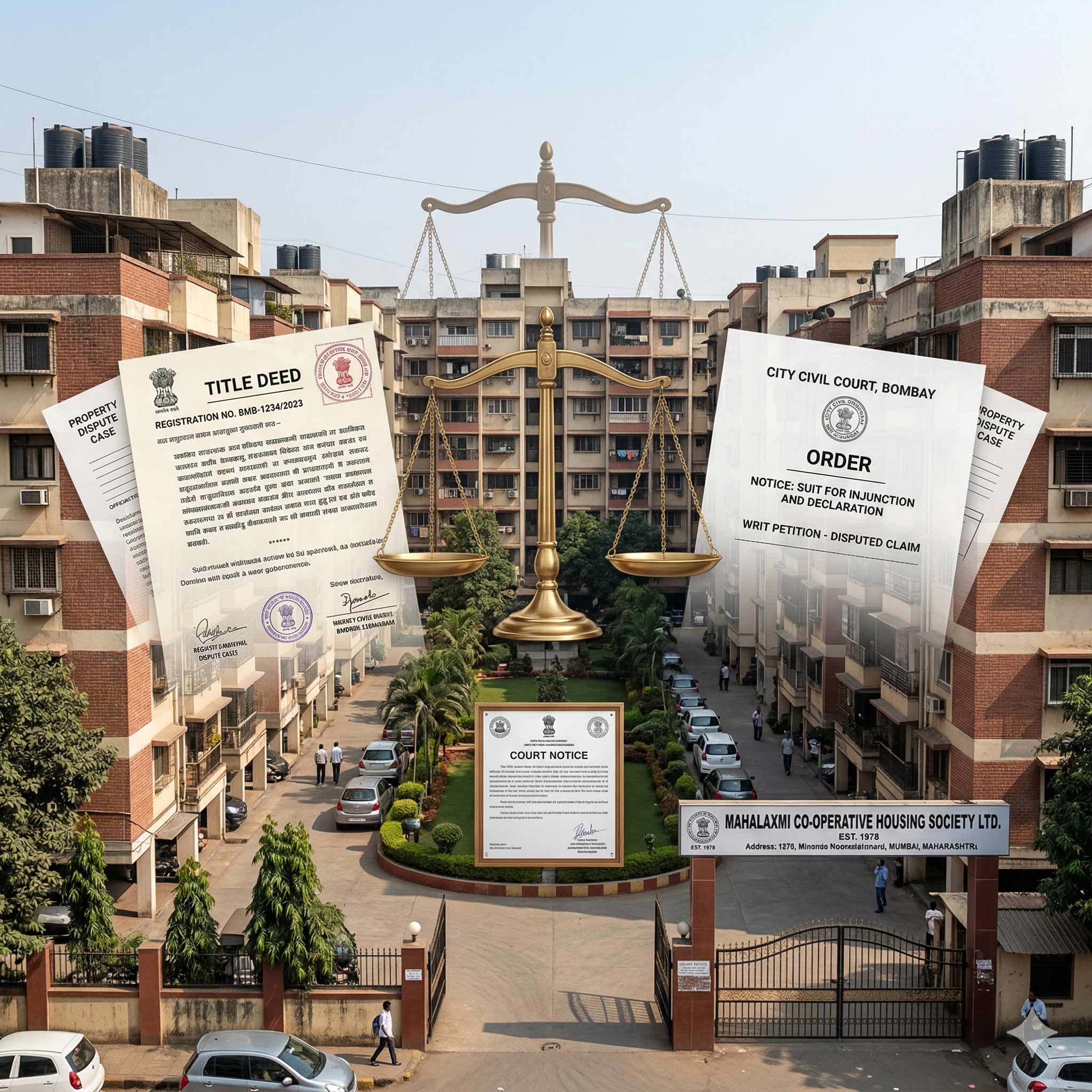
Civil Disputes & Housing Society Matters in Mumbai: A Complete Legal Guide for Property Owners
Mumbai is one of the most densely populated cities in the world, and the majority of residential buildings operate through co-operative housing societies. Because of this unique structure, housing society disputes and civil litigation matters are among the most frequently searched legal issues in Mumbai.
From flat succession disputes, society membership issues, recovery cases, contract disputes, and injunction proceedings, residents often require legal assistance to protect their property and financial rights.
This article provides a comprehensive legal guide to civil disputes and housing society matters in Mumbai, explaining common issues faced by residents and the legal remedies available under Indian law.
Legal Framework Governing Housing Societies in Mumbai
Housing societies in Maharashtra are primarily governed by the Maharashtra Co-operative Societies Act, 1960, which regulates the formation, management, and functioning of co-operative housing societies.
Disputes arising between society members, managing committees, developers, and property owners are typically resolved through the Deputy Registrar of Co-operative Societies, Co-operative Courts, or higher judicial forums such as the Bombay High Court.
Understanding the legal structure of housing societies is essential for resolving conflicts efficiently.
Flat Succession & Ownership Disputes in Housing Societies
One of the most common civil disputes in Mumbai arises when a flat owner passes away and multiple family members claim ownership rights.
Typical issues include:
- Transfer of membership to legal heirs
- Conflicts between family members regarding property ownership
- Disputes over nomination in society records
- Delay in issuing or transferring share certificates
Many society members assume that a nominee automatically becomes the legal owner of a flat. However, under Indian law, a nominee usually holds the property as a trustee for the legal heirs, unless there is a valid will determining ownership.
In such cases, legal processes may involve:
- Probate proceedings
- Succession certificates
- Legal heirship verification
- Civil litigation for declaration of ownership
Because property values in Mumbai are extremely high, these disputes frequently escalate into civil suits before the courts.
Housing Society Membership Disputes
Another frequent legal issue in Mumbai occurs when housing societies refuse membership to legitimate flat purchasers.
Societies sometimes deny membership due to:
- Internal disputes among managing committee members
- Objections raised against the sale transaction
- Documentation deficiencies
- Developer-related conflicts
However, under cooperative housing laws, a society cannot arbitrarily deny membership to a lawful purchaser who has acquired the property through a valid sale transaction.
If membership is wrongfully denied, the buyer can approach the Registrar of Co-operative Societies or initiate legal proceedings to enforce their rights.
Such disputes are particularly common in older buildings undergoing redevelopment or buildings with unresolved title histories.
Civil Recovery Cases in Mumbai
Civil recovery disputes are another major category of litigation in Mumbai. These cases typically arise when one party fails to repay money owed under an agreement or financial transaction.
Examples include:
- Recovery of unpaid loans or advances
- Non-payment under business agreements
- Failure to repay friendly loans
- Builder-buyer financial disputes
- Payment defaults under service contracts
In such cases, the aggrieved party may file a civil suit for recovery of money, seeking a court decree directing the defaulting party to repay the outstanding amount along with interest and costs.
Civil recovery proceedings may also involve attachment of assets and execution of court orders if payment is not made voluntarily.
Contract Disputes in Property and Business Transactions
Mumbai is India’s financial capital, and disputes arising from contracts and agreements are extremely common.
Contract disputes often arise from:
- Real estate agreements
- Development agreements
- Partnership contracts
- Service agreements
- Joint venture arrangements
Typical legal issues include:
- Breach of contractual obligations
- Delay in project completion
- Failure to make agreed payments
- Misrepresentation during contract negotiations
Courts generally examine the terms of the agreement, evidence of breach, and financial losses suffered by the affected party.
Depending on the case, the court may award damages, compensation, or specific performance of the contract.
Injunctions in Civil and Property Disputes
An injunction is one of the most powerful remedies available under civil law.
It is a court order restraining a person from performing a particular act, such as:
- Interfering with property possession
- Carrying out illegal construction
- Selling disputed property
- Demolishing structures during redevelopment disputes
Courts may grant:
Temporary Injunctions – Preventing a party from taking certain actions until the dispute is resolved.
Permanent Injunctions – A final order restraining unlawful conduct.
In Mumbai, injunctions are frequently sought in disputes involving:
- Redevelopment projects
- Housing society management conflicts
- Property ownership disputes
- Illegal occupation or trespassing
Because injunctions are urgent legal remedies, immediate legal action is often required to protect property rights.
Why Housing Society Litigation is Increasing in Mumbai
The number of civil disputes relating to housing societies continues to rise due to several factors:
1. High Real Estate Values
Mumbai’s property market is among the most expensive in India, making ownership disputes financially significant.
2. Redevelopment of Old Buildings
Thousands of aging buildings are undergoing redevelopment, leading to conflicts between developers, societies, and members.
3. Complex Title Histories
Many properties have decades-old ownership records, resulting in inheritance disputes.
4. Society Governance Issues
Mismanagement by managing committees and lack of transparency often trigger legal disputes among members.
When Should You Consult a Civil Lawyer in Mumbai?
You should consider seeking legal advice if you face situations such as:
- Housing society refusing to transfer membership
- Property ownership disputes among family members
- Recovery of unpaid money or financial dues
- Breach of contracts causing financial loss
- Urgent need for court injunctions in property matters
Early legal intervention can often prevent disputes from escalating into lengthy and expensive litigation.
Conclusion
Civil disputes and housing society matters are among the most common legal challenges faced by property owners in Mumbai. With high property values, complex ownership histories, and increasing redevelopment activity, legal conflicts are becoming more frequent.
Whether the issue involves flat succession, society membership disputes, recovery litigation, contract breaches, or injunction proceedings, proper legal guidance is essential to safeguard your rights.
Seeking advice from an experienced civil litigation lawyer can help resolve disputes efficiently and ensure compliance with the applicable laws governing housing societies in Mumbai.
Frequently Asked Questions (FAQs)
Can a housing society refuse to transfer a flat to a buyer?
A housing society cannot arbitrarily refuse membership if the property has been legally transferred and the required documentation has been submitted.
Does a nominee become the legal owner of a flat?
No. A nominee usually acts as a trustee for the legal heirs unless ownership is determined through a will or succession process.
What legal action can be taken if someone interferes with property possession?
A civil suit seeking an injunction can be filed to restrain unlawful interference with property rights.
Where are housing society disputes resolved in Mumbai?
Such disputes may be addressed before the Registrar of Co-operative Societies, Co-operative Courts, Civil Courts, or the Bombay High Court depending on the nature of the dispute.
Advocate Sarosh Damania is the founder of Sarosh Damania & Co., a premier law firm based in Mumbai, recognized for its exceptional legal services to corporations, individuals, and international clients worldwide. With a rich blend of experience and expertise, Adv. Damania and his team specialize in a wide array of legal disciplines, including Civil Law, Criminal Law, Aviation Law, Arbitration, Consumer Law, RERA, Company Law, Succession Law, Wills, Intellectual Property Law, Property Law, Housing Society Law, Debt Recovery, and Banking Law.
Corporate Lawyer in Mumbai: Corporate, Contract & Regulatory Legal Services for Businesses
Mumbai is the financial and commercial capital of India, home to thousands of corporations, multinational companies, financial institutions, aviation companies, startups, and manufacturing businesses. With such a dynamic business environment, companies operating in the city frequently encounter complex legal issues relating to corporate governance, commercial contracts, employment disputes, and regulatory compliance.
For businesses operating in a competitive and highly regulated environment like Mumbai, professional legal guidance is essential to protect commercial interests, ensure regulatory compliance, and prevent costly disputes.
Corporate clients today increasingly seek experienced legal advisors who can assist not only with litigation but also with strategic legal planning, contract structuring, compliance advisory, and dispute resolution.
This article explores the key areas of corporate, contract, and regulatory law in Mumbai and why companies require experienced legal counsel to operate safely and efficiently.
Corporate Law in Mumbai: The Legal Backbone of Businesses
Mumbai hosts the headquarters and major offices of several Indian and multinational companies. Corporate transactions and business operations are governed by the Companies Act 2013, which regulates company formation, governance, shareholder rights, director responsibilities, and corporate compliance.
Corporate disputes frequently arise between:
• Promoters and minority shareholders
• Directors and company management
• Joint venture partners
• Investors and founders
• Corporate groups and subsidiaries
Such disputes may involve allegations of:
• Oppression and mismanagement
• Fraudulent dilution of shareholding
• Breach of fiduciary duties
• Non-disclosure of financial information
• Illegal board decisions or resolutions
These disputes are typically adjudicated before the National Company Law Tribunal, which handles corporate litigation matters including shareholder disputes, insolvency proceedings, and company law violations.
For businesses, resolving such disputes requires experienced corporate legal representation and strategic litigation planning.
Contract Law and Commercial Agreements
Contracts form the foundation of almost every commercial transaction. Businesses rely on carefully structured agreements to regulate their relationships with vendors, clients, partners, and employees.
However, poorly drafted contracts are one of the leading causes of corporate litigation in Mumbai.
Common contractual disputes include:
• Breach of contract
• Payment disputes between businesses
• Vendor and supplier conflicts
• Termination disputes
• Partnership disagreements
• Intellectual property misuse
• Confidentiality breaches
Corporate legal advisors assist companies with drafting and reviewing critical agreements such as:
• Shareholders agreements
• Joint venture agreements
• Vendor and supply contracts
• Service agreements
• Franchise and licensing agreements
• Technology and software contracts
• Non-disclosure agreements (NDAs)
Properly drafted contracts clearly define commercial obligations, payment terms, dispute resolution mechanisms, indemnity provisions, and liability limitations, significantly reducing the risk of disputes.
Employment and Labour Law Compliance
Employment law disputes are among the most common legal issues faced by corporations in Mumbai. Businesses must comply with various labour laws governing employment relationships, workplace safety, and employee rights.
Common employment disputes involve:
• Wrongful termination claims
• Salary and bonus disputes
• Employment bond disputes
• Breach of confidentiality agreements
• Workplace harassment complaints
• Employee misconduct and disciplinary proceedings
Workplace harassment cases are governed by the Sexual Harassment of Women at Workplace Act, which requires companies to establish an Internal Complaints Committee (ICC) and implement preventive policies.
Employment disputes and labour matters may also involve regulatory authorities such as the Labour Commissioner Office.
Corporate lawyers assist organisations by drafting legally compliant employment policies, conducting internal investigations, and representing companies in labour disputes.
Regulatory Compliance for Businesses
Corporate regulatory compliance is a critical aspect of business operations in India. Companies must comply with multiple regulatory frameworks relating to taxation, corporate governance, employment laws, and industry-specific regulations.
Key compliance obligations include:
• Corporate filings with the Registrar of Companies
• Tax compliance and GST filings under the Goods and Services Tax Council
• Labour law compliance and statutory registrations
• Foreign investment and FEMA compliance
• Data protection and IT regulations
• Environmental and industry-specific regulatory approvals
Failure to comply with these regulations can result in severe consequences including financial penalties, regulatory investigations, director disqualification, and corporate litigation.
Corporate legal advisors help businesses conduct legal compliance audits, regulatory filings, and risk assessments to ensure full compliance with applicable laws.
Commercial Litigation and Arbitration in Mumbai
Despite best efforts to prevent disputes, commercial conflicts sometimes become unavoidable. Businesses must then pursue litigation or arbitration to protect their legal rights.
Commercial disputes in Mumbai are frequently handled before the Bombay High Court, which has jurisdiction over high-value corporate and commercial matters.
Many commercial agreements now include arbitration clauses requiring disputes to be resolved through arbitration proceedings governed by the Arbitration and Conciliation Act 1996.
Arbitration offers several advantages to corporate clients:
• Faster dispute resolution
• Confidential proceedings
• Flexibility in procedural rules
• Enforceable arbitral awards
Corporate lawyers assist businesses in commercial litigation, arbitration proceedings, and dispute resolution strategies to protect their commercial interests.
Why Corporate Clients Need Experienced Legal Counsel
In a highly regulated and competitive business environment like Mumbai, legal issues can arise at any stage of a business transaction or corporate relationship.
Corporate clients increasingly rely on legal advisors to:
• Structure legally secure commercial transactions
• Draft and negotiate complex business agreements
• Ensure regulatory compliance
• Prevent costly commercial disputes
• Represent businesses in litigation and arbitration
• Protect shareholder and investor interests
Proactive legal advisory services allow businesses to identify risks early and avoid expensive legal battles in the future.
Corporate Legal Services for Businesses in Mumbai
A corporate law firm typically assists businesses in a wide range of legal matters, including:
• Corporate advisory and governance
• Contract drafting and negotiation
• Regulatory compliance and corporate filings
• Employment and labour law advisory
• Commercial litigation and arbitration
• Due diligence for mergers and acquisitions
• Legal support for startups and investors
Many corporations also prefer ongoing legal retainership arrangements, enabling them to obtain timely legal advice for business decisions and regulatory compliance.
Conclusion: Legal Strategy is a Business Necessity
Mumbai’s business ecosystem offers enormous opportunities, but it also involves complex legal and regulatory challenges.
Companies that invest in strong legal structuring, compliant corporate governance, and professionally drafted contracts are better positioned to grow while minimizing legal risk.
Whether dealing with corporate governance disputes, contract enforcement, employment law compliance, or regulatory matters, experienced legal counsel plays a crucial role in protecting business interests.
For corporate clients operating in Mumbai, having a trusted corporate lawyer ensures that businesses remain legally protected, compliant, and strategically prepared for growth.
FAQs – Corporate Legal Services in Mumbai
What are the most common corporate legal issues in Mumbai?
Corporate legal disputes commonly involve shareholder conflicts, breach of contract, employment disputes, regulatory compliance violations, and commercial litigation.
Why is professional contract drafting important for businesses?
Properly drafted contracts clearly define rights, obligations, payment terms, and dispute resolution mechanisms, reducing the risk of costly litigation.
Where are corporate disputes resolved in Mumbai?
Corporate disputes may be handled before the Bombay High Court, the National Company Law Tribunal, or through arbitration proceedings.
Do startups also require corporate legal advisory services?
Yes. Startups require legal support for company incorporation, shareholder agreements, investor funding documentation, regulatory compliance, and employment contracts.
When should a business consult a corporate lawyer?
Businesses should consult a corporate lawyer when drafting contracts, handling disputes, ensuring regulatory compliance, conducting due diligence, or structuring business transactions.
Advocate Sarosh Damania is the founder of Sarosh Damania & Co., a premier law firm based in Mumbai, recognized for its exceptional legal services to corporations, individuals, and international clients worldwide. With a rich blend of experience and expertise, Adv. Damania and his team specialize in a wide array of legal disciplines, including Civil Law, Criminal Law, Aviation Law, Arbitration, Consumer Law, RERA, Company Law, Succession Law, Wills, Intellectual Property Law, Property Law, Housing Society Law, Debt Recovery, and Banking Law.
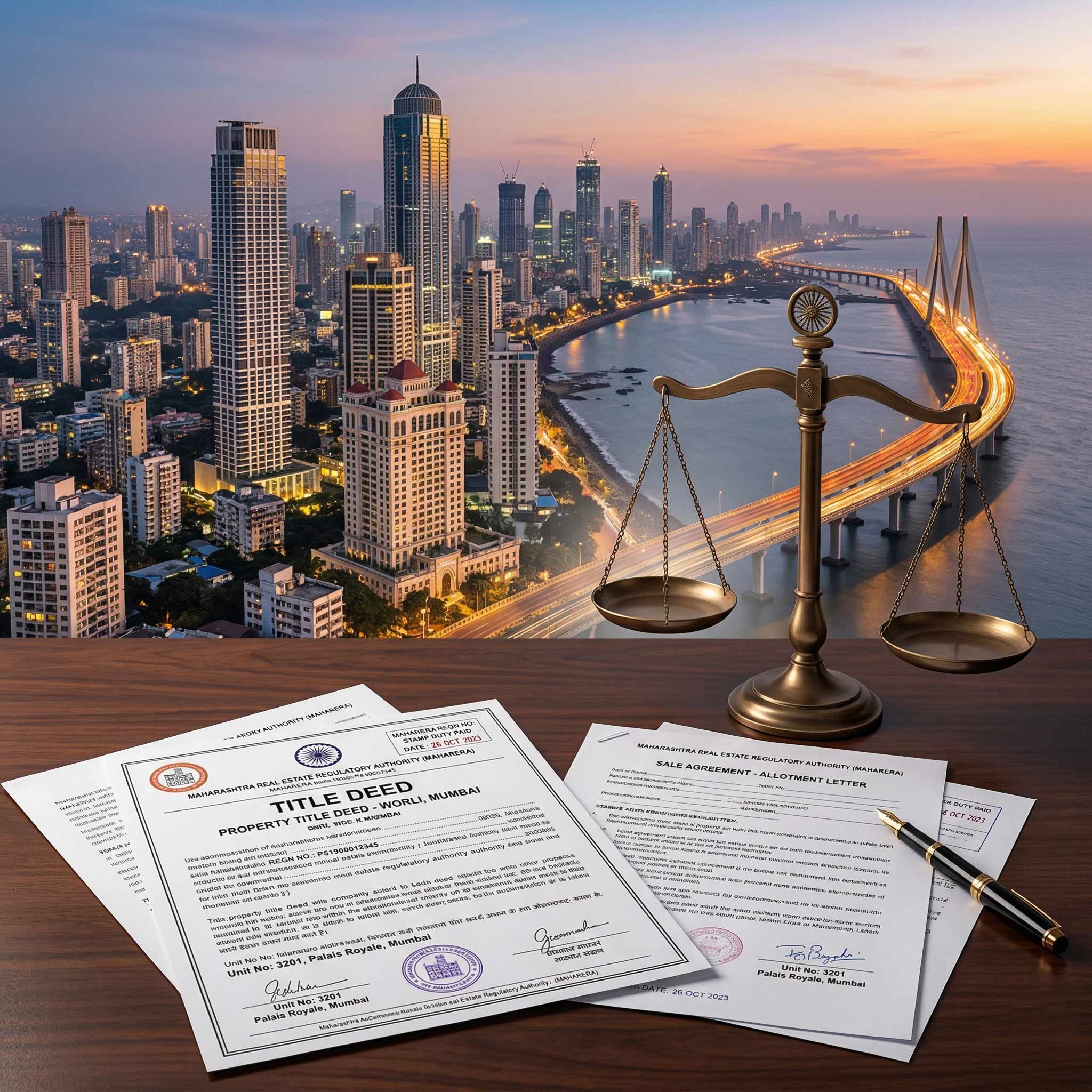
Real Estate & Property Disputes in Mumbai: A Complete Legal Guide for Buyers, Sellers and Housing Societies
Mumbai’s real estate market is one of the most expensive and legally complex property markets in India. With limited land availability, aging housing societies, large-scale redevelopment projects, and extremely high property values, real estate disputes are among the most frequently searched legal issues in Mumbai.
Every year thousands of buyers, sellers, housing societies, and developers encounter legal problems related to property ownership, redevelopment, documentation, and regulatory compliance. These disputes often arise due to unclear title history, redevelopment conflicts, documentation errors, and society disputes.
From a legal perspective, property matters in Mumbai are governed by several laws and regulations including the Real Estate (Regulation and Development) Act, 2016, the Maharashtra Rent Control Act, 1999, and various municipal regulations issued by the Municipal Corporation of Greater Mumbai.
Understanding these legal issues is essential for anyone purchasing property, selling property, investing in real estate, or participating in redevelopment projects in Mumbai.
Why Property Disputes Are Common in Mumbai
There are several reasons why real estate litigation is extremely common in Mumbai:
• Extremely high property prices
• Limited land availability
• Old buildings requiring redevelopment
• Complex ownership histories
• Multiple heirs claiming property rights
• Documentation irregularities from earlier decades
Many properties in Mumbai were transferred through old agreements, family arrangements, or power of attorney transactions, particularly between the 1960s and early 2000s. Some of these transactions were not properly registered, leading to unclear ownership chains and legal disputes years later.
As a result, people frequently search for legal advice before buying property, selling property, or entering redevelopment agreements.
Title Disputes and Unclear Ownership Chains
One of the most common property disputes in Mumbai relates to defective title or unclear ownership history.
Unlike some countries where title insurance protects buyers, property ownership in India is determined by documentary evidence forming a chain of ownership over many years.
Common title issues include
• Missing links in ownership documents
• Unregistered agreements or family settlements
• Inheritance disputes between legal heirs
• Multiple claims over the same property
• Forged documents or fraudulent sale agreements
For example, a property may have been transferred decades ago through an unregistered agreement or family settlement, and when a buyer attempts to purchase the property years later, the absence of proper documentation creates disputes.
Courts usually examine:
• Historical sale agreements
• Property card or CTS records
• Municipal records
• Housing society share certificates
• Probate or succession documents
Title disputes often lead to civil litigation that may take years to resolve, making legal due diligence extremely important before purchasing property.
Redevelopment Disputes in Housing Societies
Redevelopment is a major feature of Mumbai’s real estate landscape. Thousands of old buildings across the city are undergoing redevelopment due to structural deterioration, increased FSI availability, and rising land values.
In redevelopment projects, a co-operative housing society appoints a developer to demolish the old building and construct a new one, usually providing larger flats to existing residents.
However, redevelopment projects frequently give rise to disputes.
Common redevelopment issues
• Disagreements between society members and developers
• Allegations of unfair development agreements
• Delay in completion of redevelopment projects
• Non-payment of rent or transit accommodation
• Disputes regarding additional carpet area
• Lack of transparency in developer selection
In some cases, redevelopment agreements are signed without proper consultation with members, leading to disputes between the society committee and residents.
The Real Estate (Regulation and Development) Act, 2016 (RERA) has introduced important safeguards requiring developers to maintain financial transparency, register projects, and adhere to project timelines.
However, disputes continue to arise when developers fail to fulfil contractual obligations or when society members challenge redevelopment decisions.
Property Registration and Stamp Duty Disputes
Another common legal issue in Mumbai involves errors or irregularities in property registration.
Every property transaction in Maharashtra must comply with the Registration Act and the Maharashtra Stamp Act, which require proper stamping and registration of property documents.
Common registration problems include
• Underpayment of stamp duty
• Incorrect property description in documents
• Missing annexures or layout plans
• Errors in names of buyers or sellers
• Incorrect area measurements or CTS numbers
These issues sometimes come to light years later when the property is resold or when banks conduct due diligence before granting a home loan.
Rectifying such mistakes may require execution of rectification deeds, adjudication before stamp authorities, or even court proceedings.
Housing Society Membership and Share Certificate Disputes
Housing societies play a critical role in Mumbai’s residential real estate system. However, disputes often arise in relation to membership rights and transfer of shares in housing societies.
Common society disputes include
• Society refusing to transfer membership to the buyer
• Delay in issuing share certificates
• Objections raised during property transfer
• Disputes regarding nomination versus inheritance rights
• Disputes between society members and managing committees
Many societies delay membership transfers due to documentation issues, pending dues, or internal disputes.
These matters are usually resolved before the Registrar of Co-operative Societies or the Co-operative Court.
Tenant Rights and Rent Control Properties
Mumbai has a large number of properties governed by rent control laws. Under the Maharashtra Rent Control Act, 1999, tenants enjoy strong legal protection against eviction.
Tenant-related disputes often involve:
• Landlord attempts to recover possession
• Redevelopment involving tenants
• Pagdi system properties
• Disputes over tenancy rights after inheritance
When old buildings are redeveloped, tenants are typically entitled to rehabilitation rights and alternative accommodation, which frequently becomes a subject of litigation.
Property Fraud and Illegal Transactions
Property fraud is another serious issue in large cities such as Mumbai.
Common fraud methods include:
• Sale of property using forged power of attorney
• Sale by unauthorized relatives or agents
• Fake redevelopment schemes offered by fraudsters
• Multiple sale agreements executed for the same property
Once fraudulent transactions occur, victims may need to pursue civil suits, criminal complaints, and police investigations, which can take years to resolve.
Proper due diligence is therefore essential before entering into any property transaction.
Legal Due Diligence Before Buying Property in Mumbai
To avoid legal disputes, buyers should conduct proper legal verification before purchasing property.
Key precautions include:
• Conducting a title search for at least 30 years
• Verifying property card and CTS records
• Checking for encumbrances or pending litigation
• Reviewing housing society documents and share certificates
• Confirming compliance with RERA registration requirements
Engaging a property lawyer to review documentation can help identify legal risks before the transaction is completed.
Conclusion
Real estate transactions in Mumbai involve significant financial investment and complex legal procedures. Property disputes relating to title defects, redevelopment conflicts, registration errors, and housing society disputes are extremely common.
Given the high value of property in Mumbai and the complex regulatory framework governing real estate transactions, professional legal advice and thorough due diligence are essential before buying, selling, or redeveloping property.
Taking the right legal precautions at the beginning of a transaction can prevent years of litigation and financial loss.
Frequently Asked Questions (FAQs)
What documents should be verified before buying property in Mumbai?
Buyers should verify title documents, property card or CTS records, encumbrance certificates, housing society share certificates, and registration records.
What is RERA and how does it protect property buyers?
The Real Estate (Regulation and Development) Act, 2016 requires developers to register projects, disclose project details, and maintain financial transparency to protect homebuyers.
Can a housing society refuse to transfer membership to a buyer?
A housing society cannot arbitrarily refuse membership if the buyer complies with legal requirements and submits the necessary documentation.
What should be done if stamp duty is underpaid on a property agreement?
The document may need to be adjudicated before the stamp authority and the deficiency along with penalties may have to be paid.
Is legal due diligence necessary before buying property?
Yes. Conducting proper legal due diligence helps identify title defects, litigation risks, and regulatory issues before purchasing property.
Advocate Sarosh Damania is the founder of Sarosh Damania & Co., a premier law firm based in Mumbai, recognized for its exceptional legal services to corporations, individuals, and international clients worldwide. With a rich blend of experience and expertise, Adv. Damania and his team specialize in a wide array of legal disciplines, including Civil Law, Criminal Law, Aviation Law, Arbitration, Consumer Law, RERA, Company Law, Succession Law, Wills, Intellectual Property Law, Property Law, Housing Society Law, Debt Recovery, and Banking Law.

Shipbuilding Contract Disputes in India: Delay, Cost Escalation & Barge Detention – A Complete Legal Guide
India’s emergence as a significant player in the global shipbuilding and offshore engineering ecosystem has led to a substantial increase in high-value commercial contracts between shipyards, contractors, and international project owners. However, alongside this growth, there has been a parallel rise in complex disputes arising out of such contracts. These disputes are rarely straightforward. They involve multiple layers of technical, financial, and legal issues, often compounded by tight project timelines and pressure from end clients such as oil and gas companies or infrastructure developers.
Among the most pressing and commercially disruptive issues faced by contractors today are delays in vessel construction, disputes over escalation and variation claims, and, most critically, the refusal by shipyards to release barges or vessels despite substantial payments having been made. These situations place contractors in an extremely vulnerable position, where legal intervention becomes not only necessary but urgent. This article seeks to provide a comprehensive legal perspective on such disputes and outlines the most effective remedies available under Indian law.
1. Understanding Shipbuilding Contracts: Legal Character and Risk Allocation
Shipbuilding contracts are inherently complex and do not fall neatly within a single legal category. They are hybrid agreements that incorporate elements of a contract for sale, a works contract, and an engineering-procurement-construction (EPC) arrangement. This hybrid nature itself becomes a source of disputes, particularly when parties attempt to interpret obligations in a manner favourable to their commercial interests.
Typically, such contracts include detailed technical specifications, phased payment schedules linked to construction milestones, delivery timelines with provisions for liquidated damages, inspection and certification protocols, and dispute resolution mechanisms, most often arbitration. However, despite the presence of these clauses, disputes arise not because the contract is silent, but because of ambiguity in drafting, inconsistent conduct by parties, and commercial pressures that lead to deviations from agreed terms.
In practice, risk allocation under these contracts is often heavily negotiated, but not always clearly recorded. Issues such as who bears the risk of delay, how variations are to be approved, and under what circumstances a shipyard may exercise lien over the vessel are frequently left open to interpretation. It is this ambiguity that ultimately forms the foundation of most shipbuilding disputes.
2. Delay in Delivery: When It Becomes a Fundamental Breach
Delay in delivery is perhaps the most common and contentious issue in shipbuilding contracts. While some degree of delay may be anticipated in large-scale engineering projects, the law distinguishes between excusable and inexcusable delays. A delay becomes legally actionable when it exceeds the agreed contractual timeline without justification, particularly where it is not attributable to force majeure events or actions of the contractor.
From a legal standpoint, the key question is whether the delay strikes at the root of the contract. Where time is of the essence, and the delay significantly impacts the commercial viability of the project, it may be treated as a fundamental breach, entitling the aggrieved party to terminate the contract and claim damages.
Shipyards often attempt to justify delays by citing factors such as design changes, delayed payments, or supply chain disruptions. However, such defenses must be supported by clear contractual provisions and contemporaneous documentation. Indian courts and arbitral tribunals have increasingly adopted a strict approach, particularly in commercial contracts, recognising that delays in infrastructure and offshore projects can have cascading financial consequences.
In such cases, the contractor is entitled not only to liquidated damages, where provided, but also to claim actual losses, including loss of profits and additional costs incurred due to delay.
3. Cost Escalation and Variation Disputes
Another frequent source of conflict is the issue of cost escalation and variation claims. Shipyards often raise additional invoices during the course of construction, alleging changes in scope, increase in material costs, or additional work undertaken beyond the original contract.
While variation clauses are standard in such agreements, they typically require a defined process involving prior approval, documentation, and agreement on pricing. In the absence of compliance with this mechanism, unilateral claims for escalation are legally unsustainable.
Despite this, shipyards frequently use such claims as leverage, refusing to proceed with construction or withholding delivery until payments are made. From a legal perspective, this conduct is problematic. Disputed claims must be resolved through the contractual dispute resolution process and cannot be enforced through coercive means such as detention of the vessel.
The law is clear that a party cannot take advantage of its own breach or use possession of the asset as a tool to compel payment of disputed amounts.
4. Barge Detention: The Most Aggressive Pressure Tactic
The refusal to release a barge or vessel is arguably the most serious and commercially damaging action taken by a shipyard. In many cases, the contractor may have already paid a substantial portion if not the entirety of the contract value, yet the vessel remains in the physical control of the shipyard.
This detention is often justified on the basis of alleged outstanding dues or unresolved disputes. However, unless the contract expressly provides for a lien, and such lien is exercised in a lawful and proportionate manner, the detention is unlikely to be legally defensible.
Wrongful detention of a vessel amounts to a breach of contract and may also constitute wrongful possession. It disrupts the contractor’s ability to deploy the vessel, leading to loss of revenue, breach of downstream contracts, and reputational damage.
From a strategic standpoint, such detention is often used as a pressure tactic to force settlement. However, Indian courts have shown a clear willingness to intervene in such cases, particularly where the balance of convenience lies in favour of the contractor.
5. Immediate Legal Strategy: Securing Release of the Barge
In situations involving barge detention, time is of the essence. The most effective legal remedy available is an application under Section 9 of the Arbitration and Conciliation Act, 1996, which allows a party to seek interim measures from the court before or during arbitration.
Through such an application, the contractor can seek immediate release of the barge, restrain the shipyard from creating third-party rights, and, in appropriate cases, seek the appointment of a court receiver. The objective is to preserve the asset and prevent further commercial loss.
Indian courts have consistently granted such relief where the applicant is able to demonstrate a strong prima facie case, balance of convenience, and irreparable harm. In urgent matters, courts have been known to pass orders within a short span, recognising the commercial urgency involved.
In addition to Section 9, parties may also consider invoking the admiralty jurisdiction of High Courts, particularly where maritime considerations are involved. This provides an additional layer of legal protection and strategic leverage.
Once interim relief is secured, the substantive dispute is typically referred to arbitration, where detailed claims and counterclaims are adjudicated.
6. Strategic Errors That We Frequently Encounter
In advising clients on shipbuilding disputes, one recurring theme is that many disputes escalate due to avoidable strategic errors. Contractors often continue making payments despite clear indications of breach, without recording their objections or reserving their rights. This conduct can later be interpreted as acquiescence.
Another common issue is the failure to maintain proper documentation. In complex projects, contemporaneous records of communication, progress reports, and approvals are critical. Without such evidence, even a strong legal case may become difficult to establish.
Perhaps the most significant mistake is delay in taking legal action. Parties often attempt prolonged negotiations in the hope of an amicable resolution, during which time their position weakens. By the time legal proceedings are initiated, the commercial damage may already be substantial.
7. Contract Drafting: The First Line of Defence
Many of these disputes can be mitigated or even avoided through careful contract drafting. A well-drafted shipbuilding contract should clearly define delivery timelines and consequences of delay, including liquidated damages. It should set out a robust mechanism for approval of variations, leaving no scope for unilateral claims.
Equally important is the treatment of lien rights. The contract must explicitly state whether the shipyard has any right to retain possession of the vessel and, if so, under what conditions. In many cases, contractors may negotiate for a “no lien” clause or restrict such rights significantly.
The dispute resolution clause should also be carefully structured, ensuring that parties have access to interim relief and a neutral forum for adjudication.
8. Cross-Border Considerations for International Clients
For foreign contractors engaging with Indian shipyards, additional considerations come into play. It is essential to ensure that the contract provides for arbitration seated in India, with clear governing law provisions. This facilitates access to interim relief from Indian courts.
Foreign parties must also be mindful of maintaining a clear documentary trail, particularly in relation to payments and approvals. Indian courts are generally supportive of commercial claims, but the burden of proof remains on the party asserting its rights.
Importantly, India’s legal framework has evolved significantly, with courts adopting a pro-arbitration and commercially pragmatic approach. This makes India a viable and effective jurisdiction for enforcement of contractual rights.
9. Conclusion
Shipbuilding disputes, particularly those involving delay and barge detention, require a combination of legal expertise and strategic execution. The key lies in acting swiftly, preserving evidence, and leveraging the legal remedies available under Indian law.
With the right approach, it is entirely possible to secure immediate release of the vessel, protect commercial interests, and recover substantial damages. However, delay in action can significantly undermine these outcomes.
Frequently Asked Questions (FAQ) – Shipbuilding & Barge Disputes
1. Can a shipyard detain my barge for unpaid dues?
A shipyard can only detain a vessel if the contract expressly provides for such a right. Even then, the exercise of lien must be lawful, proportionate, and in good faith. Arbitrary detention is legally challengeable.
2. What is the fastest way to secure release of a detained barge?
The most effective remedy is filing a petition under Section 9 of the Arbitration and Conciliation Act, seeking immediate interim relief from the court.
3. Can I claim damages for delay in delivery?
Yes, provided the delay is unjustified. Claims may include loss of profits, additional costs, and other consequential damages.
4. What if the shipyard raises inflated or disputed claims?
Such claims must be resolved through arbitration. They do not justify withholding delivery of the vessel.
5. How important is documentation in such disputes?
Documentation is critical. Courts and tribunals rely heavily on contemporaneous records to determine the rights of parties.
6. Can foreign companies enforce their rights in India?
Yes. Indian courts recognise and enforce the rights of foreign parties in commercial disputes, particularly where arbitration clauses exist.
7. What is the biggest mistake contractors make?
The most common mistake is delaying legal action, which weakens their position and increases financial exposure.
Advocate Sarosh Damania is the founder of Sarosh Damania & Co., a premier law firm based in Mumbai, recognized for its exceptional legal services to corporations, individuals, and international clients worldwide. With a rich blend of experience and expertise, Adv. Damania and his team specialize in a wide array of legal disciplines, including Civil Law, Criminal Law, Aviation Law, Arbitration, Consumer Law, RERA, Company Law, Succession Law, Wills, Intellectual Property Law, Property Law, Housing Society Law, Debt Recovery, and Banking Law.
Family Law & Matrimonial Issues in Mumbai: Complete Legal Guide by a Divorce & Family Court Advocate
Family law disputes are among the most searched legal issues in Mumbai and across India. In a fast-paced metropolitan city, relationships often face pressures arising from work stress, financial issues, lifestyle differences, and evolving social expectations. As a result, many individuals seek legal guidance regarding divorce, child custody, maintenance, alimony, and domestic violence protection.
As an advocate practicing in Mumbai, I frequently advise clients who are dealing with complex matrimonial disputes that affect not only their legal rights but also their emotional and financial stability. Family law litigation requires careful legal strategy, sensitivity, and a clear understanding of the legal framework governing matrimonial relationships in India.
In Mumbai, matrimonial disputes are generally handled by specialised courts such as the Family Court Mumbai, while appeals from family court decisions are heard by the Bombay High Court.
This comprehensive guide explains the most common family law issues faced by couples in Mumbai, the relevant laws governing matrimonial disputes in India, and the legal remedies available to individuals facing marital breakdown.
Understanding Family Law in India
Family law in India regulates marriage, divorce, guardianship, maintenance, and financial responsibilities between spouses and children.
Unlike many Western countries that follow a uniform family law system, India follows religion-based personal laws, along with certain secular statutes that apply across communities.
The key laws governing matrimonial disputes include:
- Hindu Marriage Act, 1955
- Special Marriage Act, 1954
- Guardians and Wards Act, 1890
- Hindu Minority and Guardianship Act, 1956
- Code of Criminal Procedure, 1973
- Protection of Women from Domestic Violence Act, 2005
These statutes collectively govern issues such as marriage validity, divorce proceedings, custody of children, financial support between spouses, and protection from domestic abuse.
Divorce in India: Mutual Consent and Contested Divorce
Divorce remains one of the most commonly searched legal issues in Mumbai. Indian law recognises two primary types of divorce proceedings.
Mutual Consent Divorce
A mutual consent divorce occurs when both spouses agree that the marriage has irretrievably broken down and jointly seek dissolution of the marriage.
Under Section 13B of the Hindu Marriage Act, 1955, spouses may file a joint petition if:
- They have lived separately for at least one year
- Both parties mutually agree to dissolve the marriage
- Issues relating to custody, maintenance, and property distribution have been settled
Mutual divorce is widely considered the most efficient and least adversarial way to end a marriage.
Timeline for Mutual Divorce in Mumbai
Generally, mutual consent divorce takes 6 to 18 months, although courts sometimes waive the mandatory cooling-off period if settlement terms are already finalised.
Benefits of Mutual Divorce
- Faster resolution
- Reduced legal costs
- Minimal emotional stress
- Privacy and dignity
Many working professionals in Mumbai prefer this route as it avoids lengthy litigation.
Contested Divorce
A contested divorce arises when one spouse seeks divorce and the other spouse disputes the allegations or refuses to consent.
Common legal grounds for contested divorce include:
- Cruelty (mental or physical)
- Adultery
- Desertion
- Conversion to another religion
- Mental illness
- Communicable disease
Contested divorce cases often involve extensive evidence, witness testimony, and multiple hearings, and may take several years to conclude.
Child Custody and Guardianship Disputes
Child custody disputes are among the most emotionally challenging aspects of matrimonial litigation.
Indian courts prioritise the welfare and best interests of the child above the rights of the parents.
Custody matters are governed by laws such as:
- Guardians and Wards Act, 1890
- Hindu Minority and Guardianship Act, 1956
Types of Custody Orders
Physical Custody
The child primarily lives with one parent, while the other parent receives visitation rights.
Joint Custody
Both parents share responsibility for raising the child.
Legal Custody
Authority to make decisions about the child’s education, health, and welfare.
Factors Considered by Courts
Courts evaluate multiple factors including:
- Emotional and physical welfare of the child
- Age and educational needs
- Financial stability of the parents
- Parenting capability of each parent
In many cases involving young children, courts may award custody to the mother, although courts increasingly recognise the importance of both parents in a child’s upbringing.
Maintenance and Alimony in Divorce Cases
Financial disputes often arise after separation. Maintenance ensures that a financially dependent spouse is not left without means of livelihood after divorce.
Maintenance claims may be filed under:
- Section 125 of the Code of Criminal Procedure, 1973
- Sections 24 and 25 of the Hindu Marriage Act, 1955
Types of Maintenance
Interim Maintenance
Temporary financial support awarded during the pendency of divorce proceedings.
Permanent Alimony
Financial compensation awarded at the time of divorce.
This may be paid as:
- Lump sum settlement
- Monthly financial support
Factors Considered by Courts
Courts typically consider:
- Income of both spouses
- Standard of living during marriage
- Duration of marriage
- Financial liabilities and responsibilities
- Custody of children
Courts aim to ensure that the dependent spouse can maintain a lifestyle reasonably similar to the marital standard of living.
Domestic Violence and Legal Protection
Domestic violence remains a serious issue across India. Victims may seek protection under the Protection of Women from Domestic Violence Act, 2005.
This law provides civil remedies and immediate protection for victims of abuse.
Domestic violence includes:
- Physical abuse
- Emotional or psychological abuse
- Verbal abuse
- Sexual abuse
- Economic abuse
Importantly, this law also protects women in live-in relationships similar to marriage.
Legal Remedies Available
Courts may grant:
- Protection orders restraining the abuser
- Residence orders allowing the victim to remain in the shared household
- Monetary relief and compensation
- Custody orders
- Emergency protection measures
These remedies aim to ensure safety, dignity, and financial protection for victims.
Matrimonial Litigation Trends in Mumbai
Urban matrimonial disputes often involve complex issues including:
- Dual-income households
- International marriages
- Property and asset division
- Cross-border custody disputes
- High-value alimony claims
Lawyers in Mumbai frequently deal with cases involving:
- NRI marriages
- International jurisdiction issues
- False criminal complaints in matrimonial disputes
- Domestic violence allegations
- Child relocation disputes
Such matters often require strategic litigation and careful legal representation.
Why Legal Advice Is Important in Matrimonial Disputes
Family disputes are deeply personal and legally complex. Seeking early legal advice can help individuals:
- Protect financial interests
- Secure fair custody arrangements
- Avoid unnecessary litigation
- Explore mediation and settlement options
- Navigate complex court procedures
In many cases, amicable settlements help reduce emotional trauma and financial burden for both parties.
Conclusion
Family law matters involving divorce, child custody, maintenance, and domestic violence remain among the most common legal challenges faced by individuals in Mumbai.
While matrimonial disputes can be emotionally overwhelming, understanding legal rights and seeking professional legal guidance can help individuals achieve fair and lawful outcomes.
Courts in India aim to ensure justice, financial fairness, and protection of children and vulnerable individuals in matrimonial disputes.
For individuals facing marital difficulties, timely consultation with a matrimonial lawyer can help protect legal rights and provide clarity on the best course of action.
Frequently Asked Questions (FAQs)
How long does divorce take in Mumbai?
Mutual consent divorce typically takes 6 to 18 months, while contested divorce cases may take several years depending on complexity.
Who gets child custody after divorce in India?
Courts prioritise the welfare of the child and may grant custody to either parent or order joint custody arrangements.
Can a working spouse claim maintenance?
Yes. Courts may still grant maintenance if there is a substantial difference in income between spouses.
What evidence is required for domestic violence cases?
Evidence may include medical reports, witness statements, photographs, electronic communication, or police complaints.
Can maintenance be claimed without divorce?
Yes. Maintenance can be claimed even without filing for divorce, particularly under Section 125 of the Criminal Procedure Code.
Advocate Sarosh Damania is the founder of Sarosh Damania & Co., a premier law firm based in Mumbai, recognized for its exceptional legal services to corporations, individuals, and international clients worldwide. With a rich blend of experience and expertise, Adv. Damania and his team specialize in a wide array of legal disciplines, including Civil Law, Criminal Law, Aviation Law, Arbitration, Consumer Law, RERA, Company Law, Succession Law, Wills, Intellectual Property Law, Property Law, Housing Society Law, Debt Recovery, and Banking Law.

Pilot Training Bonds in India: Are Airline Employment Bonds Legal or a Form of Bonded Labour?
A Legal Guide for Cadet Pilots, Flying School Students, and Aviation Professionals ✈️⚖️
India’s aviation industry is expanding rapidly. Airlines are ordering hundreds of aircraft and the demand for trained pilots continues to rise. Every year, thousands of aspiring aviators enroll in flying schools and cadet programs hoping to build successful careers in commercial aviation.
However, many young pilots face a serious challenge at the very beginning of their careers restrictive employment bonds, training bonds, blank security cheques, and contractual clauses that limit their professional mobility.
In addition to these contractual obligations, many pilots also report administrative harassment when they attempt to resign, such as delays in Full & Final settlement (F&F), refusal to issue No Objection Certificates (NOC), and delays in providing experience letters or logbook verification.
From the perspective of pilots, these practices raise serious legal concerns and may in certain circumstances resemble modern bonded labour disguised as employment agreements.
This article examines the legality of aviation training bonds in India and highlights important issues affecting cadet pilots, CPL holders, and aviation professionals.
The True Cost of Becoming a Pilot in India
Before even joining an airline, aspiring pilots already bear enormous financial burdens.
Typical training costs include:
- Commercial Pilot Licence (CPL): Rs. 40 lakh – Rs. 70 lakh
- Type Rating Training: Rs. 25 lakh – Rs. 40 lakh
- Simulator and line training costs
By the time a pilot becomes employable, many have already invested Rs. 70 lakh to over Rs. 1.2 crore in training.
Despite this massive personal investment, airlines frequently require pilots to sign training bonds ranging from Rs. 50 lakh to Rs. 2 crore, obligating them to remain with the airline for several years or pay heavy penalties if they resign early.
What Is a Pilot Training Bond?
A training bond is a contractual agreement requiring a pilot to:
• Work with the airline for a minimum lock-in period (typically 3–6 years)
• Repay training costs if they resign before completing the bond period
• Pay substantial liquidated damages or penalties
Airlines argue that such bonds protect their investment in pilot training.
However, pilots often argue that these agreements can restrict their freedom to change employers and impose disproportionate financial risks.
The Controversial Practice of Blank Cheques
One of the most alarming practices reported by pilots is the demand for blank or undated security cheques as collateral for training bonds.
These cheques are often taken:
- Before training begins
- Without specifying the amount
- As security for future recovery of bond amounts
If a dispute arises, airlines may deposit the cheque and initiate proceedings under the Negotiable Instruments Act, 1881 in case of cheque dishonour.
This exposes pilots to criminal cheque bounce cases, creating immense pressure to remain in employment even if conditions become unfavourable.
Constitutional Protection Against Forced Labour
The Constitution of India protects individuals against forced labour.
Under Article 23 of the Constitution of India, forced labour and begar are prohibited.
India also abolished bonded labour through the Bonded Labour System (Abolition) Act, 1976.
If an employment contract effectively prevents an individual from leaving employment or imposes disproportionate financial penalties, courts may examine whether the arrangement resembles bonded labour or coercive employment practices.
Employment Bonds Under Indian Contract Law
Employment bonds are analysed under the Indian Contract Act, 1872.
Two important legal principles apply.
Restraint of Trade
Under Section 27, agreements restraining a person from exercising their profession may be void.
If a pilot is prevented from joining another airline, the clause may be legally unenforceable.
Excessive Penalty Clauses
Under Section 74, employers cannot impose arbitrary penalty amounts.
Employers must demonstrate actual loss or reasonable compensation.
If a bond demands Rs. 1 crore but the actual training cost is significantly lower, courts may reduce or invalidate the claim.
Airlines in India Where Training Bonds Have Been Reported
Training bonds have historically been associated with several airlines operating in India, including:
- Air India
- Air India Express
- IndiGo
- SpiceJet
- Akasa Air
- Vistara
- Alliance Air
While airlines justify bonds as protection of training investments, pilots often argue that the financial risk is disproportionately transferred to them.
Pilot Associations Raising Concerns
Several pilot unions have repeatedly raised concerns regarding restrictive employment bonds.
These include:
- Indian Commercial Pilots Association (ICPA)
- Airline Pilots Association of India (ALPA India)
- Federation of Indian Pilots (FIP)
These organisations have advocated for fair employment practices, transparent training cost recovery mechanisms, and better protection for pilots.
Major Flying Schools and Cadet Programs in India
Aspiring pilots typically begin their careers through flying schools and cadet programs.
Prominent aviation training institutions include:
- Indira Gandhi Rashtriya Uran Akademi
- Bombay Flying Club
- Chimes Aviation Academy
- CAE Oxford Aviation Academy
- NFTI Gondia
- Redbird Aviation
- Ambitions Flying Club
- IndiGo Cadet Pilot Programme
While these institutions provide excellent training, cadet pilots should carefully examine any contractual commitments linked to airline placements.
Harassment Faced by Young Pilots After Resignation
Another serious issue frequently reported by pilots is the administrative harassment faced after resignation.
Many pilots claim that airlines delay or refuse to provide essential documents required for future employment.
Common complaints include:
•Delayed Full & Final settlement (F&F) payments
•Refusal or delay in issuing No Objection Certificates (NOC)
•Delays in providing experience letters or relieving letters
•Failure to verify flying experience and logbook records
Without these documents, pilots may face difficulty applying to new airlines.
Such practices can effectively trap pilots in their existing employment, even after resignation.
Role of Aviation Regulator in India
India’s aviation regulator, Directorate General of Civil Aviation, is responsible for regulating aviation operations, licensing, and safety standards.
While DGCA oversees pilot licensing and training standards, employment contracts between airlines and pilots remain largely private agreements.
Many aviation professionals believe that DGCA should consider clear guidelines regulating training bonds, pilot employment mobility, and documentation procedures to protect young pilots entering the profession.
Why Many Pilots Consider Training Bonds Unfair
From the pilot’s perspective, several factors contribute to the controversy surrounding training bonds.
Unequal Bargaining Power
Young pilots often sign contracts under pressure due to limited job opportunities.
Excessive Financial Liability
Bond amounts sometimes exceed the actual training cost.
Restrictions on Career Mobility
Pilots may be prevented from joining other airlines offering better opportunities.
Administrative Pressure
Delays in F&F settlements, NOCs, and experience letters can discourage pilots from leaving.
Advice for Cadet Pilots Before Signing Any Bond
Before signing any aviation employment bond or cadet program contract, aspiring pilots should:
✔ Seek independent legal advice
✔ Verify the actual training cost claimed by the airline
✔ Avoid issuing blank or undated cheques
✔ Ensure the bond period is reasonable
✔ Carefully review exit clauses and penalty provisions
No employment agreement can override constitutional protections or labour rights.
Conclusion: Awareness Is Essential for Aspiring Pilots
Aviation careers should be built on skill, professionalism, and merit, not restrictive contracts that place disproportionate financial pressure on young pilots.
Understanding the legal implications of training bonds, seeking proper legal advice, and carefully reviewing employment agreements are essential steps for every aspiring pilot.
The dream of flying should not come at the cost of unfair contractual obligations that resemble bonded labour.
FAQs on Pilot Training Bonds in India
Are pilot training bonds legal in India?
They may be enforceable if they represent reasonable recovery of training costs, but excessive penalties can be challenged in court.
Can airlines demand blank cheques from pilots?
There is no statutory requirement for pilots to issue blank cheques, and doing so can create serious legal risks.
Can airlines delay F&F settlements or experience letters?
Unreasonable delays may be challenged legally, especially if they prevent a pilot from seeking new employment.
Can a bond prevent a pilot from joining another airline?
Such restrictions may be void as restraint of trade under Indian contract law.
Should cadet pilots sign employment bonds without legal review?
No. Aviation employment contracts should ideally be reviewed by a qualified lawyer before signing.
Advocate Sarosh Damania is the founder of Sarosh Damania & Co., a premier law firm based in Mumbai, recognized for its exceptional legal services to corporations, individuals, and international clients worldwide. With a rich blend of experience and expertise, Adv. Damania and his team specialize in a wide array of legal disciplines, including Civil Law, Criminal Law, Aviation Law, Arbitration, Consumer Law, RERA, Company Law, Succession Law, Wills, Intellectual Property Law, Property Law, Housing Society Law, Debt Recovery, and Banking Law.