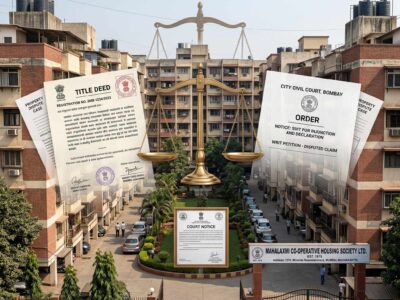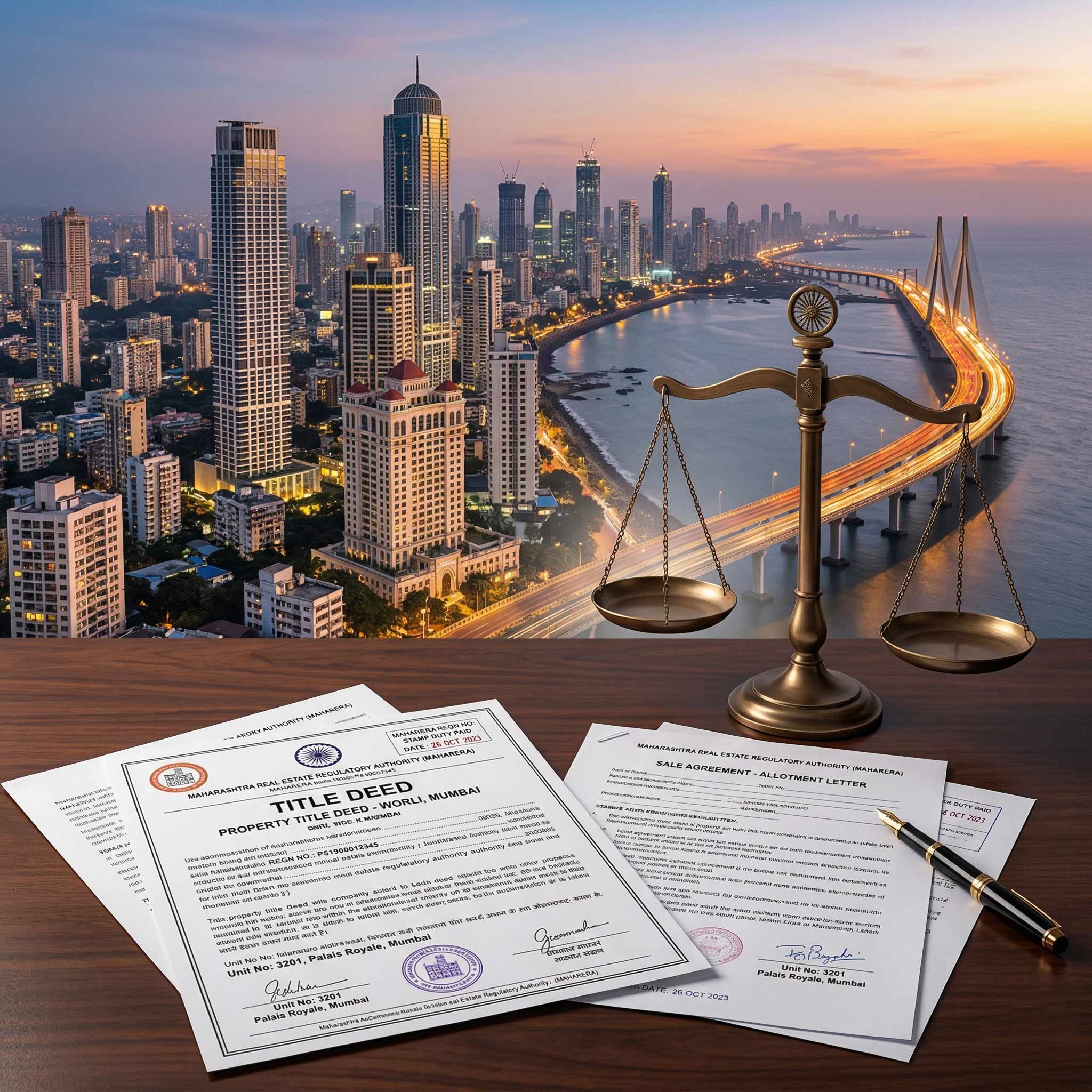
Real Estate & Property Disputes in Mumbai: A Complete Legal Guide for Buyers, Sellers and Housing Societies
Mumbai’s real estate market is one of the most expensive and legally complex property markets in India. With limited land availability, aging housing societies, large-scale redevelopment projects, and extremely high property values, real estate disputes are among the most frequently searched legal issues in Mumbai.
Every year thousands of buyers, sellers, housing societies, and developers encounter legal problems related to property ownership, redevelopment, documentation, and regulatory compliance. These disputes often arise due to unclear title history, redevelopment conflicts, documentation errors, and society disputes.
From a legal perspective, property matters in Mumbai are governed by several laws and regulations including the Real Estate (Regulation and Development) Act, 2016, the Maharashtra Rent Control Act, 1999, and various municipal regulations issued by the Municipal Corporation of Greater Mumbai.
Understanding these legal issues is essential for anyone purchasing property, selling property, investing in real estate, or participating in redevelopment projects in Mumbai.
Why Property Disputes Are Common in Mumbai
There are several reasons why real estate litigation is extremely common in Mumbai:
• Extremely high property prices
• Limited land availability
• Old buildings requiring redevelopment
• Complex ownership histories
• Multiple heirs claiming property rights
• Documentation irregularities from earlier decades
Many properties in Mumbai were transferred through old agreements, family arrangements, or power of attorney transactions, particularly between the 1960s and early 2000s. Some of these transactions were not properly registered, leading to unclear ownership chains and legal disputes years later.
As a result, people frequently search for legal advice before buying property, selling property, or entering redevelopment agreements.
Title Disputes and Unclear Ownership Chains
One of the most common property disputes in Mumbai relates to defective title or unclear ownership history.
Unlike some countries where title insurance protects buyers, property ownership in India is determined by documentary evidence forming a chain of ownership over many years.
Common title issues include
• Missing links in ownership documents
• Unregistered agreements or family settlements
• Inheritance disputes between legal heirs
• Multiple claims over the same property
• Forged documents or fraudulent sale agreements
For example, a property may have been transferred decades ago through an unregistered agreement or family settlement, and when a buyer attempts to purchase the property years later, the absence of proper documentation creates disputes.
Courts usually examine:
• Historical sale agreements
• Property card or CTS records
• Municipal records
• Housing society share certificates
• Probate or succession documents
Title disputes often lead to civil litigation that may take years to resolve, making legal due diligence extremely important before purchasing property.
Redevelopment Disputes in Housing Societies
Redevelopment is a major feature of Mumbai’s real estate landscape. Thousands of old buildings across the city are undergoing redevelopment due to structural deterioration, increased FSI availability, and rising land values.
In redevelopment projects, a co-operative housing society appoints a developer to demolish the old building and construct a new one, usually providing larger flats to existing residents.
However, redevelopment projects frequently give rise to disputes.
Common redevelopment issues
• Disagreements between society members and developers
• Allegations of unfair development agreements
• Delay in completion of redevelopment projects
• Non-payment of rent or transit accommodation
• Disputes regarding additional carpet area
• Lack of transparency in developer selection
In some cases, redevelopment agreements are signed without proper consultation with members, leading to disputes between the society committee and residents.
The Real Estate (Regulation and Development) Act, 2016 (RERA) has introduced important safeguards requiring developers to maintain financial transparency, register projects, and adhere to project timelines.
However, disputes continue to arise when developers fail to fulfil contractual obligations or when society members challenge redevelopment decisions.
Property Registration and Stamp Duty Disputes
Another common legal issue in Mumbai involves errors or irregularities in property registration.
Every property transaction in Maharashtra must comply with the Registration Act and the Maharashtra Stamp Act, which require proper stamping and registration of property documents.
Common registration problems include
• Underpayment of stamp duty
• Incorrect property description in documents
• Missing annexures or layout plans
• Errors in names of buyers or sellers
• Incorrect area measurements or CTS numbers
These issues sometimes come to light years later when the property is resold or when banks conduct due diligence before granting a home loan.
Rectifying such mistakes may require execution of rectification deeds, adjudication before stamp authorities, or even court proceedings.
Housing Society Membership and Share Certificate Disputes
Housing societies play a critical role in Mumbai’s residential real estate system. However, disputes often arise in relation to membership rights and transfer of shares in housing societies.
Common society disputes include
• Society refusing to transfer membership to the buyer
• Delay in issuing share certificates
• Objections raised during property transfer
• Disputes regarding nomination versus inheritance rights
• Disputes between society members and managing committees
Many societies delay membership transfers due to documentation issues, pending dues, or internal disputes.
These matters are usually resolved before the Registrar of Co-operative Societies or the Co-operative Court.
Tenant Rights and Rent Control Properties
Mumbai has a large number of properties governed by rent control laws. Under the Maharashtra Rent Control Act, 1999, tenants enjoy strong legal protection against eviction.
Tenant-related disputes often involve:
• Landlord attempts to recover possession
• Redevelopment involving tenants
• Pagdi system properties
• Disputes over tenancy rights after inheritance
When old buildings are redeveloped, tenants are typically entitled to rehabilitation rights and alternative accommodation, which frequently becomes a subject of litigation.
Property Fraud and Illegal Transactions
Property fraud is another serious issue in large cities such as Mumbai.
Common fraud methods include:
• Sale of property using forged power of attorney
• Sale by unauthorized relatives or agents
• Fake redevelopment schemes offered by fraudsters
• Multiple sale agreements executed for the same property
Once fraudulent transactions occur, victims may need to pursue civil suits, criminal complaints, and police investigations, which can take years to resolve.
Proper due diligence is therefore essential before entering into any property transaction.
Legal Due Diligence Before Buying Property in Mumbai
To avoid legal disputes, buyers should conduct proper legal verification before purchasing property.
Key precautions include:
• Conducting a title search for at least 30 years
• Verifying property card and CTS records
• Checking for encumbrances or pending litigation
• Reviewing housing society documents and share certificates
• Confirming compliance with RERA registration requirements
Engaging a property lawyer to review documentation can help identify legal risks before the transaction is completed.
Conclusion
Real estate transactions in Mumbai involve significant financial investment and complex legal procedures. Property disputes relating to title defects, redevelopment conflicts, registration errors, and housing society disputes are extremely common.
Given the high value of property in Mumbai and the complex regulatory framework governing real estate transactions, professional legal advice and thorough due diligence are essential before buying, selling, or redeveloping property.
Taking the right legal precautions at the beginning of a transaction can prevent years of litigation and financial loss.
Frequently Asked Questions (FAQs)
What documents should be verified before buying property in Mumbai?
Buyers should verify title documents, property card or CTS records, encumbrance certificates, housing society share certificates, and registration records.
What is RERA and how does it protect property buyers?
The Real Estate (Regulation and Development) Act, 2016 requires developers to register projects, disclose project details, and maintain financial transparency to protect homebuyers.
Can a housing society refuse to transfer membership to a buyer?
A housing society cannot arbitrarily refuse membership if the buyer complies with legal requirements and submits the necessary documentation.
What should be done if stamp duty is underpaid on a property agreement?
The document may need to be adjudicated before the stamp authority and the deficiency along with penalties may have to be paid.
Is legal due diligence necessary before buying property?
Yes. Conducting proper legal due diligence helps identify title defects, litigation risks, and regulatory issues before purchasing property.

Advocate Sarosh Damania is the founder of Sarosh Damania & Co., a premier law firm based in Mumbai, recognized for its exceptional legal services to corporations, individuals, and international clients worldwide. With a rich blend of experience and expertise, Adv. Damania and his team specialize in a wide array of legal disciplines, including Civil Law, Criminal Law, Aviation Law, Arbitration, Consumer Law, RERA, Company Law, Succession Law, Wills, Intellectual Property Law, Property Law, Housing Society Law, Debt Recovery, and Banking Law.