Why Airlines Need Specialised POSH Training: Aviation-Specific Workplace Harassment Compliance Under the POSH Act, 2013
The aviation industry is one of the most dynamic and demanding sectors in the world. Every day, thousands of airline employees work in airports, aircraft, corporate offices, cargo terminals, engineering facilities, crew transport vehicles and hotels across multiple cities and countries. Unlike a conventional office environment, an airline’s workplace is constantly changing, highly regulated and involves interaction with passengers, airport authorities, government agencies, vendors and employees from numerous organisations.
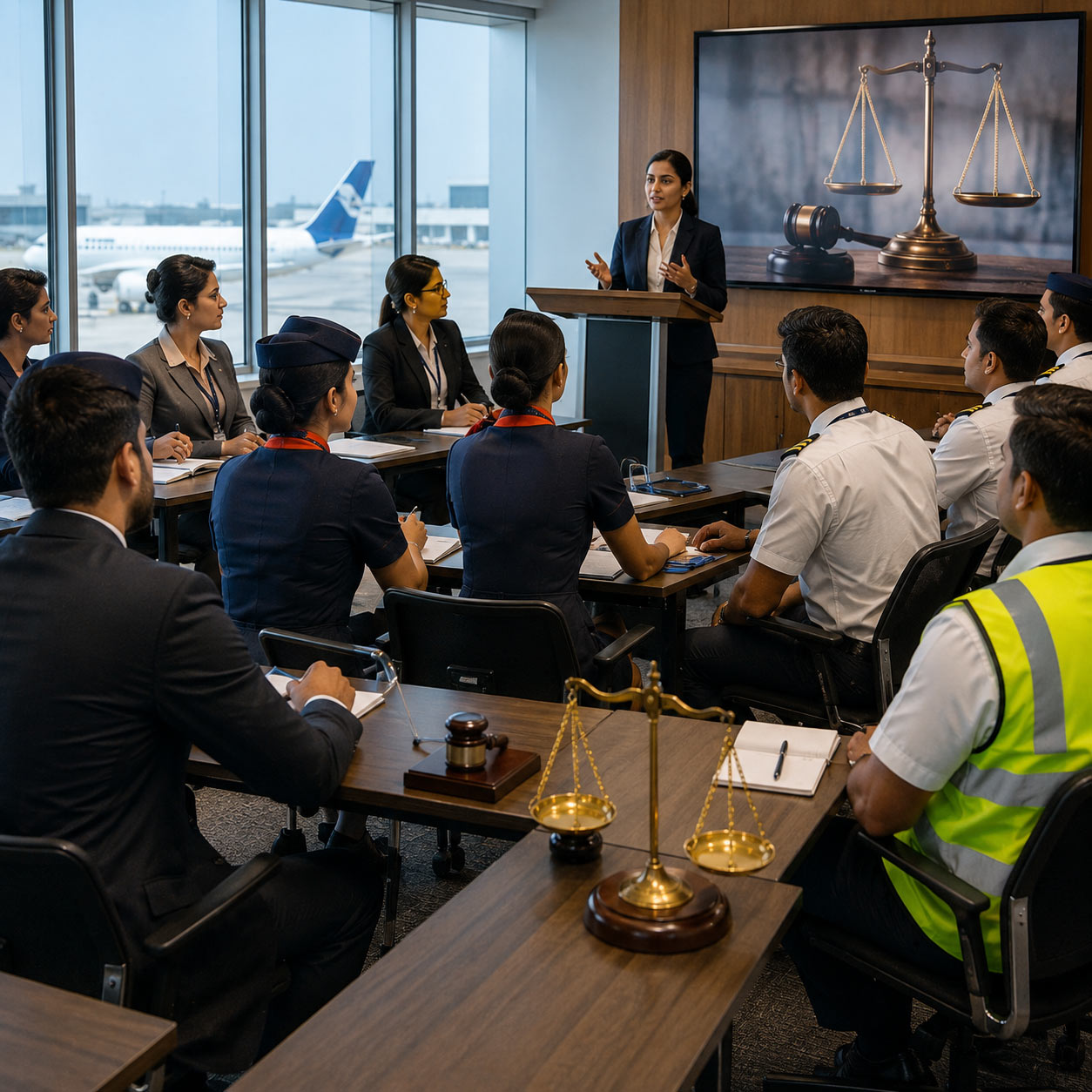
Given these unique operational challenges, compliance with the Sexual Harassment of Women at Workplace (Prevention, Prohibition and Redressal) Act, 2013 (“POSH Act”) cannot be achieved by simply conducting a generic annual awareness session. Airlines require specialised, role-specific POSH training that reflects the realities of aviation operations.
Unfortunately, many organisations continue to provide identical training to every employee, irrespective of whether they work in a corporate office, at an airport check-in counter, inside an aircraft or in an engineering hangar. While this may technically satisfy an internal training calendar, it often fails to achieve the true objective of the POSH Act prevention through awareness.
The Employer’s Legal Duty
The POSH Act places a clear responsibility on every employer to create and maintain a safe workplace.
Section 19 of the Act mandates that every employer shall, amongst other things:
- provide a safe working environment;
- organise workshops and awareness programmes for employees at regular intervals;
- organise orientation programmes for members of the Internal Committee;
- display the penal consequences of sexual harassment and details of the Internal Committee;
- assist employees where sexual harassment is committed by a third party or outsider in relation to the workplace; and
- treat sexual harassment as misconduct under the applicable service rules.
These obligations are mandatory. Compliance is not limited to constituting an Internal Committee or adopting a POSH Policy. An employer must take proactive measures to educate its workforce.
For airlines, this responsibility assumes even greater importance because of the unique nature of the aviation workplace.
The Aviation Workplace Is Unlike Any Other
Most industries operate from a fixed office location. Airlines do not.
For airline employees, the workplace may include:
- Corporate offices
- Airport terminals
- Aircraft
- Crew briefing rooms
- Airport lounges
- Cargo terminals
- Engineering hangars
- Crew transport vehicles
- Hotel accommodation during official layovers
- Training centres
- Official business travel
- Virtual workspaces and online communication platforms
Employees frequently interact with people who are not employed by the airline, including passengers, airport operators, CISF personnel, immigration officials, customs officers, ground handling companies, caterers, hotel staff and transport providers.
These interactions create situations that are rarely encountered in traditional workplaces and require specialised guidance.
One Training Programme Cannot Address Every Role
An airline employs people performing vastly different functions. Their workplace risks differ significantly.
Corporate Office Staff
Employees working in finance, HR, legal, sales, commercial, procurement and administration generally operate in a structured office environment.
Their training should focus on:
- professional workplace behaviour;
- respectful communication;
- misuse of authority by supervisors;
- workplace relationships;
- inappropriate emails, chats and video meetings;
- confidentiality obligations;
- retaliation and victimisation; and
- reporting mechanisms under the POSH Policy.
Practical examples involving Microsoft Teams, emails, WhatsApp messages, business travel and office meetings are far more relevant than generic illustrations.
Airport Ground Staff
Ground staff work in one of the busiest public-facing environments.
Every day they interact with:
- passengers;
- airport operators;
- immigration officers;
- customs officials;
- security agencies;
- ground handlers;
- caterers;
- transport providers;
- vendors; and
- employees of other airlines.
Unlike office employees, they regularly deal with members of the public, many of whom may behave inappropriately.
Training for ground staff should therefore cover:
- harassment by passengers;
- offensive language and gestures;
- inappropriate physical contact at check-in counters or boarding gates;
- third-party harassment;
- escalation protocols;
- preservation of CCTV and other evidence;
- coordination with airport security; and
- reporting obligations.
Section 19(g) of the POSH Act specifically requires employers to assist employees where harassment is committed by a third party or outsider. Ground staff must know how to invoke these protections.
Cabin Crew
Cabin crew operate in an entirely different environment.
Their workplace is confined, customer-facing and often international. They spend long hours with passengers in close proximity while simultaneously ensuring safety and delivering service.
Specialised training should address situations such as:
- passengers making sexually coloured remarks;
- unwelcome touching during inflight service;
- repeated requests for personal contact details;
- photography or video recording without consent;
- stalking through social media after a flight;
- inappropriate behaviour during official layovers;
- maintaining professional boundaries between crew members; and
- reporting incidents immediately after landing.
Cabin crew must also understand how to preserve evidence, report incidents promptly and coordinate with airline management without compromising safety or operational priorities.
Pilots and Flight Crew
Pilots occupy positions of authority and leadership within the flight crew.
Training should address:
- leadership responsibilities;
- interactions with cabin crew;
- maintaining professional boundaries;
- conduct during layovers;
- reporting obligations;
- avoiding abuse of authority; and
- fostering a respectful cockpit environment.
Because of the hierarchical nature of flight operations, pilots must appreciate the importance of maintaining professionalism at all times.
Engineering, Cargo and Technical Personnel
Employees working in engineering hangars, cargo terminals and technical operations often work in shifts, isolated workspaces and multidisciplinary teams.
Training should include:
- respectful workplace conduct;
- interactions with contractors;
- shift-based working;
- reporting procedures;
- use of digital communication; and
- maintaining professionalism in operational environments.
Managers Require Advanced Training
Managers are often the first point of contact when an employee raises a concern.
Their responsibilities extend beyond personal conduct.
Managers should understand:
- how to respond to complaints;
- when a matter must be referred to the Internal Committee;
- confidentiality obligations under Section 16;
- interim workplace measures;
- prohibition against retaliation; and
- maintaining neutrality during an inquiry.
A manager who mishandles an initial complaint may expose the organisation to unnecessary legal risk.
Internal Committee Members Need Industry-Specific Orientation
Section 19(c) requires employers to organise orientation programmes for Internal Committee members.
For airlines, these programmes should extend beyond the provisions of the POSH Act.
Internal Committee members should understand:
- airline operations;
- flight and duty rosters;
- airport access restrictions;
- CCTV systems;
- passenger interaction records;
- crew scheduling;
- security procedures;
- operational documentation; and
- preservation of electronic evidence.
An Internal Committee unfamiliar with aviation operations may struggle to appreciate the context of workplace incidents.
Digital Workplace Risks
Today’s airline workforce communicates extensively through:
- Microsoft Teams;
- WhatsApp;
- official messaging platforms;
- emails;
- rostering applications; and
- collaboration tools.
Harassment is no longer confined to physical workplaces.
Training should address:
- inappropriate messages;
- offensive memes or images;
- repeated personal communication;
- misuse of official communication groups;
- online stalking; and
- social media interactions between colleagues and passengers.
Employees should understand that digital misconduct may amount to sexual harassment even when it occurs outside office hours if it has a nexus with the workplace.
Third-Party Harassment
Airline employees are particularly vulnerable to misconduct by individuals who are not employees of the airline.
Passengers, vendors, contractors and airport personnel may all engage in inappropriate behaviour.
Employees should know:
- how to report such incidents;
- whom to contact immediately;
- what evidence should be preserved;
- how management will respond; and
- what support the employer is legally required to provide.
Training should reinforce that employees will be supported when they report genuine incidents involving third parties.
Why Generic Training Is Ineffective
A standard one-hour presentation delivered uniformly across the organisation often fails to address the realities of airline operations.
Employees engage more effectively when training includes realistic aviation scenarios, role-play exercises and examples directly relevant to their duties.
Role-specific training enables employees to understand not only the law but also how to apply it in practical situations they encounter every day.
Beyond Compliance—Building a Respectful Culture
Effective POSH training is not merely about avoiding penalties under Section 26 of the POSH Act. It is about fostering a culture of dignity, respect and accountability.
Employees who understand acceptable workplace behaviour are more likely to intervene appropriately, report concerns promptly and contribute to a safer working environment.
For airlines, where teamwork, trust and professionalism are essential to safe operations, this culture is invaluable.
Conclusion
The aviation industry is unlike any other workplace. The challenges faced by a corporate HR executive, an airport customer service agent and a cabin crew member are fundamentally different. Expecting a single generic POSH training programme to address these diverse operational realities is neither effective nor consistent with the preventive spirit of the POSH Act.
Airlines should adopt role-specific, aviation-focused POSH training for office staff, ground staff, cabin crew, flight crew, engineering personnel, managers and Internal Committee members. Such training should combine legal compliance with practical operational scenarios, enabling employees to recognise, prevent and appropriately respond to workplace sexual harassment.
A safe workplace is not created by policy documents alone. It is built through awareness, continuous education and a shared commitment to respect and professionalism. For airlines, specialised POSH training is therefore not merely a compliance requirement—it is an operational necessity.
About the Author
Adv. Sarosh Damania is an Advocate practising before the Bombay High Court and various judicial forums across India. He advises airlines, multinational corporations and employers on aviation law, employment law, labour law, domestic inquiries and POSH compliance. He regularly conducts customised POSH training programmes for airline office staff, airport ground operations, cabin crew, management teams and Internal Committee members, tailored to the unique operational requirements of the aviation industry.
Disclaimer: This article is intended for general informational purposes only and should not be construed as legal advice. Every organisation should seek legal advice tailored to its operations, service rules and applicable laws.
Frequently Asked Questions (FAQs)
Why do airlines need specialised POSH training?
Airline employees work in diverse environments such as aircraft, airports, hotels, engineering hangars, and virtual platforms. Role-specific training helps employees understand how the POSH Act applies to their unique operational settings.
Is generic POSH training sufficient for airlines?
Generic training may satisfy a compliance calendar but often fails to address aviation-specific scenarios involving passengers, airport authorities, contractors, layovers, and international operations.
Which airline employees should receive specialised POSH training?
Training should be customised for:
- Corporate office staff
- Airport ground staff
- Cabin crew
- Pilots and flight crew
- Engineering and cargo personnel
- Managers
- Internal Committee members
What topics should aviation POSH training include?
Training should cover third-party harassment, digital communications, reporting mechanisms, confidentiality, evidence preservation, professional boundaries, layover conduct, and role-specific workplace scenarios.
Why is specialised Internal Committee training important for airlines?
Internal Committee members should understand aviation operations, flight rosters, airport access controls, CCTV systems, crew scheduling, and preservation of electronic evidence to conduct fair and effective inquiries.
What are an employer’s obligations under Section 19 of the POSH Act?
Employers must provide a safe workplace, conduct regular awareness programmes, organise orientation for Internal Committee members, assist employees facing third-party harassment, and implement appropriate workplace policies and procedures.

Advocate Sarosh Damania is the founder of Sarosh Damania & Co., a premier law firm based in Mumbai, recognized for its exceptional legal services to corporations, individuals, and international clients worldwide. With a rich blend of experience and expertise, Adv. Damania and his team specialize in a wide array of legal disciplines, including Civil Law, Criminal Law, Aviation Law, Arbitration, Consumer Law, RERA, Company Law, Succession Law, Wills, Intellectual Property Law, Property Law, Housing Society Law, Debt Recovery, and Banking Law.