Can Hotels Legally Use Guest Photos or Videos for Marketing in India? Understanding Hotel Guest Privacy Rights
The hospitality and luxury hotel industry in India has undergone a massive commercial transformation over the past decade.
Modern hotels no longer operate merely as accommodation providers. Today, luxury hospitality brands aggressively position themselves as:
- lifestyle destinations;
- wellness retreats;
- luxury experience providers;
- influencer collaboration hubs;
- premium event venues;
- destination wedding properties;
- luxury tourism brands.
As a consequence, hotels increasingly undertake:
- commercial photoshoots;
- promotional videography;
- drone filming;
- influencer campaigns;
- celebrity collaborations;
- social media marketing campaigns;
- digital advertising shoots.
Across India and internationally, premium hospitality brands including:
- Taj Mahal Palace
- The Oberoi Mumbai
- The St. Regis Mumbai
- JW Marriott Mumbai Juhu
- The Leela Palace New Delhi
- ITC Grand Chola
- The Oberoi Udaivilas
- Umaid Bhawan Palace
- Rambagh Palace
- Taj Lake Palace
- Atlantis The Royal
- Burj Al Arab
regularly conduct:
- lifestyle branding shoots;
- hospitality advertisements;
- poolside campaigns;
- drone videography;
- influencer-led promotional campaigns;
- social media marketing exercises.
This increasing commercialization of hospitality branding has simultaneously given rise to serious legal concerns involving:
- guest privacy;
- unauthorized filming;
- misuse of guest photographs;
- commercial exploitation of guest identity;
- drone surveillance concerns;
- social media misuse;
- consumer harassment;
- informational privacy.
A recurring legal issue therefore arises:
Whether hotels can legally use photographs, videos, drone footage, or identifiable images of guests for commercial marketing purposes without consent?
The answer, in law, is nuanced but significant.
The legal position emerging from constitutional jurisprudence, consumer protection principles, privacy law, tort principles, and evolving judicial trends strongly suggests that:
hotels cannot arbitrarily or commercially exploit identifiable guest photographs, videos, or personal likeness without lawful authority, informed consent, or legally sustainable contractual permission.
This article seeks to examine in detail:
- legal rights of hotel guests in India;
- privacy protections available to guests;
- legality of hotel filming practices;
- drone videography issues;
- social media reposting by hotels;
- influencer marketing risks;
- consumer remedies against hotels;
- compensation claims arising from unauthorized usage of guest photographs or videos.
Prepared by:
Sarosh Damania & Co. – Advocates, Bombay High Court
RIGHT TO PRIVACY OF HOTEL GUESTS UNDER INDIAN LAW
The right to privacy is now firmly recognized as a fundamental right under Indian constitutional jurisprudence.
Guests checking into hotels reasonably expect:
- dignity;
- confidentiality;
- privacy;
- personal security;
- freedom from unauthorized commercial exploitation.
The expectation of privacy becomes even more significant in:
- hotel rooms;
- private villas;
- spas;
- swimming pool areas;
- wellness retreats;
- beach resorts;
- luxury recreational areas;
- private dining spaces.
Hotels therefore owe heightened obligations concerning:
- guest confidentiality;
- responsible surveillance practices;
- commercial usage of guest identity;
- protection against intrusive filming.
WHETHER HOTELS CAN LEGALLY USE GUEST PHOTOS OR VIDEOS FOR MARKETING PURPOSES
Ordinarily:
hotels cannot commercially exploit identifiable photographs, videos, or likeness of guests without proper authority or legally sustainable consent.
Where a guest is identifiable in:
- advertisements;
- social media campaigns;
- promotional videos;
- influencer campaigns;
- drone footage;
- hotel brochures;
- hospitality marketing campaigns;
unauthorized commercial usage may potentially expose hotels to:
- consumer litigation;
- injunction proceedings;
- privacy claims;
- compensation claims;
- reputational liability.
WHETHER IMPLIED CONSENT IS SUFFICIENT
Hotels frequently attempt to rely upon:
- fine-print disclaimers;
- booking terms;
- event notices;
- generic photography notices;
- website conditions.
However:
implied consent is not automatically sufficient for commercial exploitation of identifiable guest images.
Courts may examine:
- whether consent was informed;
- whether the guest had actual knowledge;
- whether the guest was reasonably identifiable;
- whether commercial exploitation occurred;
- whether the usage exceeded legitimate expectations.
One-sided or hidden clauses may not necessarily protect hotels from legal scrutiny.
HOTEL DRONE SHOOTS & PRIVACY CONCERNS
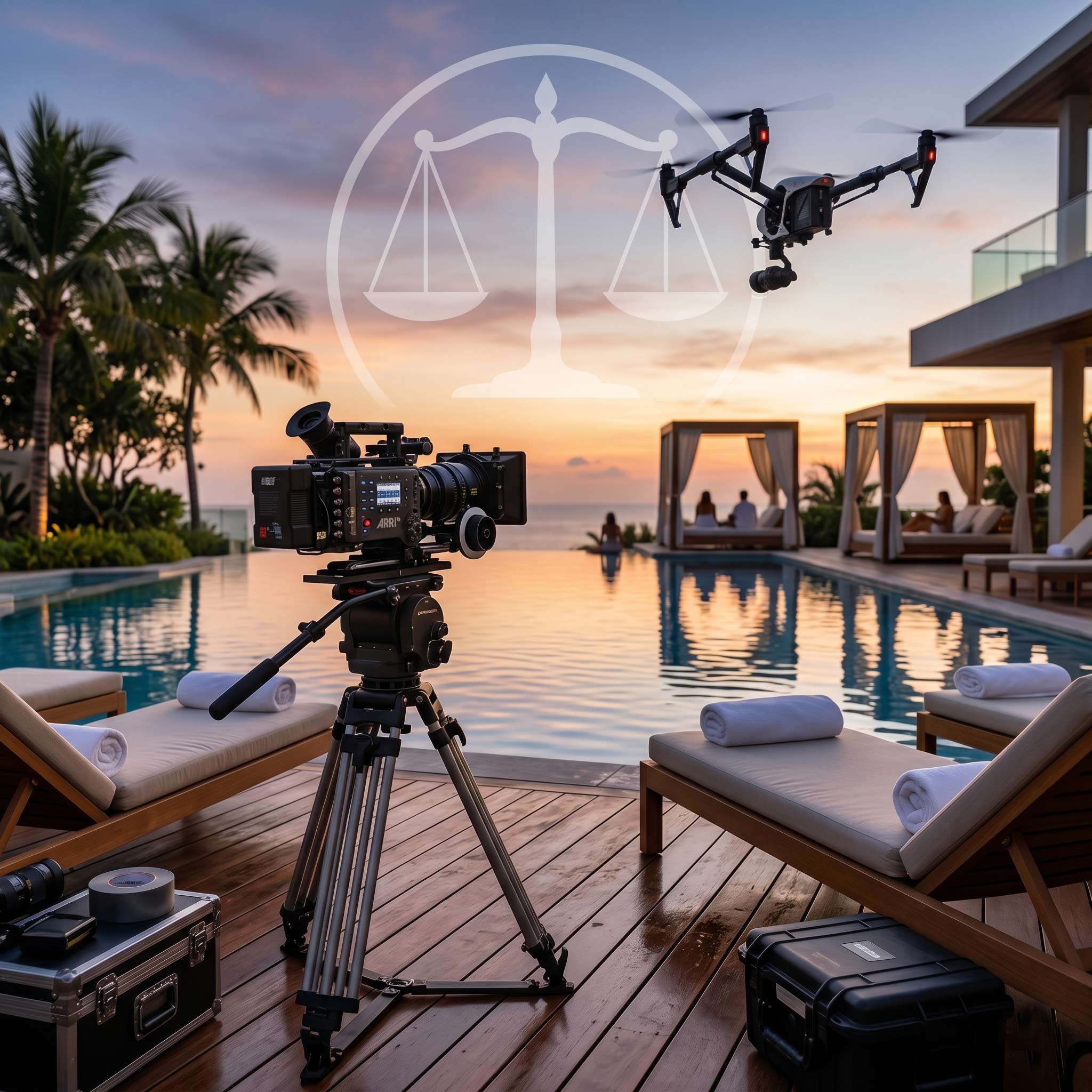
Luxury hotels increasingly employ drone videography for:
- resort promotions;
- hospitality branding;
- destination wedding marketing;
- tourism advertisements;
- influencer collaborations.
However, drone filming frequently raises serious privacy concerns where guests are unknowingly captured in:
- poolside footage;
- beach footage;
- recreational areas;
- wellness zones;
- private event spaces.
Disputes concerning unauthorized drone filming are increasingly emerging within:
- luxury resorts;
- wellness retreats;
- premium beach destinations;
- celebrity event venues.
WHETHER HOTELS CAN RECORD GUESTS IN SWIMMING POOLS, SPAS & PRIVATE AREAS
The legality depends upon:
- nature of recording;
- expectation of privacy;
- visibility of guest;
- purpose of recording;
- commercial exploitation.
Recording guests in:
- swimwear zones;
- spas;
- wellness areas;
- semi-private recreational spaces;
without informed consent may potentially amount to:
- invasion of privacy;
- harassment;
- unauthorized commercial exploitation.
Such conduct may expose hotels to:
- consumer complaints;
- injunction proceedings;
- compensation liability.
SOCIAL MEDIA MARKETING & INFLUENCER CAMPAIGNS BY HOTELS
Hotels today aggressively market themselves through:
- YouTube
- influencer collaborations;
- celebrity endorsements;
- hospitality reels;
- digital advertising campaigns.
Hotels frequently repost:
- guest photographs;
- tagged stories;
- customer videos;
- influencer-generated content.
However:
reposting guest content without lawful authorization may still expose hotels to legal scrutiny.
WHETHER TAGGING A HOTEL GIVES AUTOMATIC COMMERCIAL RIGHTS TO THE HOTEL
No.
Merely because:
- a guest tags the hotel;
- uploads content publicly;
- posts a location-tagged image;
does not automatically confer unrestricted commercial exploitation rights upon the hotel.
Commercial usage may still require:
- permission;
- license;
- express authorization;
- informed consent.
DATA PRIVACY & INFORMATIONAL RIGHTS OF HOTEL GUESTS
Hotels routinely collect:
- passports;
- identity documents;
- phone numbers;
- payment details;
- travel information;
- email addresses.
Improper handling or unauthorized usage of such information may expose hotels to:
- consumer litigation;
- privacy disputes;
- reputational harm;
- regulatory scrutiny.
Luxury hospitality businesses are increasingly expected to maintain heightened standards of:
- confidentiality;
- data protection;
- guest privacy management.
WHETHER GUESTS CAN FILE CONSUMER CASES AGAINST HOTELS
Yes.
Guests may initiate proceedings before:
- District Consumer Commission;
- State Consumer Commission;
- National Consumer Disputes Redressal Commission (NCDRC).
Hotels may face allegations involving:
- deficiency in service;
- unfair trade practices;
- privacy violations;
- mental harassment;
- unauthorized commercial exploitation.
Consumer fora increasingly recognize:
- emotional distress;
- mental agony;
- reputational harm;
- privacy-related grievances.
WHETHER GUESTS CAN CLAIM COMPENSATION
Depending upon facts and circumstances, guests may seek:
- compensation;
- injunctions;
- removal of photographs/videos;
- damages;
- litigation costs;
- public apology.
Claims may arise where guests suffer:
- humiliation;
- embarrassment;
- reputational damage;
- emotional distress;
- unauthorized exploitation of identity.
WHETHER FOREIGN TOURISTS CAN FILE LEGAL ACTION IN INDIA
Yes.
Foreign nationals visiting India may initiate:
- consumer complaints;
- civil proceedings;
- injunction actions;
where the cause of action arose within India.
This assumes particular relevance in disputes involving:
- luxury resorts;
- destination weddings;
- international hospitality chains;
- tourism-related filming disputes.
COMMON DEFENCES RAISED BY HOTELS
Hotels frequently contend:
- implied consent existed;
- the guest voluntarily appeared;
- the guest was part of crowd footage;
- no commercial exploitation occurred;
- terms and conditions permitted recording.
Courts carefully scrutinize:
- degree of identifiability;
- factual circumstances;
- reasonable privacy expectations;
- commercial intent;
- proportionality of usage.
EMERGING JUDICIAL & COMMERCIAL TREND IN INDIA
Indian jurisprudence increasingly recognizes:
dignity, informational autonomy, and privacy as significant legal rights.
Luxury hospitality businesses are increasingly expected to:
- secure informed consent;
- maintain guest confidentiality;
- avoid intrusive commercial filming;
- adopt responsible marketing practices.
The hospitality sector is witnessing growing legal scrutiny concerning:
- drone usage;
- influencer campaigns;
- surveillance practices;
- commercial exploitation of guest identity.
IMPORTANT STEPS GUESTS SHOULD TAKE IMMEDIATELY
Guests facing privacy-related concerns should promptly:
- preserve screenshots;
- record URLs;
- preserve social media evidence;
- retain booking documents;
- maintain correspondence;
- issue written objections.
Delay in objecting may weaken legal remedies.
WHY PROFESSIONAL LEGAL REPRESENTATION IS IMPORTANT
Hospitality privacy disputes frequently involve:
- digital evidence;
- social media usage;
- commercial exploitation;
- consumer jurisprudence;
- reputational concerns.
Professional legal assistance helps:
- secure takedown/removal;
- preserve evidence;
- issue legal notices;
- initiate consumer proceedings;
- claim compensation;
- protect reputation.
HOW Sarosh Damania & Co. ASSISTS CLIENTS
Sarosh Damania & Co. regularly advises and represents clients in matters involving:
- hotel privacy disputes;
- hospitality litigation;
- consumer complaints;
- social media disputes;
- privacy claims;
- reputation management disputes;
- commercial exploitation claims;
- luxury hospitality disputes.
The Firm appears before:
- Consumer Commissions;
- Civil Courts;
- Regulatory Authorities;
- Bombay High Court.
CONCLUSION
Hotels and luxury hospitality brands cannot assume unrestricted rights over guest photographs, videos, drone footage, or personal likeness merely because guests visit their premises.
The increasing commercialization of:
- luxury hospitality branding;
- influencer campaigns;
- drone videography;
- social media marketing;
has simultaneously intensified legal scrutiny concerning:
- privacy rights;
- consent;
- dignity;
- unauthorized commercial exploitation.
Hotels must therefore exercise extreme caution before commercially using:
- guest images;
- videos;
- identifiable footage;
- personal likeness.
Guests facing:
- unauthorized filming;
- misuse of photographs;
- social media exploitation;
- privacy violations;
- unauthorized commercial usage;
must promptly evaluate their legal remedies.
For legal assistance concerning:
- hotel privacy disputes;
- consumer litigation against hotels;
- social media misuse;
- unauthorized commercial exploitation;
- hospitality disputes;
- privacy-related claims,
contact:
Sarosh Damania & Co. – Advocates, Bombay High Court
Practice Areas:
- Consumer Litigation
- Hospitality Disputes
- Privacy Law
- Social Media Litigation
- Commercial Litigation
- Bombay High Court Litigation
Office:
Mumbai
Website:
Frequently Asked Questions
Can a hotel use my photograph for advertising without my permission?
Generally, hotels should not commercially use identifiable guest photographs or videos without proper consent, especially where guests can be clearly identified.
Does tagging a hotel on Instagram allow the hotel to use my photo in advertisements?
No. Merely tagging a hotel or posting publicly does not automatically grant the hotel unrestricted commercial usage rights.
Can hotels use drone footage that includes guests?
Hotels should exercise caution. If identifiable guests are captured and the footage is used commercially without consent, privacy concerns may arise.
Can I file a consumer complaint against a hotel for privacy violations?
Yes. Guests may approach Consumer Commissions and seek remedies for privacy violations, mental distress, or unauthorized commercial exploitation.
What should I do if a hotel posts my image without permission?
Preserve screenshots, save URLs, retain booking records, issue written objections, and seek legal advice promptly.

Advocate Sarosh Damania is the founder of Sarosh Damania & Co., a premier law firm based in Mumbai, recognized for its exceptional legal services to corporations, individuals, and international clients worldwide. With a rich blend of experience and expertise, Adv. Damania and his team specialize in a wide array of legal disciplines, including Civil Law, Criminal Law, Aviation Law, Arbitration, Consumer Law, RERA, Company Law, Succession Law, Wills, Intellectual Property Law, Property Law, Housing Society Law, Debt Recovery, and Banking Law.