How to Legally Recover Money from Friends or Business Partners in India
One of the most emotionally and financially distressing situations faced by individuals and businesses in India arises when money lent to a friend, relative, colleague, or business partner is not returned.
Across India, particularly in cities such as Mumbai, disputes involving:
- friendly loans;
- unpaid business investments;
- partnership disputes;
- breach of oral promises;
- failed joint ventures;
- unpaid advances;
- dishonoured cheques;
- unpaid profit-sharing arrangements;
- informal financial transactions;
have increased substantially in recent years.
Many individuals lend substantial sums:
- based on friendship;
- family relations;
- trust;
- verbal commitments;
- WhatsApp assurances;
- business goodwill.
However, once disputes arise, the borrower or business partner frequently:
- denies liability;
- avoids repayment;
- delays communication;
- disputes terms;
- threatens counter-action;
- transfers assets;
- or simply disappears.
A common misconception prevailing in society is that:
“money given to friends or business partners cannot be legally recovered unless there is a written agreement.”
This belief is legally incorrect.
Indian law provides multiple legal remedies for recovery of money, even in cases involving:
- oral transactions;
- friendly loans;
- WhatsApp communications;
- undocumented business arrangements;
- verbal assurances.
This article provides a detailed legal analysis regarding:
- recovery of friendly loans;
- recovery from business partners;
- cheque bounce cases;
- civil recovery suits;
- criminal remedies;
- legal notices;
- evidence required;
- limitation period;
- recovery through courts;
- practical legal strategy for recovery of money in India.
Prepared by:
Sarosh Damania & Co. – Advocates, Bombay High Court
COMMON MONEY RECOVERY DISPUTES IN INDIA
The Firm regularly encounters disputes involving:
- friendly loans not returned;
- business investments gone wrong;
- failed partnership arrangements;
- unpaid advances;
- hand loans;
- oral financial arrangements;
- property transaction disputes;
- non-return of security deposits;
- unpaid commissions;
- breach of profit-sharing commitments;
- family financial disputes;
- startup investment disputes;
- unpaid vendor dues.
Such disputes often involve substantial amounts running into:
- lakhs;
- crores;
- business investments;
- property-related advances.
WHETHER MONEY GIVEN WITHOUT WRITTEN AGREEMENT CAN BE RECOVERED?
Yes.
Indian law does not mandate that every loan or financial transaction must necessarily be documented through a formal written agreement.
Money may still be recoverable based upon:
- bank transfers;
- UPI transactions;
- WhatsApp chats;
- emails;
- audio recordings;
- admissions;
- witnesses;
- account statements;
- cheque issuance;
- conduct of parties.
Courts in India increasingly recognize electronic and digital evidence.
IMPORTANT EVIDENCE REQUIRED FOR MONEY RECOVERY
While written agreements strengthen cases, recovery is still possible through surrounding evidence.
Important evidence may include:
(i) Bank Transfer Proofs
- NEFT
- RTGS
- IMPS
- UPI transactions
- account statements
(ii) WhatsApp Chats
Messages acknowledging:
- borrowing;
- repayment promises;
- extensions of time;
- liability admissions.
(iii) Emails
Email communications frequently become crucial evidence.
(iv) Audio Recordings
In appropriate circumstances, recordings may support recovery claims.
(v) Witnesses
Witnesses aware of the transaction may support the claim.
(vi) Cheques Issued by Borrower
Dishonoured cheques significantly strengthen recovery proceedings.
LEGAL NOTICE FOR RECOVERY OF MONEY
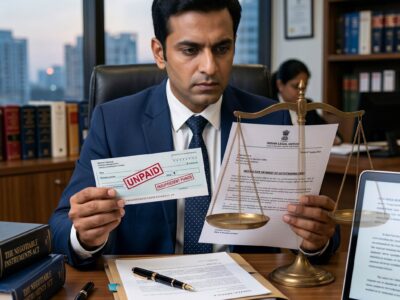
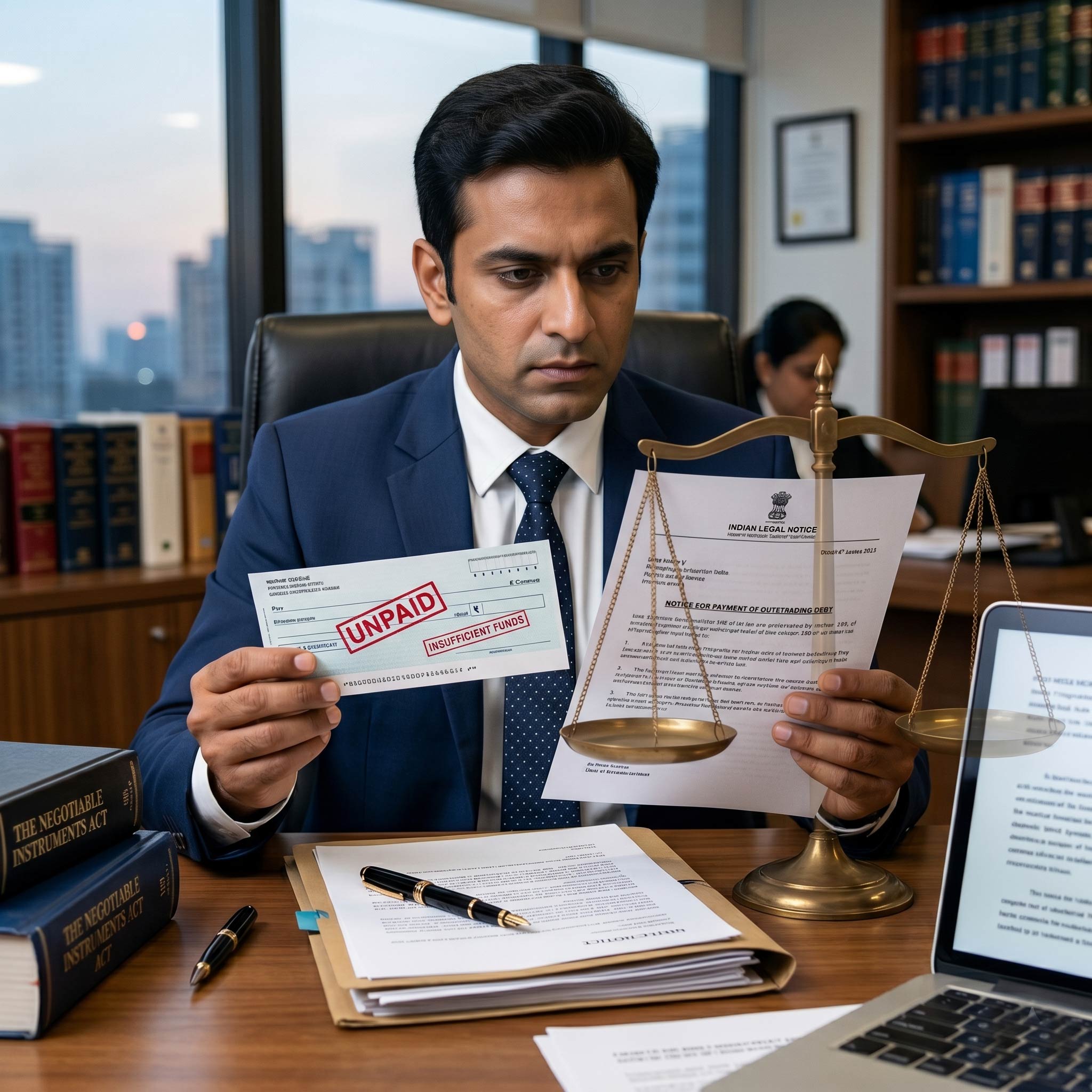
The first and most important legal step generally involves issuance of a formal legal notice.
A properly drafted legal notice:
- records the claim;
- narrates facts;
- demands payment;
- preserves legal rights;
- creates documentary evidence;
- often pressures settlement.
A strong advocate-drafted legal notice frequently results in:
- negotiated settlement;
- repayment schedule;
- acknowledgment of liability.
CIVIL SUIT FOR RECOVERY OF MONEY
Where repayment is not made despite notice, proceedings may be initiated before Civil Courts.
A civil recovery suit may seek:
- recovery of principal amount;
- contractual interest;
- commercial interest;
- damages;
- litigation costs.
Civil recovery proceedings may also include:
- attachment applications;
- injunctions;
- disclosure of assets;
- garnishee proceedings.
SUMMARY SUIT UNDER ORDER XXXVII CPC
In appropriate cases involving:
- written contracts;
- invoices;
- cheques;
- acknowledgments;
- promissory notes,
a Summary Suit under Order XXXVII of the Code of Civil Procedure may be maintainable.
Summary suits are comparatively faster since:
the defendant cannot automatically defend the suit without obtaining leave from the court.
This becomes a powerful remedy in commercial recovery disputes.
CHEQUE BOUNCE CASES UNDER SECTION 138 NI ACT
Where the borrower issues a cheque which is dishonoured, proceedings may be initiated under:
Section 138 of the Negotiable Instruments Act, 1881.
Cheque bounce proceedings constitute one of the most effective legal remedies for money recovery in India.
Dishonour of cheques due to:
- insufficient funds;
- account closure;
- payment stop instructions;
- signature mismatch,
may expose the drawer to:
- criminal prosecution;
- fine;
- imprisonment;
- compensation orders.
CAN CRIMINAL ACTION BE TAKEN?
In certain cases, yes.
Where money was obtained through:
- cheating;
- fraudulent inducement;
- dishonest misrepresentation;
- criminal breach of trust;
- deception from inception,
criminal proceedings may be maintainable under:
Bharatiya Nyaya Sanhita, 2023
However:
every money dispute does not automatically amount to a criminal offence.
Courts carefully distinguish:
- civil disputes;
- contractual breaches;
- criminal cheating.
RECOVERY OF MONEY FROM BUSINESS PARTNERS
Business partner disputes frequently involve:
- diversion of funds;
- siphoning of profits;
- breach of partnership terms;
- non-payment of profit share;
- misuse of company accounts;
- unauthorized withdrawals;
- misuse of investor funds.
Such disputes commonly arise in:
- partnerships;
- LLPs;
- startups;
- private limited companies;
- informal business arrangements.
WHETHER ORAL PARTNERSHIPS ARE LEGALLY VALID?
Yes.
Partnerships in India may arise even without formal written agreements.
Courts examine:
- conduct of parties;
- profit sharing;
- capital contribution;
- communications;
- operational involvement.
However, absence of documentation often complicates evidence and recovery.
IMPORTANT LEGAL REMEDIES AGAINST BUSINESS PARTNERS
Depending upon facts, remedies may include:
- civil recovery suits;
- injunction proceedings;
- partnership dissolution;
- rendition of accounts;
- forensic audit;
- criminal complaints;
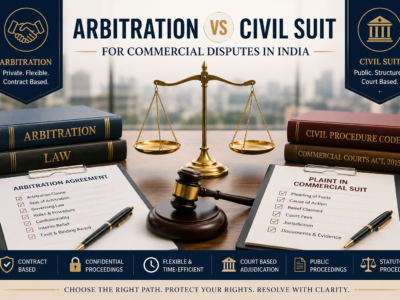
- arbitration proceedings;
- NCLT proceedings (in company matters).
LIMITATION PERIOD FOR RECOVERY OF MONEY IN INDIA
A crucial issue in money recovery matters is limitation.
Generally:
money recovery proceedings should ordinarily be initiated within 3 years from the date the money became due.
However, limitation may get extended through:
- written acknowledgments;
- part-payments;
- emails;
- WhatsApp admissions;
- fresh promises to pay.
Delay in taking legal action may seriously prejudice recovery rights.
WHETHER WHATSAPP CHATS ARE VALID EVIDENCE?
Yes.
Indian courts increasingly recognize:
- WhatsApp chats;
- emails;
- electronic records;
- digital communications;
as admissible evidence subject to legal proof requirements.
In modern litigation, WhatsApp conversations frequently become critical evidence in recovery disputes.
WHETHER PROPERTY OF BORROWER CAN BE ATTACHED?
In appropriate cases, courts may grant:
- attachment before judgment;
- injunction against transfer of assets;
- restraint orders;
- garnishee reliefs.
Such remedies become important where borrowers attempt to:
- dispose of assets;
- evade liability;
- transfer monies;
- frustrate recovery proceedings.
COMMON DEFENCES RAISED BY BORROWERS
Borrowers frequently allege:
- money was gift and not loan;
- transaction was investment;
- repayment already made;
- no written agreement exists;
- amount was gambling/speculative transaction;
- claim is time-barred.
Proper legal strategy and evidence become critical to defeat such defences.
WHY PROFESSIONAL LEGAL REPRESENTATION IS IMPORTANT
Money recovery disputes frequently involve:
- emotional relationships;
- business fallout;
- complex factual disputes;
- documentary evidence;
- criminal and civil overlap.
Professional legal assistance helps:
- structure the claim properly;
- preserve evidence;
- draft strong legal notices;
- initiate appropriate proceedings;
- maximize recovery chances;
- secure interim reliefs.
- HOW Sarosh Damania & Co. ASSISTS CLIENTS
Sarosh Damania & Co. regularly advises and represents clients in matters involving:
- money recovery disputes;
- friendly loan recovery;
- cheque bounce litigation;
- partnership disputes;
- business fraud disputes;
- recovery suits;
- arbitration proceedings;
- commercial litigation.
The Firm represents clients before:
- Civil Courts;
- Commercial Courts;
- Magistrate Courts;
- Arbitral Tribunals;
- Bombay High Court.
PRACTICAL LEGAL STRATEGY FOR MONEY RECOVERY
An effective money recovery strategy generally involves:
Step 1:
Preserve all documentary and electronic evidence.
Step 2:
Issue a strong legal notice.
Step 3:
Evaluate civil and criminal remedies simultaneously.
Step 4:
Seek urgent interim protection where necessary.
Step 5:
Initiate structured legal proceedings without delay.
CONCLUSION
Money recovery disputes involving friends, relatives, and business partners are amongst the most sensitive and complicated disputes faced by individuals and businesses in India.
However:
merely because money was advanced informally does not mean it cannot be legally recovered.
Indian law provides multiple powerful remedies for recovery of money through:
- civil proceedings;
- cheque bounce litigation;
- commercial suits;
- arbitration;
- criminal proceedings in appropriate cases.
Prompt legal action, proper evidence preservation, and strategic legal representation significantly improve recovery prospects.
For legal assistance relating to:
- money recovery;
- friendly loan disputes;
- cheque bounce matters;
- business partner disputes;
- commercial recovery litigation;
- recovery suits;
- arbitration proceedings,
contact:
Sarosh Damania & Co. – Advocates, Bombay High Court
Practice Areas:
- Money Recovery Litigation
- Cheque Bounce Cases
- Commercial Litigation
- Partnership Disputes
- Arbitration
- Bombay High Court Litigation
Office:
Mumbai
Website:
Frequently Asked Questions (FAQs)
Can money given without written agreement be legally recovered?
Yes. Courts recognize bank transfers, WhatsApp chats, emails, witnesses, and digital evidence.
What is the first legal step for money recovery?
Issuing a strong legal notice demanding repayment.
Can cheque bounce cases help recover money?
Yes. Section 138 NI Act proceedings are among the strongest remedies in India.
Are WhatsApp chats valid evidence?
Yes, courts increasingly recognize electronic records and chats as evidence.
What is the limitation period for money recovery?
Generally 3 years from the date the amount became due, subject to extensions through acknowledgments.

Advocate Sarosh Damania is the founder of Sarosh Damania & Co., a premier law firm based in Mumbai, recognized for its exceptional legal services to corporations, individuals, and international clients worldwide. With a rich blend of experience and expertise, Adv. Damania and his team specialize in a wide array of legal disciplines, including Civil Law, Criminal Law, Aviation Law, Arbitration, Consumer Law, RERA, Company Law, Succession Law, Wills, Intellectual Property Law, Property Law, Housing Society Law, Debt Recovery, and Banking Law.