
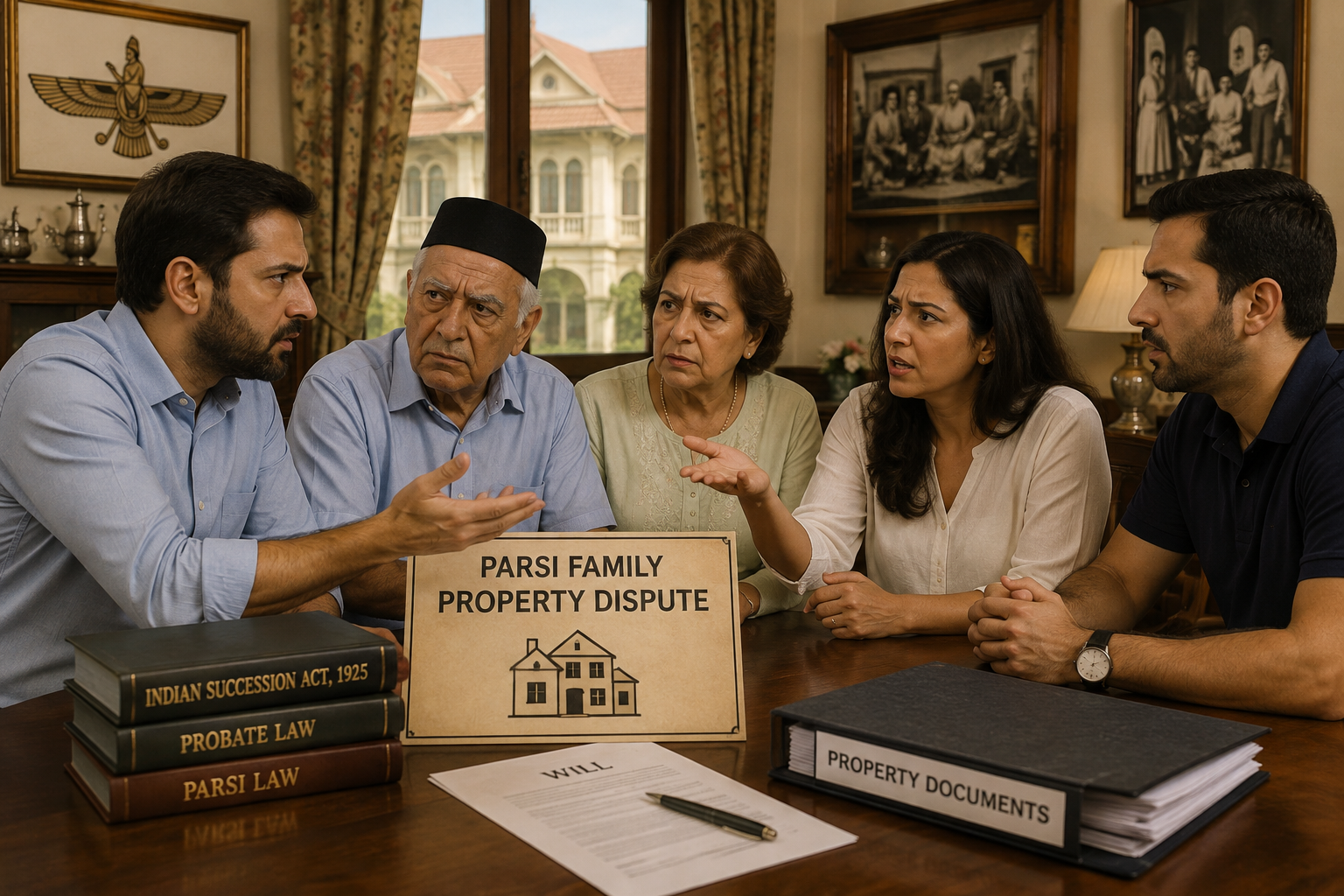
Parsi Succession & Property Disputes in India: Legal Rights Every Parsi Family Must Know
Detailed Legal Analysis on Parsi Inheritance, Probate Proceedings, Family Settlements, Redevelopment Disputes & Testamentary Litigation in India
By Adv. Sarosh Damania
Sarosh Damania & Co. – Advocates, Bombay High Court
INTRODUCTORY OVERVIEW
The Parsi community in India, though numerically small, has historically contributed immensely towards the commercial, industrial, legal, philanthropic, aviation, hospitality, and constitutional development of the country.
The legacy of the Parsi community is deeply intertwined with the growth of modern India through iconic personalities and institutions associated with:
- Jamsetji Tata
- J. R. D. Tata
- Ratan Tata
- Adi Godrej
- Nusli Wadia
- Pallonji Mistry
- Cyrus Mistry
- Field Marshal Sam Manekshaw
- Zubin Mehta
- Boman Irani
- Freddie Mercury
The legal fraternity in India has also witnessed towering Parsi legal luminaries including:
- Nani Palkhivala
- Fali S. Nariman
- Soli J. Sorabjee
- Rohinton Fali Nariman
- Darius Khambata
- Aspi Chinoy
- Janak Dwarkadas
- Zal Andhyarujina
- Karl Tamboly
- Percy Kavina
- A. D. Shroff
- Adv. Sarosh Damania
A substantial portion of the Parsi community continues to reside in:
- Mumbai
- Pune
- Surat
- Navsari
- Udvada
As property values in metropolitan cities such as Mumbai have escalated dramatically, disputes involving:
- inheritance;
- probate;
- succession;
- redevelopment;
- co-operative housing societies;
- family settlements;
- testamentary disputes;
- nomination disputes;
- Parsi matrimonial litigation;
have increased substantially.
A recurring legal question therefore arises:
What are the legal rights of Parsis concerning inheritance, succession, probate, Wills, redevelopment rights, and family property disputes in India?
This article seeks to provide a detailed legal analysis concerning:
- Parsi succession law;
- probate proceedings;
- inheritance rights;
- redevelopment disputes;
- nomination vs succession;
- testamentary litigation;
- co-operative housing disputes;
- Parsi matrimonial law;
- legal remedies available to Parsi families.
Prepared by:
Sarosh Damania & Co. – Advocates, Bombay High Court
PARSI SUCCESSION LAW IN INDIA
Succession amongst Parsis in India is primarily governed by:
Indian Succession Act, 1925
The Indian Succession Act contains specific provisions dealing with:
- intestate succession;
- testamentary succession;
- probate;
- administration of estates;
- inheritance rights of Parsis.
Parsi succession law in India differs materially from:
- Hindu succession law;
- Muslim personal law;
- Christian succession law.
WHAT HAPPENS IF A PARSI DIES WITHOUT A WILL?
Where a Parsi dies intestate, i.e., without leaving a valid Will:
succession devolves as per the intestate succession provisions under the Indian Succession Act.
The estate may devolve upon:
- spouse;
- children;
- parents;
- widow/widower;
- lineal descendants;
- statutory heirs prescribed under law.
Disputes frequently arise where:
- multiple heirs exist;
- old family arrangements are relied upon;
- redevelopment compensation becomes substantial;
- nomination conflicts arise.
WHETHER PARSI DAUGHTERS HAVE EQUAL INHERITANCE RIGHTS
Yes.
Parsi daughters possess inheritance rights under Indian law.
Modern courts increasingly recognize:
- constitutional equality principles;
- rights of female heirs;
- protection against discriminatory succession practices.
Disputes frequently arise where:
- male heirs seek exclusive control;
- oral understandings are alleged;
- old family customs are relied upon;
- redevelopment benefits are substantial.
PROBATE OF WILLS IN MUMBAI FOR PARSIS
One of the most significant aspects of Parsi succession law in:
- Mumbai
relates to:
probate of Wills.
Where immovable property situated in Mumbai is involved:
probate of a Will may become mandatory before rights can effectively be enforced.
Probate proceedings are generally instituted before:
Bombay High Court Testamentary & Intestate Jurisdiction.
COMMON DISPUTES RELATING TO PARSI WILLS
Parsi families frequently encounter disputes involving:
- forged Wills;
- fabricated signatures;
- suspicious circumstances;
- undue influence;
- coercion;
- exclusion of heirs;
- testamentary incapacity;
- disputes involving caregivers;
- second marriages;
- overseas heirs.
High-value South Mumbai properties frequently become subject matter of prolonged testamentary litigation.
WHETHER PARSIS CAN FREELY EXECUTE WILLS
Generally yes.
Parsis may execute Wills concerning:
- immovable properties;
- bank accounts;
- investments;
- shares;
- business interests;
- overseas assets.
However:
improperly drafted Wills frequently become subject matter of expensive and prolonged litigation.
Professional drafting becomes particularly important where:
- large estates exist;
- blended families exist;
- overseas assets exist;
- substantial redevelopment rights exist;
- multiple heirs exist.
NOMINATION VS SUCCESSION IN PARSI FAMILIES
A major misconception prevailing in society is:
the nominee becomes the absolute owner of the property.
This is legally incorrect in several situations.
A nominee frequently acts merely as:
- trustee;
- custodian;
- representative of legal heirs.
Actual succession rights may still devolve according to:
- the Will;
or - intestate succession law.
This issue commonly arises concerning:
- co-operative housing society flats;
- shares and securities;
- fixed deposits;
- bank accounts;
- redevelopment compensation.
PARSI REDEVELOPMENT DISPUTES IN MUMBAI
Numerous old Parsi colonies, buildings, and housing societies situated in:
- Mumbai
are presently undergoing:
- redevelopment;
- cluster redevelopment;
- self-redevelopment.
This has resulted in disputes involving:
- corpus compensation;
- permanent alternate accommodation;
- transit rent;
- tenancy rights;
- inheritance disputes;
- succession complications;
- membership disputes in co-operative societies.
Complications frequently arise where:
- original tenants are deceased;
- succession remains unresolved;
- multiple heirs claim entitlement;
- probate remains pending.
PARSI MATRIMONIAL DISPUTES
Parsi matrimonial disputes are governed by:
Parsi Marriage and Divorce Act, 1936
Such disputes may involve:
- divorce;
- judicial separation;
- cruelty;
- adultery;
- maintenance;
- custody disputes.
Parsi matrimonial proceedings remain historically unique and may involve:
Delegates in Parsi Matrimonial Courts.
NRI PARSI SUCCESSION & PROPERTY DISPUTES
A substantial number of Parsis presently reside in:
- United Kingdom
- United States
- Canada
- Australia
Cross-border succession disputes frequently involve:
- overseas Wills;
- probate complications;
- transfer of Indian assets;
- Power of Attorney;
- conflict of laws;
- inheritance disputes between overseas heirs.
Such matters require careful legal structuring and strategic litigation planning.
WHETHER ORAL FAMILY ARRANGEMENTS ARE VALID
In certain circumstances, oral family arrangements may be recognized by courts.
However:
absence of documentation frequently creates evidentiary complications.
High-value family properties should ideally be governed through:
- properly drafted Wills;
- written family settlements;
- registered agreements;
- structured succession planning.
DISPUTES IN PARSI CO-OPERATIVE HOUSING SOCIETIES
Parsi co-operative societies frequently encounter disputes involving:
- transfer of shares;
- nomination;
- inheritance;
- redevelopment;
- membership rights;
- probate requirements;
- succession certificates.
Such disputes frequently become:
- emotionally sensitive;
- document-intensive;
- commercially significant.
WHETHER PARSIS CAN CHALLENGE FRAUDULENT TRANSFERS
Yes.
Parsis may initiate:
- civil suits;
- probate proceedings;
- testamentary petitions;
- injunction applications;
- criminal complaints;
- partition suits.
Fraudulent transactions involving:
- forged signatures;
- fabricated Wills;
- misuse of Power of Attorney;
- unauthorized transfers;
- illegal sale deeds;
may be challenged before competent courts.
WHY PROFESSIONAL LEGAL REPRESENTATION IS IMPORTANT
Parsi succession disputes frequently involve:
- old title documents;
- probate complications;
- redevelopment issues;
- co-operative society disputes;
- family settlements;
- cross-border inheritance concerns.
Professional legal assistance helps:
- secure probate;
- structure succession planning;
- challenge fraudulent transfers;
- protect inheritance rights;
- avoid prolonged litigation.
HOW Sarosh Damania & Co. ASSISTS PARSI FAMILIES
Sarosh Damania & Co. regularly advises and represents clients in matters involving:
- Parsi succession disputes;
- probate proceedings;
- testamentary litigation;
- redevelopment disputes;
- inheritance litigation;
- co-operative society disputes;
- family settlements;
- matrimonial disputes.
The Firm appears before:
- Bombay High Court;
- City Civil Court;
- Co-operative Courts;
- Consumer Commissions;
- Family Courts.
CONCLUSION
Parsi succession law in India involves a unique interplay of:
- testamentary law;
- statutory succession;
- redevelopment rights;
- co-operative housing laws;
- family settlements;
- probate jurisprudence.
As real estate values continue to rise, disputes involving:
- Wills;
- probate;
- inheritance;
- redevelopment rights;
- succession;
- co-operative society transfers;
are becoming increasingly common within the Parsi community.
Accordingly:
professionally drafted Wills, timely succession planning, strategic legal structuring, and experienced legal representation become absolutely indispensable.
For legal assistance relating to:
- Parsi succession disputes;
- probate proceedings;
- redevelopment disputes;
- inheritance litigation;
- family settlements;
- testamentary disputes;
- Bombay High Court litigation,
contact:
Sarosh Damania & Co. – Advocates, Bombay High Court
Practice Areas:
- Testamentary & Probate Litigation
- Parsi Succession Law
- Redevelopment Disputes
- Property Litigation
- Family Settlements
- Bombay High Court Litigation
Office:
Mumbai
Website:

Advocate Sarosh Damania is the founder of Sarosh Damania & Co., a premier law firm based in Mumbai, recognized for its exceptional legal services to corporations, individuals, and international clients worldwide. With a rich blend of experience and expertise, Adv. Damania and his team specialize in a wide array of legal disciplines, including Civil Law, Criminal Law, Aviation Law, Arbitration, Consumer Law, RERA, Company Law, Succession Law, Wills, Intellectual Property Law, Property Law, Housing Society Law, Debt Recovery, and Banking Law.
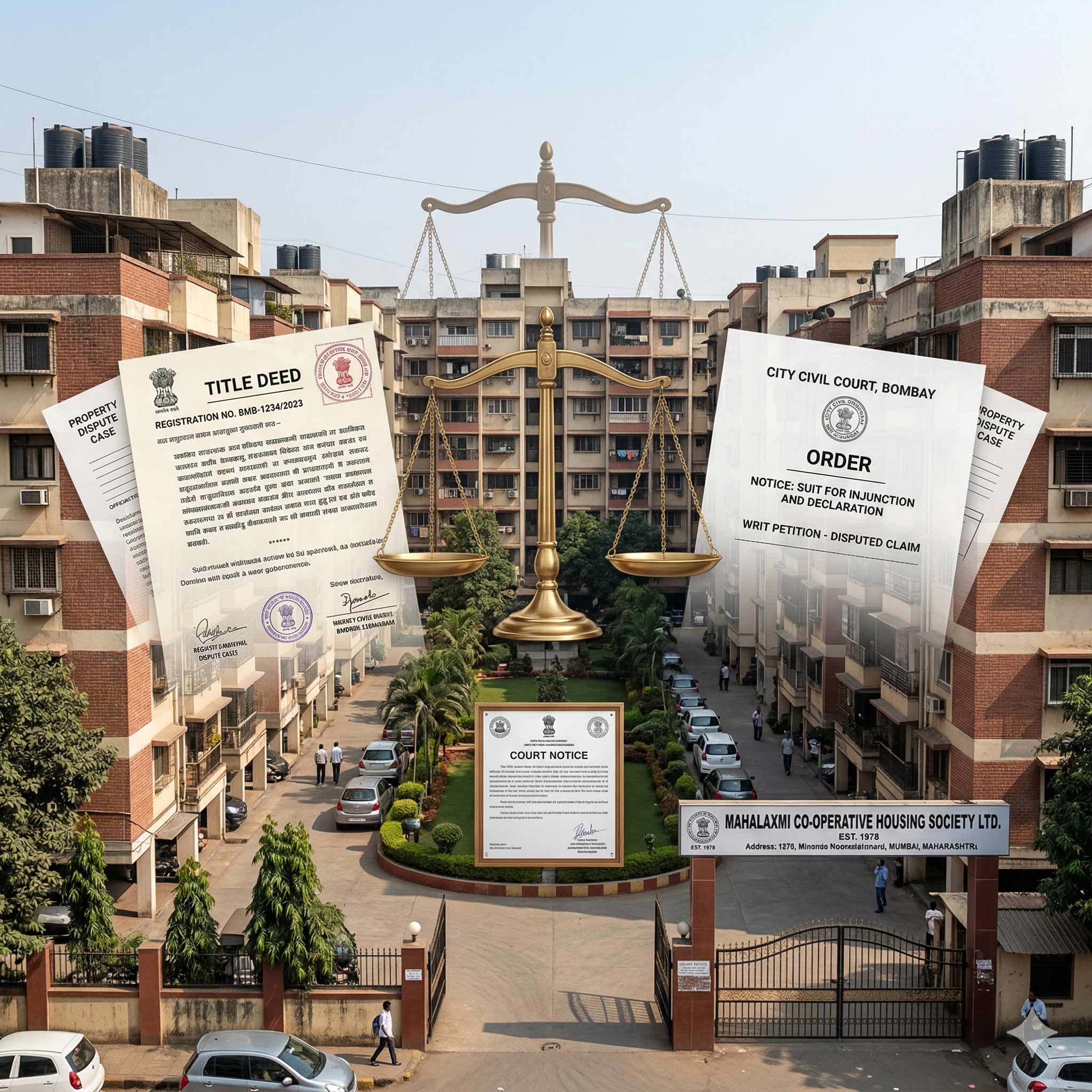
Civil Disputes & Housing Society Matters in Mumbai: A Complete Legal Guide for Property Owners
Mumbai is one of the most densely populated cities in the world, and the majority of residential buildings operate through co-operative housing societies. Because of this unique structure, housing society disputes and civil litigation matters are among the most frequently searched legal issues in Mumbai.
From flat succession disputes, society membership issues, recovery cases, contract disputes, and injunction proceedings, residents often require legal assistance to protect their property and financial rights.
This article provides a comprehensive legal guide to civil disputes and housing society matters in Mumbai, explaining common issues faced by residents and the legal remedies available under Indian law.
Legal Framework Governing Housing Societies in Mumbai
Housing societies in Maharashtra are primarily governed by the Maharashtra Co-operative Societies Act, 1960, which regulates the formation, management, and functioning of co-operative housing societies.
Disputes arising between society members, managing committees, developers, and property owners are typically resolved through the Deputy Registrar of Co-operative Societies, Co-operative Courts, or higher judicial forums such as the Bombay High Court.
Understanding the legal structure of housing societies is essential for resolving conflicts efficiently.
Flat Succession & Ownership Disputes in Housing Societies
One of the most common civil disputes in Mumbai arises when a flat owner passes away and multiple family members claim ownership rights.
Typical issues include:
- Transfer of membership to legal heirs
- Conflicts between family members regarding property ownership
- Disputes over nomination in society records
- Delay in issuing or transferring share certificates
Many society members assume that a nominee automatically becomes the legal owner of a flat. However, under Indian law, a nominee usually holds the property as a trustee for the legal heirs, unless there is a valid will determining ownership.
In such cases, legal processes may involve:
- Probate proceedings
- Succession certificates
- Legal heirship verification
- Civil litigation for declaration of ownership
Because property values in Mumbai are extremely high, these disputes frequently escalate into civil suits before the courts.
Housing Society Membership Disputes
Another frequent legal issue in Mumbai occurs when housing societies refuse membership to legitimate flat purchasers.
Societies sometimes deny membership due to:
- Internal disputes among managing committee members
- Objections raised against the sale transaction
- Documentation deficiencies
- Developer-related conflicts
However, under cooperative housing laws, a society cannot arbitrarily deny membership to a lawful purchaser who has acquired the property through a valid sale transaction.
If membership is wrongfully denied, the buyer can approach the Registrar of Co-operative Societies or initiate legal proceedings to enforce their rights.
Such disputes are particularly common in older buildings undergoing redevelopment or buildings with unresolved title histories.
Civil Recovery Cases in Mumbai
Civil recovery disputes are another major category of litigation in Mumbai. These cases typically arise when one party fails to repay money owed under an agreement or financial transaction.
Examples include:
- Recovery of unpaid loans or advances
- Non-payment under business agreements
- Failure to repay friendly loans
- Builder-buyer financial disputes
- Payment defaults under service contracts
In such cases, the aggrieved party may file a civil suit for recovery of money, seeking a court decree directing the defaulting party to repay the outstanding amount along with interest and costs.
Civil recovery proceedings may also involve attachment of assets and execution of court orders if payment is not made voluntarily.
Contract Disputes in Property and Business Transactions
Mumbai is India’s financial capital, and disputes arising from contracts and agreements are extremely common.
Contract disputes often arise from:
- Real estate agreements
- Development agreements
- Partnership contracts
- Service agreements
- Joint venture arrangements
Typical legal issues include:
- Breach of contractual obligations
- Delay in project completion
- Failure to make agreed payments
- Misrepresentation during contract negotiations
Courts generally examine the terms of the agreement, evidence of breach, and financial losses suffered by the affected party.
Depending on the case, the court may award damages, compensation, or specific performance of the contract.
Injunctions in Civil and Property Disputes
An injunction is one of the most powerful remedies available under civil law.
It is a court order restraining a person from performing a particular act, such as:
- Interfering with property possession
- Carrying out illegal construction
- Selling disputed property
- Demolishing structures during redevelopment disputes
Courts may grant:
Temporary Injunctions – Preventing a party from taking certain actions until the dispute is resolved.
Permanent Injunctions – A final order restraining unlawful conduct.
In Mumbai, injunctions are frequently sought in disputes involving:
- Redevelopment projects
- Housing society management conflicts
- Property ownership disputes
- Illegal occupation or trespassing
Because injunctions are urgent legal remedies, immediate legal action is often required to protect property rights.
Why Housing Society Litigation is Increasing in Mumbai
The number of civil disputes relating to housing societies continues to rise due to several factors:
1. High Real Estate Values
Mumbai’s property market is among the most expensive in India, making ownership disputes financially significant.
2. Redevelopment of Old Buildings
Thousands of aging buildings are undergoing redevelopment, leading to conflicts between developers, societies, and members.
3. Complex Title Histories
Many properties have decades-old ownership records, resulting in inheritance disputes.
4. Society Governance Issues
Mismanagement by managing committees and lack of transparency often trigger legal disputes among members.
When Should You Consult a Civil Lawyer in Mumbai?
You should consider seeking legal advice if you face situations such as:
- Housing society refusing to transfer membership
- Property ownership disputes among family members
- Recovery of unpaid money or financial dues
- Breach of contracts causing financial loss
- Urgent need for court injunctions in property matters
Early legal intervention can often prevent disputes from escalating into lengthy and expensive litigation.
Conclusion
Civil disputes and housing society matters are among the most common legal challenges faced by property owners in Mumbai. With high property values, complex ownership histories, and increasing redevelopment activity, legal conflicts are becoming more frequent.
Whether the issue involves flat succession, society membership disputes, recovery litigation, contract breaches, or injunction proceedings, proper legal guidance is essential to safeguard your rights.
Seeking advice from an experienced civil litigation lawyer can help resolve disputes efficiently and ensure compliance with the applicable laws governing housing societies in Mumbai.
Frequently Asked Questions (FAQs)
Can a housing society refuse to transfer a flat to a buyer?
A housing society cannot arbitrarily refuse membership if the property has been legally transferred and the required documentation has been submitted.
Does a nominee become the legal owner of a flat?
No. A nominee usually acts as a trustee for the legal heirs unless ownership is determined through a will or succession process.
What legal action can be taken if someone interferes with property possession?
A civil suit seeking an injunction can be filed to restrain unlawful interference with property rights.
Where are housing society disputes resolved in Mumbai?
Such disputes may be addressed before the Registrar of Co-operative Societies, Co-operative Courts, Civil Courts, or the Bombay High Court depending on the nature of the dispute.
Advocate Sarosh Damania is the founder of Sarosh Damania & Co., a premier law firm based in Mumbai, recognized for its exceptional legal services to corporations, individuals, and international clients worldwide. With a rich blend of experience and expertise, Adv. Damania and his team specialize in a wide array of legal disciplines, including Civil Law, Criminal Law, Aviation Law, Arbitration, Consumer Law, RERA, Company Law, Succession Law, Wills, Intellectual Property Law, Property Law, Housing Society Law, Debt Recovery, and Banking Law.