
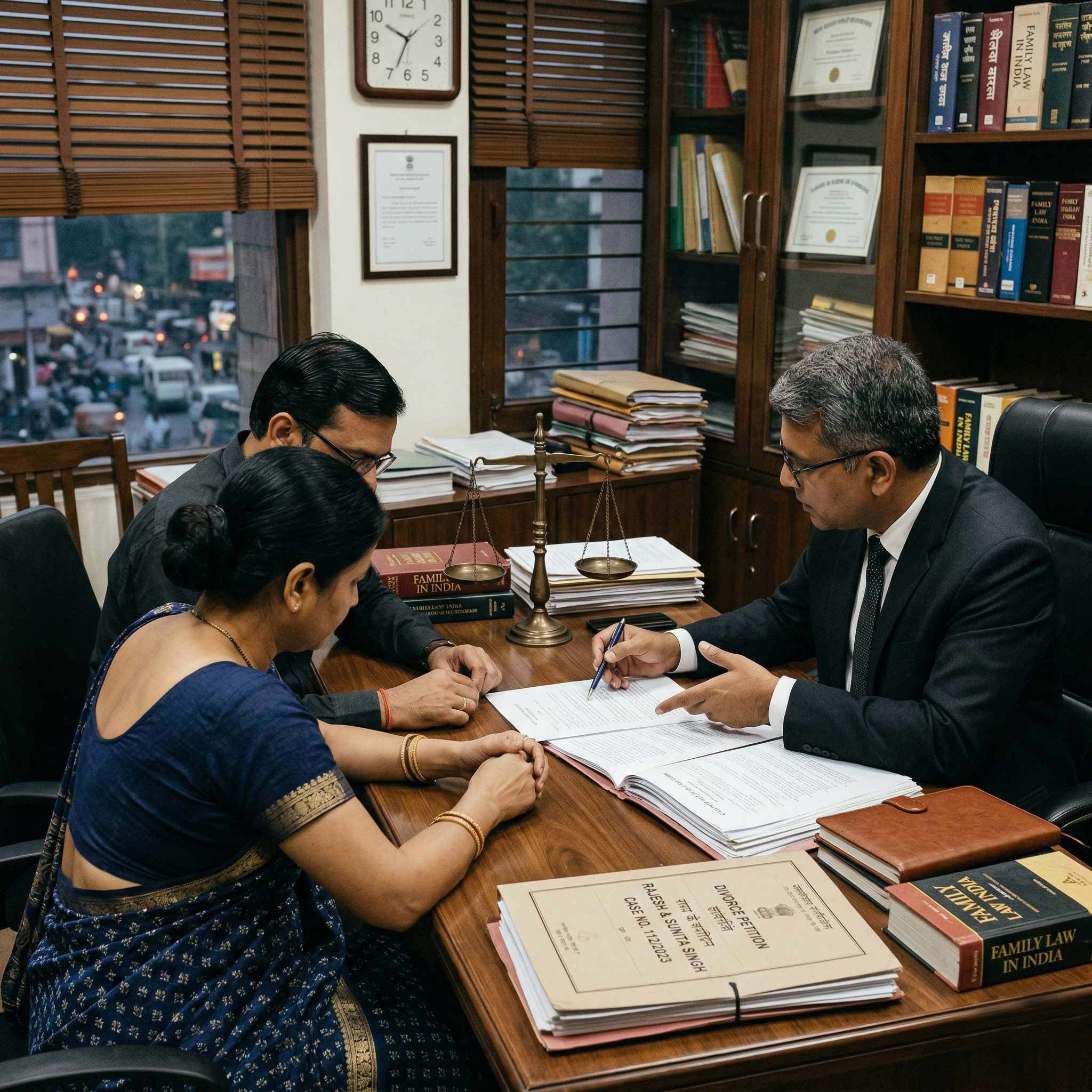
Family Law & Matrimonial Issues in Mumbai: Complete Legal Guide by a Divorce & Family Court Advocate
Family law disputes are among the most searched legal issues in Mumbai and across India. In a fast-paced metropolitan city, relationships often face pressures arising from work stress, financial issues, lifestyle differences, and evolving social expectations. As a result, many individuals seek legal guidance regarding divorce, child custody, maintenance, alimony, and domestic violence protection.
As an advocate practicing in Mumbai, I frequently advise clients who are dealing with complex matrimonial disputes that affect not only their legal rights but also their emotional and financial stability. Family law litigation requires careful legal strategy, sensitivity, and a clear understanding of the legal framework governing matrimonial relationships in India.
In Mumbai, matrimonial disputes are generally handled by specialised courts such as the Family Court Mumbai, while appeals from family court decisions are heard by the Bombay High Court.
This comprehensive guide explains the most common family law issues faced by couples in Mumbai, the relevant laws governing matrimonial disputes in India, and the legal remedies available to individuals facing marital breakdown.
Understanding Family Law in India
Family law in India regulates marriage, divorce, guardianship, maintenance, and financial responsibilities between spouses and children.
Unlike many Western countries that follow a uniform family law system, India follows religion-based personal laws, along with certain secular statutes that apply across communities.
The key laws governing matrimonial disputes include:
- Hindu Marriage Act, 1955
- Special Marriage Act, 1954
- Guardians and Wards Act, 1890
- Hindu Minority and Guardianship Act, 1956
- Code of Criminal Procedure, 1973
- Protection of Women from Domestic Violence Act, 2005
These statutes collectively govern issues such as marriage validity, divorce proceedings, custody of children, financial support between spouses, and protection from domestic abuse.
Divorce in India: Mutual Consent and Contested Divorce
Divorce remains one of the most commonly searched legal issues in Mumbai. Indian law recognises two primary types of divorce proceedings.
Mutual Consent Divorce
A mutual consent divorce occurs when both spouses agree that the marriage has irretrievably broken down and jointly seek dissolution of the marriage.
Under Section 13B of the Hindu Marriage Act, 1955, spouses may file a joint petition if:
- They have lived separately for at least one year
- Both parties mutually agree to dissolve the marriage
- Issues relating to custody, maintenance, and property distribution have been settled
Mutual divorce is widely considered the most efficient and least adversarial way to end a marriage.
Timeline for Mutual Divorce in Mumbai
Generally, mutual consent divorce takes 6 to 18 months, although courts sometimes waive the mandatory cooling-off period if settlement terms are already finalised.
Benefits of Mutual Divorce
- Faster resolution
- Reduced legal costs
- Minimal emotional stress
- Privacy and dignity
Many working professionals in Mumbai prefer this route as it avoids lengthy litigation.
Contested Divorce
A contested divorce arises when one spouse seeks divorce and the other spouse disputes the allegations or refuses to consent.
Common legal grounds for contested divorce include:
- Cruelty (mental or physical)
- Adultery
- Desertion
- Conversion to another religion
- Mental illness
- Communicable disease
Contested divorce cases often involve extensive evidence, witness testimony, and multiple hearings, and may take several years to conclude.
Child Custody and Guardianship Disputes
Child custody disputes are among the most emotionally challenging aspects of matrimonial litigation.
Indian courts prioritise the welfare and best interests of the child above the rights of the parents.
Custody matters are governed by laws such as:
- Guardians and Wards Act, 1890
- Hindu Minority and Guardianship Act, 1956
Types of Custody Orders
Physical Custody
The child primarily lives with one parent, while the other parent receives visitation rights.
Joint Custody
Both parents share responsibility for raising the child.
Legal Custody
Authority to make decisions about the child’s education, health, and welfare.
Factors Considered by Courts
Courts evaluate multiple factors including:
- Emotional and physical welfare of the child
- Age and educational needs
- Financial stability of the parents
- Parenting capability of each parent
In many cases involving young children, courts may award custody to the mother, although courts increasingly recognise the importance of both parents in a child’s upbringing.
Maintenance and Alimony in Divorce Cases
Financial disputes often arise after separation. Maintenance ensures that a financially dependent spouse is not left without means of livelihood after divorce.
Maintenance claims may be filed under:
- Section 125 of the Code of Criminal Procedure, 1973
- Sections 24 and 25 of the Hindu Marriage Act, 1955
Types of Maintenance
Interim Maintenance
Temporary financial support awarded during the pendency of divorce proceedings.
Permanent Alimony
Financial compensation awarded at the time of divorce.
This may be paid as:
- Lump sum settlement
- Monthly financial support
Factors Considered by Courts
Courts typically consider:
- Income of both spouses
- Standard of living during marriage
- Duration of marriage
- Financial liabilities and responsibilities
- Custody of children
Courts aim to ensure that the dependent spouse can maintain a lifestyle reasonably similar to the marital standard of living.
Domestic Violence and Legal Protection
Domestic violence remains a serious issue across India. Victims may seek protection under the Protection of Women from Domestic Violence Act, 2005.
This law provides civil remedies and immediate protection for victims of abuse.
Domestic violence includes:
- Physical abuse
- Emotional or psychological abuse
- Verbal abuse
- Sexual abuse
- Economic abuse
Importantly, this law also protects women in live-in relationships similar to marriage.
Legal Remedies Available
Courts may grant:
- Protection orders restraining the abuser
- Residence orders allowing the victim to remain in the shared household
- Monetary relief and compensation
- Custody orders
- Emergency protection measures
These remedies aim to ensure safety, dignity, and financial protection for victims.
Matrimonial Litigation Trends in Mumbai
Urban matrimonial disputes often involve complex issues including:
- Dual-income households
- International marriages
- Property and asset division
- Cross-border custody disputes
- High-value alimony claims
Lawyers in Mumbai frequently deal with cases involving:
- NRI marriages
- International jurisdiction issues
- False criminal complaints in matrimonial disputes
- Domestic violence allegations
- Child relocation disputes
Such matters often require strategic litigation and careful legal representation.
Why Legal Advice Is Important in Matrimonial Disputes
Family disputes are deeply personal and legally complex. Seeking early legal advice can help individuals:
- Protect financial interests
- Secure fair custody arrangements
- Avoid unnecessary litigation
- Explore mediation and settlement options
- Navigate complex court procedures
In many cases, amicable settlements help reduce emotional trauma and financial burden for both parties.
Conclusion
Family law matters involving divorce, child custody, maintenance, and domestic violence remain among the most common legal challenges faced by individuals in Mumbai.
While matrimonial disputes can be emotionally overwhelming, understanding legal rights and seeking professional legal guidance can help individuals achieve fair and lawful outcomes.
Courts in India aim to ensure justice, financial fairness, and protection of children and vulnerable individuals in matrimonial disputes.
For individuals facing marital difficulties, timely consultation with a matrimonial lawyer can help protect legal rights and provide clarity on the best course of action.
Frequently Asked Questions (FAQs)
How long does divorce take in Mumbai?
Mutual consent divorce typically takes 6 to 18 months, while contested divorce cases may take several years depending on complexity.
Who gets child custody after divorce in India?
Courts prioritise the welfare of the child and may grant custody to either parent or order joint custody arrangements.
Can a working spouse claim maintenance?
Yes. Courts may still grant maintenance if there is a substantial difference in income between spouses.
What evidence is required for domestic violence cases?
Evidence may include medical reports, witness statements, photographs, electronic communication, or police complaints.
Can maintenance be claimed without divorce?
Yes. Maintenance can be claimed even without filing for divorce, particularly under Section 125 of the Criminal Procedure Code.

Advocate Sarosh Damania is the founder of Sarosh Damania & Co., a premier law firm based in Mumbai, recognized for its exceptional legal services to corporations, individuals, and international clients worldwide. With a rich blend of experience and expertise, Adv. Damania and his team specialize in a wide array of legal disciplines, including Civil Law, Criminal Law, Aviation Law, Arbitration, Consumer Law, RERA, Company Law, Succession Law, Wills, Intellectual Property Law, Property Law, Housing Society Law, Debt Recovery, and Banking Law.